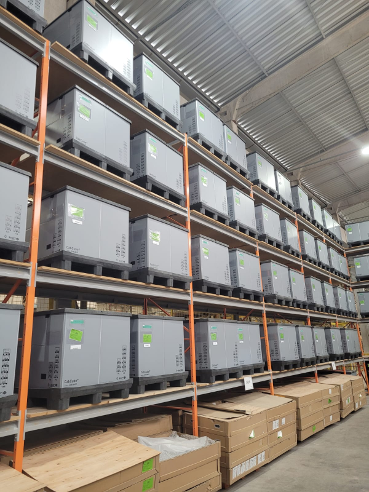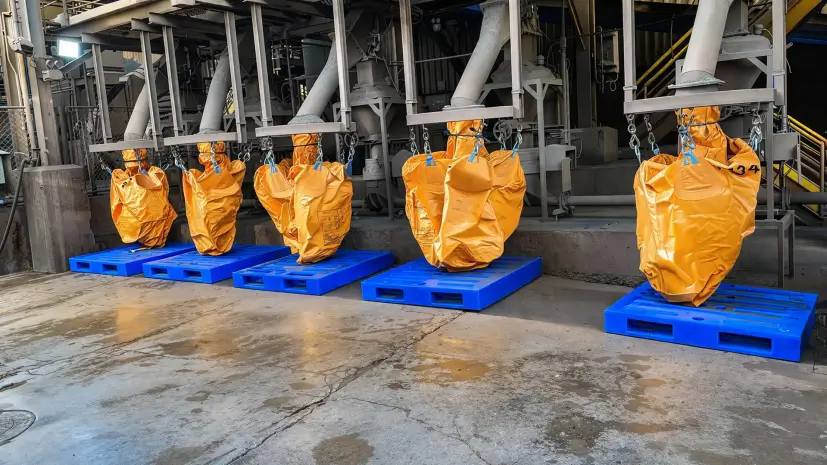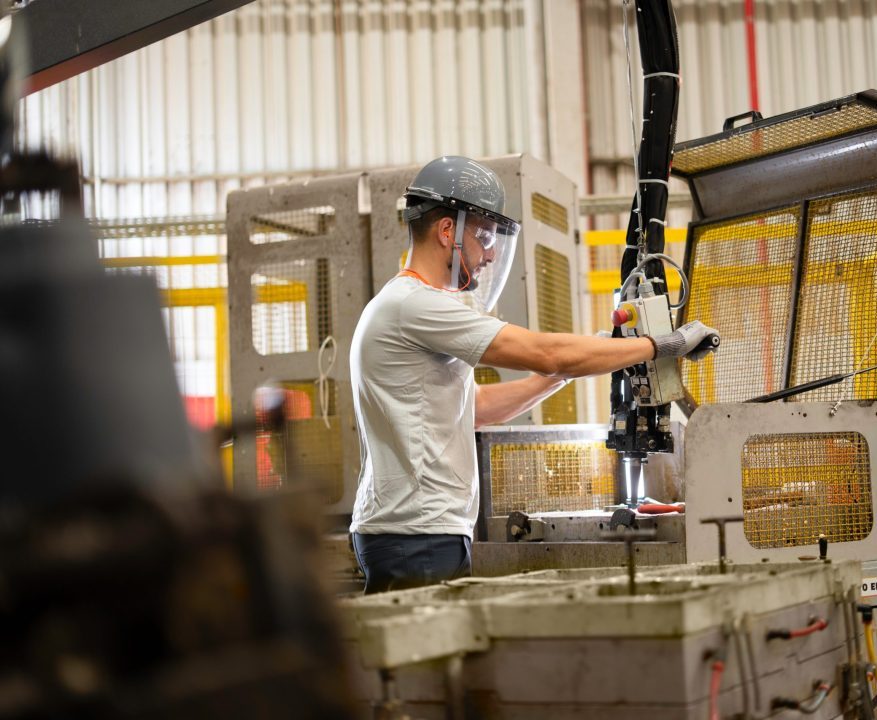
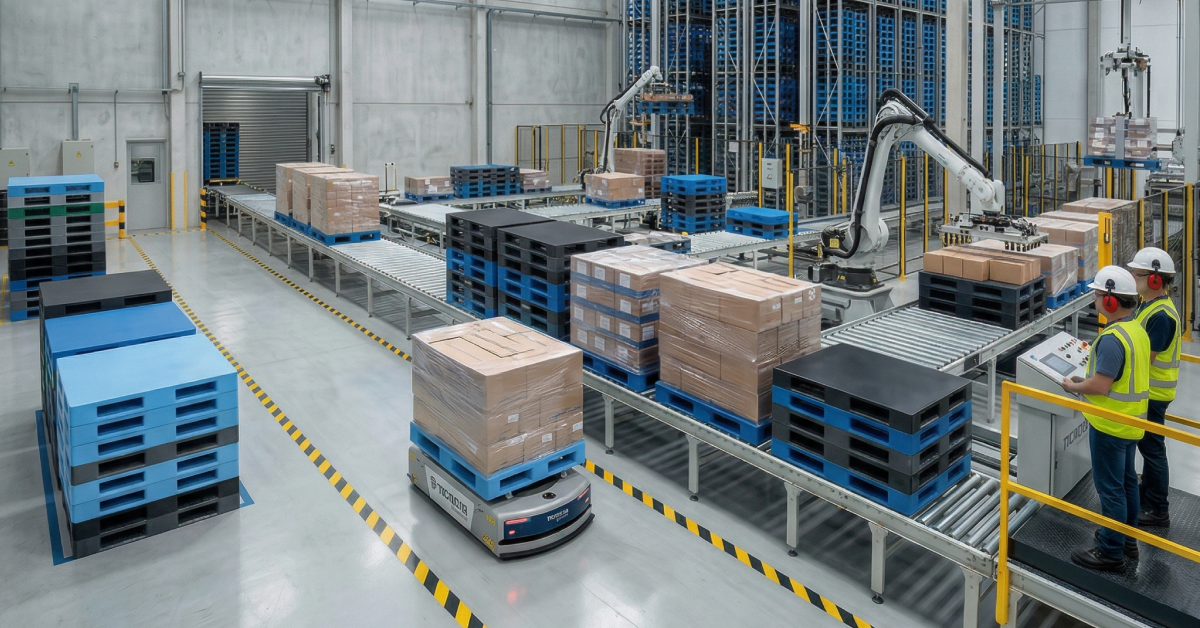
Industry 4.0 isn’t limited to robots, complex software, or automated lines. It starts at the base of the operation. And the base of industrial logistics is the pallet.
Turning your pallets into smart assets is one of the most strategic ways to move toward Industry 4.0. When integrated with QR codes, barcodes, sensors, and real-time tracking systems, they stop being just load supports and become a source of data.
In this content, you’ll learn how to apply technology to plastic pallets, what operational gains are possible, and how this transformation impacts costs, control, and competitiveness.
What is Industry 4.0?
The Industry 4.0 represents the integration between physical processes and digital systems. It connects machines, people, products, and data in a continuous flow of information.
Its pillars include:
- Internet of Things
- Smart automation
- Big Data
- Traceability
- Real-time integration
In practice, this means every element of the operation can generate strategic information. Including the pallet.
The pallet as a strategic asset
Traditionally, the pallet is seen just as a base for storage and transport. However, within the logic of Industry 4.0, it can become a smart asset.
When integrated with identification and monitoring technologies, the pallet is able to:
- Log movements
- Identify origin and destination
- Monitor location
- Integrate with management systems
- Support audits and traceability
This transforms internal logistics.
QR codes applied to pallets
Using QR codes is a simple, efficient way to digitize pallets.
Each pallet can be assigned a unique code, linked to a management system or artificial intelligence. When scanned, the operator can see:
- Usage history
- Cargo type
- Destination sector
- Movement date
- Person responsible for the operation
This practice reduces identification errors and increases control. It also makes internal inventories and audits easier.
Barcodes and ERP integration
Another common application is using barcodes integrated with the company’s ERP.
When a smart pallet is moved, the system automatically logs the transaction.
This enables:
- Precise inventory control
- Reduced losses
- Better logistics planning
- Batch traceability
Traceability is essential in sectors such as food, pharmaceuticals, and chemicals.
If a recall is ever needed, for example, quickly identifying the batch reduces financial losses and reputational impact.
Sensors and real-time traceability
The next level of Industry 4.0 involves embedded sensors. Plastic pallets can be fitted with monitoring devices that capture data such as:
- Location via RFID or GPS
- Cargo temperature
- Humidity
- Impacts during transport
This information is sent in real time to management systems. The result is full visibility of the logistics chain. Companies that use active traceability can:
- Reduce loss of goods
- Reduce damage
- Monitor sensitive conditions
- Improve quality control
This model is essential for operations involving perishable products or those sensitive to temperature changes.
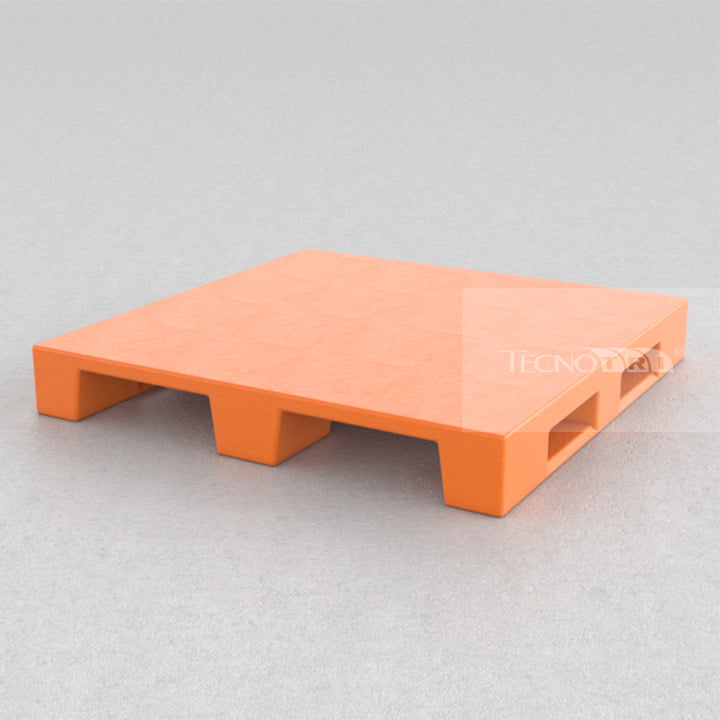
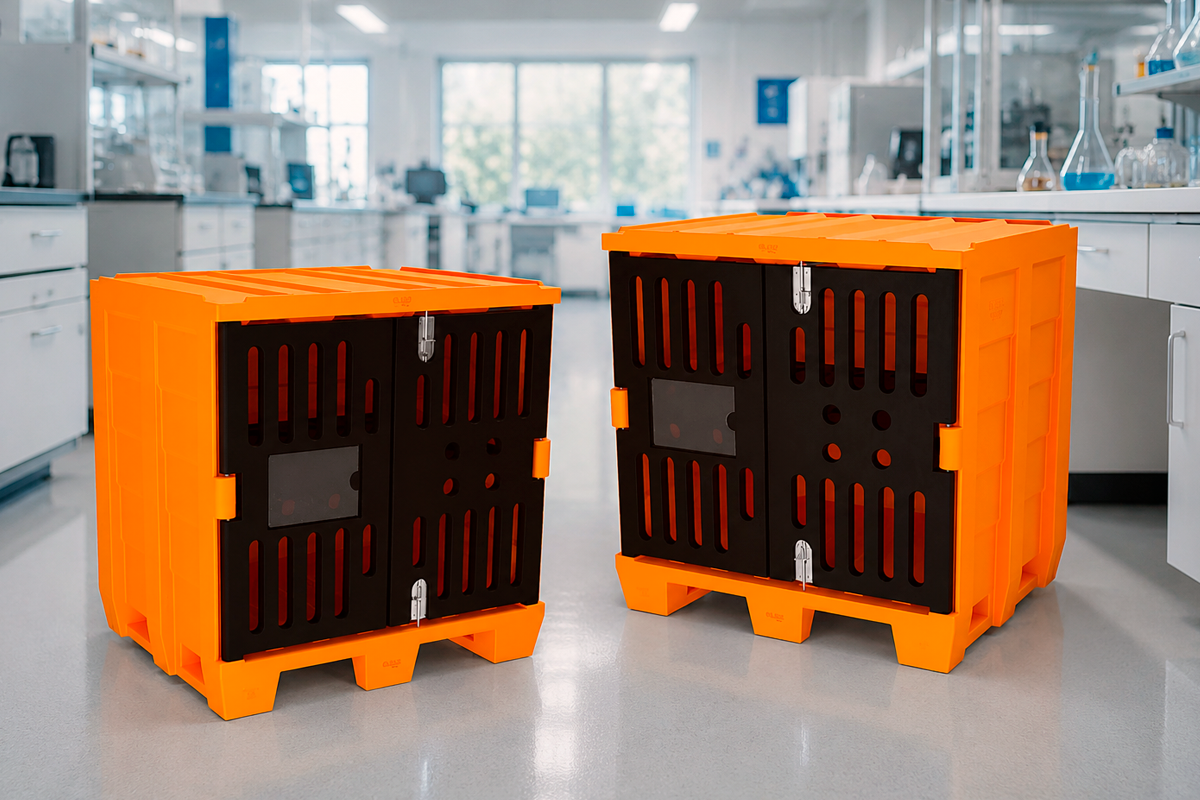
The plastic pallet comes in several colors. Orange is commonly used in the food industry.
Direct benefits of digitizing pallets
If you’re an industrial manager, someone responsible for logistics, or an operations director, you’ve likely faced at least one of these problems:
- Pallets disappear in the yard
- Nobody knows exactly where a certain shipment is
- Inventory never adds up to 100%
- There’s rework due to identification errors
- Audits become an operational headache
Turning the pallet into a smart asset generates concrete, measurable, strategic gains.
1. Lower operating costs
Have you ever calculated how much a lost pallet costs over the course of a year? Or how much an incorrectly handled shipment costs?
Without traceability, the pallet becomes invisible within the operation. It circulates between departments, goes out to customers, comes back, mixes with other batches, and by the time you notice, there’s no real asset control.
With an integrated QR code, barcode, or RFID, each pallet gets its own identity.
This enables:
- Reduced physical losses
- Quick identification of lost items
- Fewer unnecessary replacements
- Control of usage cycles
In addition, digital control eliminates rework.
How many times has your team had to recount inventory because the information was inconsistent?
How many times has a batch been picked incorrectly due to an identification error?
2. Increased logistics efficiency
One of the biggest bottlenecks in traditional logistics is the lack of visibility.
Without real-time data, decisions are based on guesswork. And guesswork creates inefficiency.
When the pallet is digitized, you get to know:
- Where it is
- How long it’s been sitting still
- What cargo it’s carrying
- Where it needs to go
With up-to-date data, the internal flow becomes predictable. You spot bottlenecks before they become problems and can redistribute assets strategically.
In addition, inventory planning improves.
If the system shows that a certain pallet has been sitting idle for days in a department, you act.
If it shows high turnover in another area, you adjust capacity.
The operation stops being reactive and becomes data-driven.
3. Full control of movement
One of a manager’s biggest pain points is not having an immediate answer.
When someone asks:
“Where’s that batch?”
“How many pallets are at customer X?”
“What was that material’s route?”
Without traceability, answering takes time. Time creates delays. With smart pallets, every movement is logged.
You know:
- Who moved it
- When it was moved
- Which department it left
- Which department it went to
This level of control reduces internal bottlenecks. It also makes audits and inspections easier. Instead of chasing down paper and spreadsheets, you present a consolidated digital history.
This builds customer trust and strengthens your position in negotiations.
4. Integration with smart systems
Industry 4.0 requires integration.
There’s no point having a robust ERP if the physical base of the operation doesn’t talk to it.
When the pallet gets a digital ID, it can integrate with:
- WMS
- ERP
- Traceability system
- Logistics control platform
This creates a connected ecosystem. Information flows automatically.
When the pallet’s physical movement is logged, the system updates inventory. When the order status changes, the pallet gets a new destination. When it heads out for delivery, the history is recorded.
This integration eliminates gaps between the physical and digital worlds.
And that gap is exactly what causes losses in many operations.
Why the rotomolded plastic pallet is ideal for Industry 4.0
The plastic pallet, especially the rotomolded kind, offers structural advantages for technology integration.
Unlike wood, it has a uniform, durable surface that’s resistant to moisture.
This makes it easier to apply permanent labels, engraved QR codes, and fixed sensors.
In addition, its extended durability ensures that the embedded technology has a compatible service life.
Rotomolded plastic pallets also offer:
- Dimensional standardization
- Resistance to temperature variations
- Better hygiene
- Long service life
These characteristics support logistics digitization.
Industry 4.0 and traceability as a competitive edge
Companies that adopt advanced traceability get ahead. The ability to respond quickly to an audit or customer request adds value.
Operational transparency strengthens the brand.
In addition, data collected over time enables predictive analysis. With a movement history, you can identify bottlenecks and optimize internal routes.
Digitizing the pallet becomes a source of strategic intelligence.
Take your logistics to the next level
If your company wants to move toward Industry 4.0 in a practical, strategic way, start with what supports your operation: the pallet.
Tecnotri develops highly durable rotomolded plastic pallets, ready for technology integration and traceability.
Talk to our team and find out how to turn your logistics foundation into a smart, connected system ready for the future.