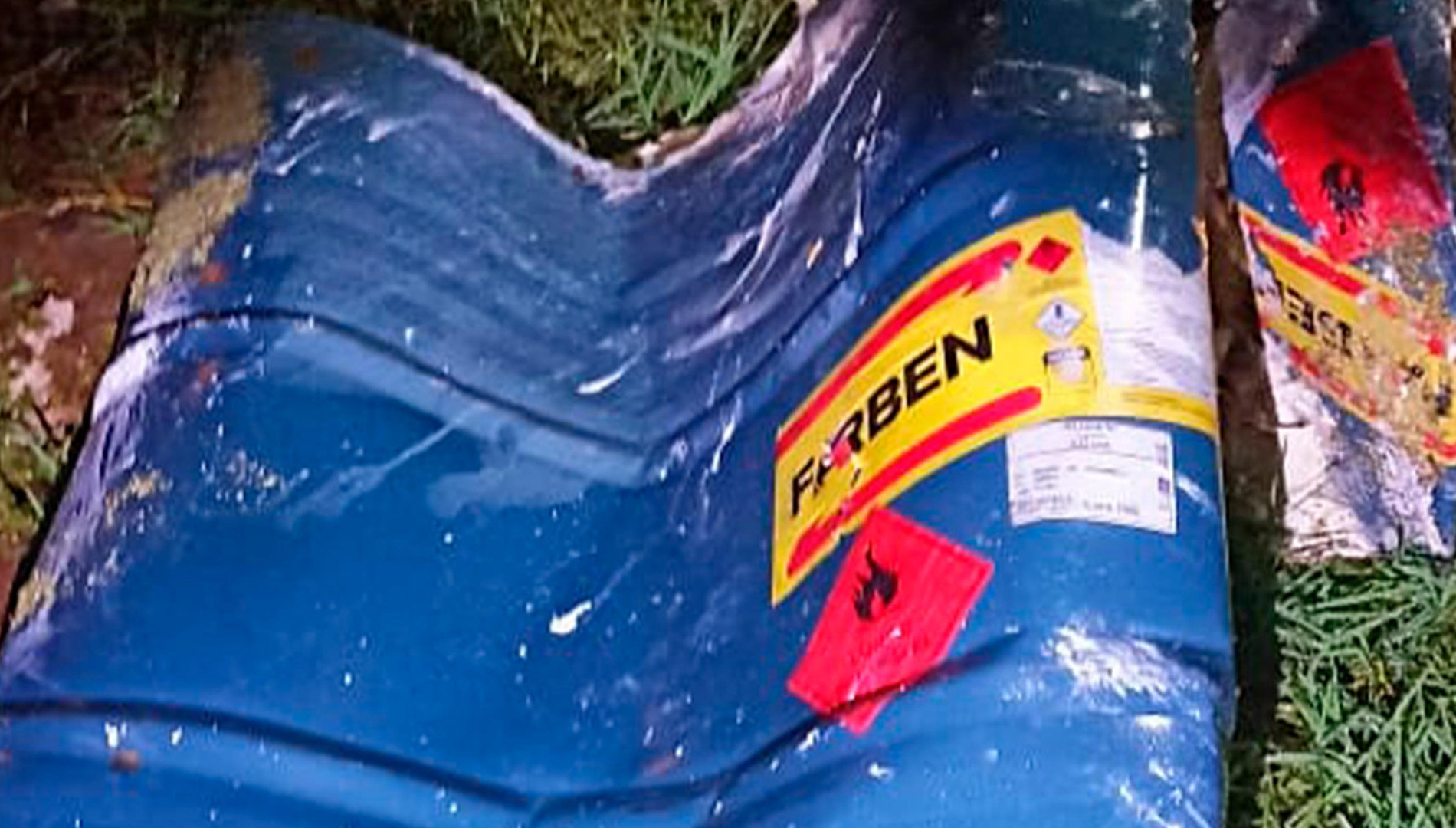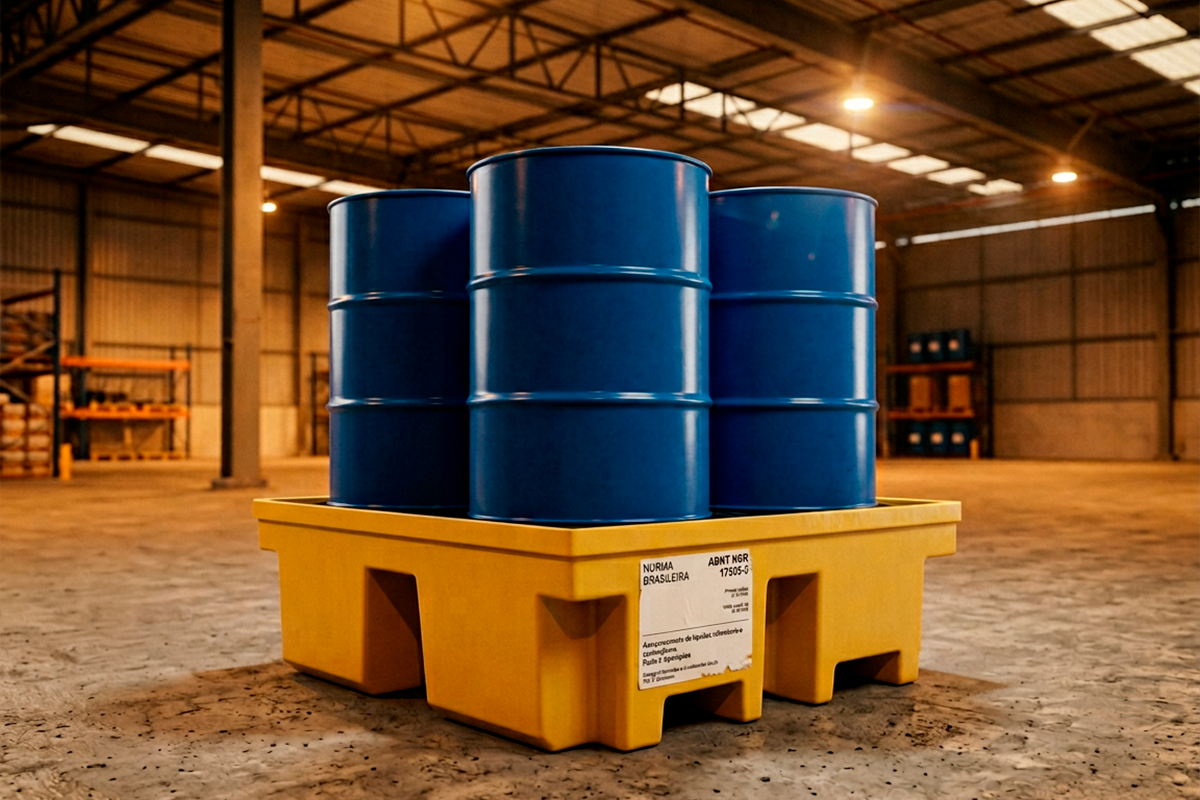


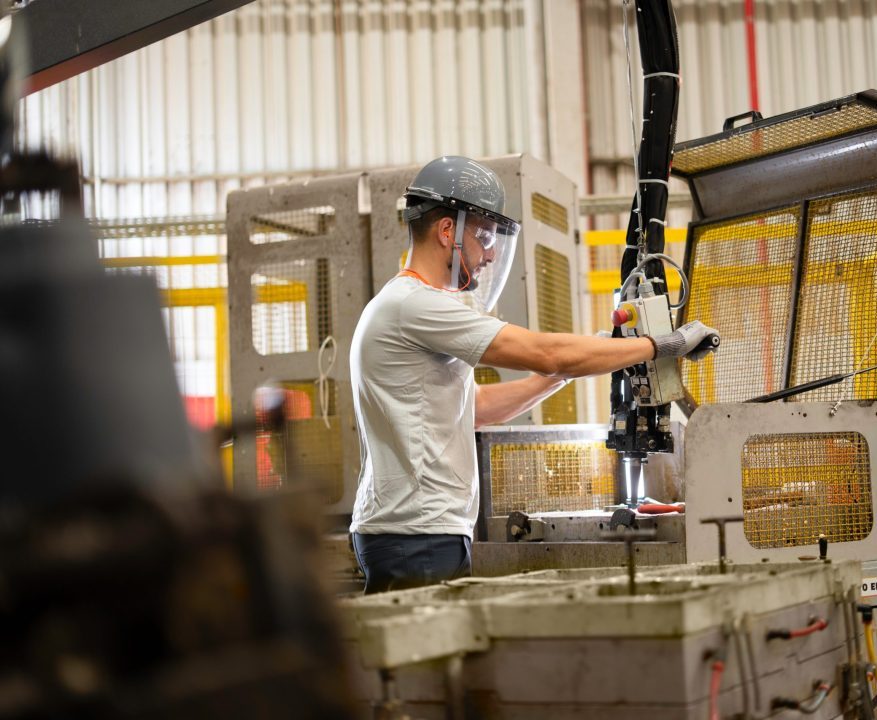
In mining, every detail of the operation directly impacts the financial result. The transport of heavy loads, storage, and internal handling involve constant risks. When the pallet fails, it is not just the equipment that is lost. It is the load, the time, and, often, the confidence in the operation.
Therefore, understanding why the plastic pallet is safer for high-value loads in mining is essential for managers seeking to reduce risks and optimize operational costs.
The mining challenge: high value and high risk
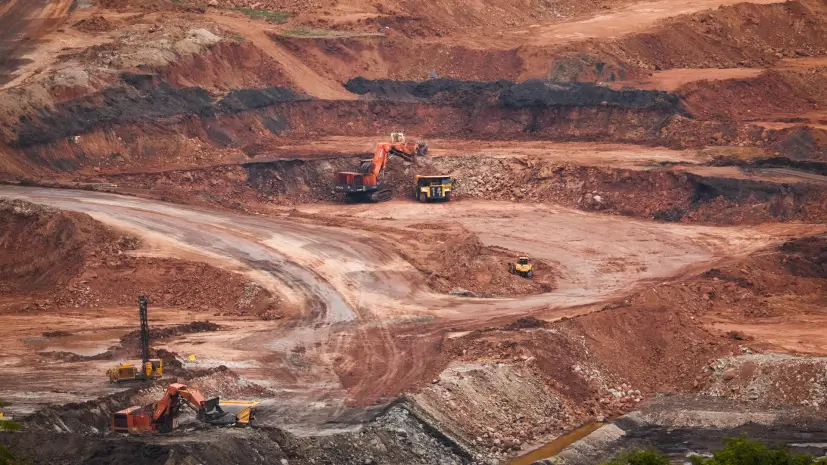
Mining works with large-scale operations. The volume is high, the weight is heavy, and the value of the transported product can be extremely significant.
Materials such as niobium, for example, have high added value. This means that any failure in the logistics chain can cause significant losses.
The main challenges in this scenario are:
- transport of heavy loads with stability
- risk of overturning during handling
- accelerated wear and tear of equipment
- exposure to aggressive environments
Believe it: the choice of pallet directly impacts all these points.
Why the wooden pallet became a problem
For many years, the wooden pallet was widely used in mining. However, with the increase in operational demand, its limitations became evident.
Among the main problems are:
- low durability, often less than 6 months
- constant need for maintenance
- structural risk due to cracks
- difficulty in supporting heavy loads safely
Furthermore, wood can absorb organic waste and liquids, increasing the risk of contamination.
In critical operations, this type of failure is unacceptable.
Plastic pallet in mining: a safer solution
The rotomolded plastic pallet emerges as a more robust and reliable alternative.
Its one-piece structure, without seams, reduces failure points and increases resistance.
In addition, it offers fundamental characteristics for mining:
- high mechanical resistance
- greater stability in transport
- lower risk of breakage
- long service life
These factors make the plastic pallet safer for critical operations.
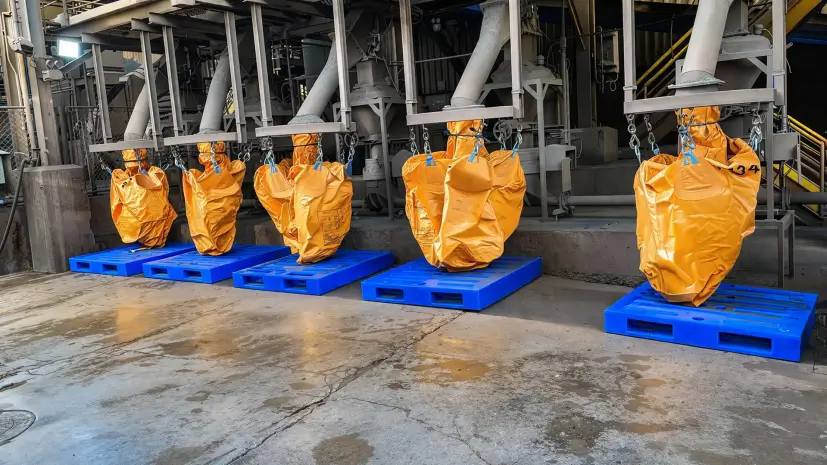
Safety in transporting heavy loads
Transporting heavy loads requires stability.
When the pallet does not offer adequate support, the risk of tipping increases.
This can cause:
- total loss of load
- operational accidents
- damage to equipment
The plastic pallet has a reinforced structure and uniform load distribution.
Chemical resistance and aggressive environments
Mining involves contact with chemicals, moisture, and temperature variations.
The plastic pallet has high chemical resistance, which means it does not degrade upon coming into contact with these agents.
Unlike wood, it does not absorb liquids and does not deteriorate easily.
This ensures greater durability and safety over time.
Reduction of long-term operational costs
One of the biggest mistakes when choosing a pallet is analyzing only the initial cost.
In mining, what really matters is the cost over time.
The plastic pallet reduces operational costs because it:
- lasts longer
- requires less maintenance
- reduces load losses
- decreases the need for replacement
When analyzed over the long term, the investment becomes more advantageous.
Real Tecnotri case: niobium mining
A practical example that we acted on here at Tecnotri reinforces this change: A mining company used wooden pallets to store loads of niobium.
The problems were constant:
- low durability
- frequent maintenance
- structural risk
- lack of reliability
The solution was the adoption of rotomolded plastic pallets.
The new model featured:
- high durability
- possibility of reprocessing
The impact was direct.
The operation gained more safety, reduced losses, and increased logistical efficiency.
But the main point was another: The value of the load.
When transporting a high-value material, the question is no longer how much the pallet costs.
And becomes: how much does it cost to lose the load?
Reverse logistics and sustainability
Another important differential is reverse logistics.
The plastic pallet can be reprocessed in case of damage. This reduces waste and contributes to a more sustainable operation.
Furthermore, it meets demands related to the ESG agenda.
Companies that adopt recyclable and durable solutions reduce environmental impact and strengthen their image.
Efficiency in the logistics chain
The plastic pallet improves the efficiency of the logistics chain.
Its standardization facilitates:
- storage
- handling
- transport
In addition, it reduces operational failures and improves material flow. This is essential in large-scale operations.
Durability as a competitive advantage
Durability is one of the most relevant factors.
While the wooden pallet needs to be replaced frequently, the plastic pallet withstands prolonged cycles of use.
This brings:
- greater predictability
- fewer interruptions
- better operational control
The operation becomes more stable.
When is it worth changing
Replacing the wooden pallet with plastic makes sense when:
- the load has a high value
- there is a large volume of handling
- the environment is aggressive
- the operation requires safety
In these scenarios, the plastic pallet ceases to be an alternative and becomes a necessity.
Protect your load with 10 years of warranty that only Tecnotri offers
In mining, it is not the pallet that is at stake. It is the value of the load it supports.
The plastic pallet offers resistance, durability, and stability for critical operations, reducing risks, improving logistics, and protecting high-value materials throughout the entire chain.
More than an operational item, it becomes a strategic decision.
If your operation still relies on fragile pallets, the risk already exists. Talk to Tecnotri and protect your load with rotomolded solutions and up to 10 years of warranty.