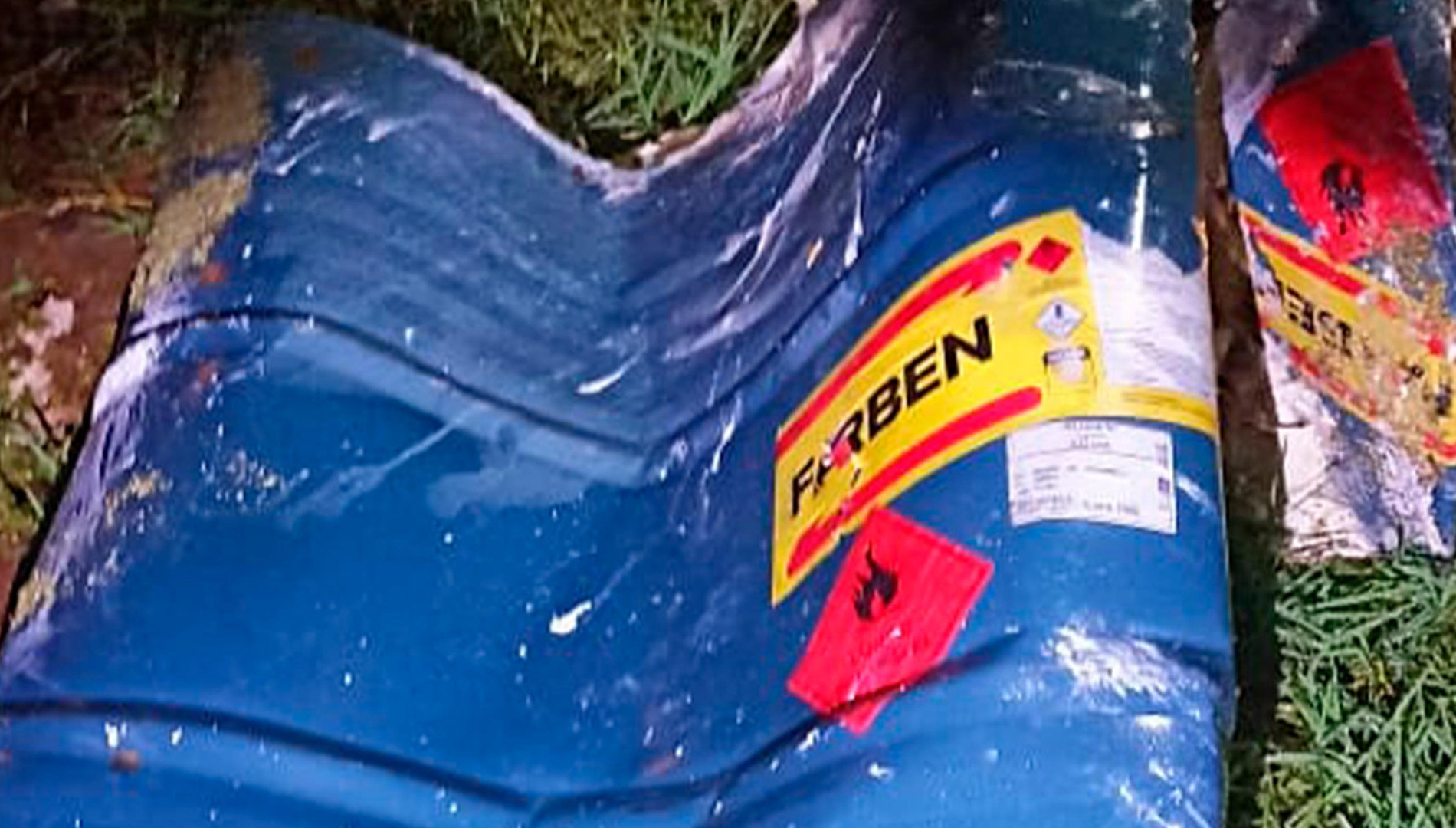


The leak problem is rarely in the big tank. It’s in the drum next to it, in an improvised containment setup, or in that detail nobody noticed. A single drop is enough to contaminate the soil, halt operations, and generate a cost no company plans to take on.
That’s why NBR 17505 for containment sets strict criteria for storing flammable liquids and fuels, including for small and medium-sized businesses.
If your industry stores oils, solvents, or fuels, the question isn’t just whether the standard applies. It’s whether your process is actually protected. Keep reading to learn more!
What does NBR 17505 say?
This is the main reference in Brazil for storing flammable liquids and fuels, setting technical criteria that reduce operational and environmental risks.
Among the main points, three stand out:
- Containment basins are mandatory
The standard requires storage areas to have systems capable of retaining spills.
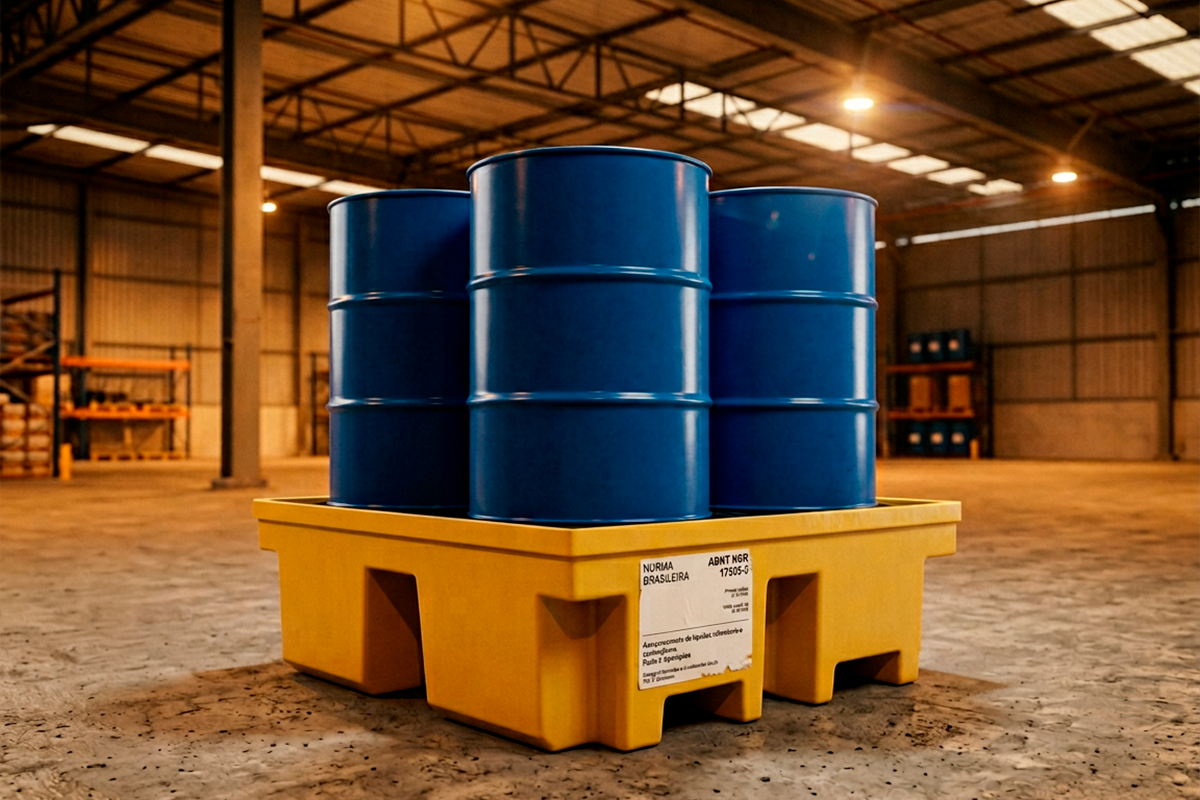
In practice, this means using an industrial containment basin with a minimum capacity of 110% of the volume of the largest container stored.
This requirement ensures that, even in a total spill, the liquid doesn’t reach the ground or drainage systems.
- Isolation of incompatible substances
Different chemical products can react with each other, increasing the risk of fires or toxic emissions.
Given this, the standard calls for proper separation of substances, avoiding uncontrolled mixed storage.
- Structure ready for emergencies
Containment shouldn’t just “hold back” the leak — it should also allow for:
- Fast, safe cleanup;
- Easy access;
- Reduced exposure for operators.
In other words, the equipment needs to be functional at the critical moment, not just “check a box.”
The most common industry mistake: underestimating small scale
In many companies, when there’s only a small number of drums, storage isn’t treated as a priority. But that’s exactly one of the most critical points.
A single piece of equipment can hold around 200 liters of flammable liquid. In other words, in case of failure:
- The liquid quickly seeps into the ground;
- The area becomes an immediate risk point;
- Operations can be shut down by regulatory agencies.
In addition, the impact isn’t limited to the work area. There are direct consequences for the business:
- Environmental fines;
- Remediation costs;
- Loss of permits;
- Production shutdown.
![[Tecnotri]-NBR-1705-para-Contenção---Comparativo1](https://tecnotri.com.br/wp-content/uploads/2026/04/Tecnotri-NBR-1705-para-Contencao-Comparativo1.png)
This means chemical safety in small factories depends less on volume and more on control.
Rotomolding vs. masonry: why is plastic more efficient?
When choosing a containment pallet for drums, the material directly affects durability, safety, and ease of operation.
On the market, the most common solutions involve rotomolding, flexible models, or masonry structures, each with specific applications.
Learn about the advantages of rotomolded plastic below!
- Chemical resistance that doesn’t fade over time
Rotomolded polyethylene doesn’t corrode. Unlike improvised solutions or structures that can degrade over time, the material keeps its integrity even in contact with aggressive substances. This reduces structural risks and extends the equipment’s service life.
- Mobility built into the operation
Rotomolded pallets are designed to ease the flow of the operation:
- Forklift entry points;
- Compatibility with pallet jacks;
- Adaptability to layout.
Unlike fixed structures, such as masonry, this mobility allows storage areas to be reorganized with more agility and efficiency. An integration that improves organization and mitigates day-to-day operational risks.
- Simple, efficient cleaning
Smooth surfaces and removable grates allow for quick sanitizing, efficient residue removal, and compliance with environmental and health requirements.
Compared to flexible solutions or built structures, cleaning tends to be more practical and controlled, supporting process standardization and reducing response time in the event of incidents.
Containment pallet: immediate control when the unexpected happens in the plant
When a leak occurs, the impact depends directly on the equipment’s response capacity. At that moment, the containment structure determines whether the incident will be quickly controlled by:
- Keeping the liquid contained;
- Limiting the affected area;
- Making cleanup and proper disposal easier;
- Reducing activity downtime.
Without this type of solution, what could have been a minor, quickly contained incident quickly grows into something much bigger.
Prevention is a strategic decision
Complying with NBR 17505 for flammables isn’t just about meeting a requirement on paper. It’s about ensuring operational predictability and avoiding risks that could compromise the entire company, from the factory floor to its reputation and credibility.
When compared to the costs involved in non-compliance, investing in proper containment becomes a logical decision. Industries that properly structure their storage operate with more safety, more control, and less exposure.
Ensure your operation’s compliance
If your industry works with flammable liquids or fuels, compliance with NBR 17505 should be treated as a priority. Choosing the right containment system is what separates control from loss.
Ensure your factory’s compliance with our solutions and request a quote to bring your operation up to code.