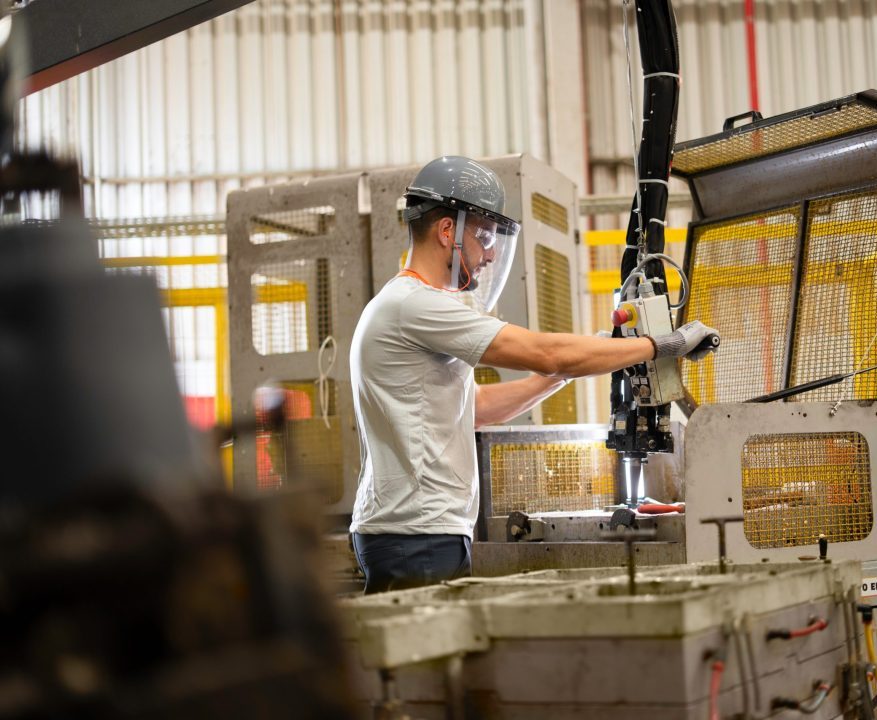
In times of water crisis, one of the solutions found is the storage of water, mainly rainwater, in reservoirs and cisterns.
The reuse of water makes it possible to reuse water in everyday functions that do not require drinking water, such as washing houses, irrigating vegetable gardens, gardens and cleaning in general. However, it is necessary to be very careful with the way in which water is stored for reuse. It is important to be alert and choose the correct equipment to ensure safety and prevent the proliferation of the dengue mosquito.
KNOW THE TYPES OF CISTERN AND BE SAFE AGAINST DENG FUE.
There are different types of cisterns on the market, ranging from the most rustic models made from masonry, to versions made from fiberglass and the most modern ones made from rotomolded plastic.
MASONRY CISTERNS

Masonry cisterns can be developed from materials such as cement, bricks and lime. Local labor is normally used, and a larger investment is required for installation, requiring major civil works. Because they are large, they hold a high level of water, so they need a large space suitable for their installation.
Widely used in the northeast of the country, these masonry reservoirs do not have protection against the proliferation of algae and microorganisms, in addition to not guaranteeing the total closure of the structure, which could compromise the contents of the tank, and be a possible focus for the proliferation of the dengue mosquito.
FIBERGLASS CISTERNS
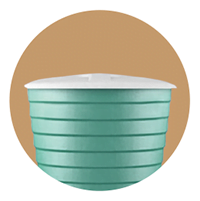
Fiberglass cisterns are generally associated with plastic, generating greater resistance to the piece, however, these cisterns have a simpler structure than rodomolded plastic. A lighter and more affordable product than masonry, but which has certain drawbacks in relation to some sanitary requirements.
The fiberglass cistern has a precarious seal, which can be an entry point for the mosquito Aedes aegypti, which transmits dengue fever,chikungunya
and the Zika Virus. In addition to not having a filter for impurities. They also often do not have antimicrobial additives or UV protection that prevent contamination and algae proliferation in the tank.
ROTOMOLDED PLASTIC CISTERNS
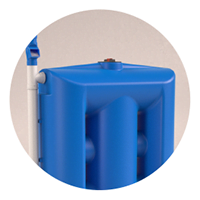
Plastic cisterns, especially rotomolded plastic, are developed through industrial processes that guarantee exclusive characteristics to the products. They have high resistance, versatility and long useful life, being non-toxic and 100% recyclable.
Furthermore, they have UV14 and antimicrobial additives, which protect the reservoir against the proliferation of bacteria, fungi and algae, in addition to being completely sealed, which prevents the proliferation of the Aedes aegypti. mosquito.

Due to its excellent material and the diversity of models, colors and shapes, the initial investment may vary according to each product. These cisterns can be modular, that is, they allow you to expand your storage capacity just by connecting to other parts. Or even be an ecofriendly product, made from 100% recycled material like the Tecnotri Eco Vertical Cisterna model.
AN INNOVATION IN THE CISTERN MARKET
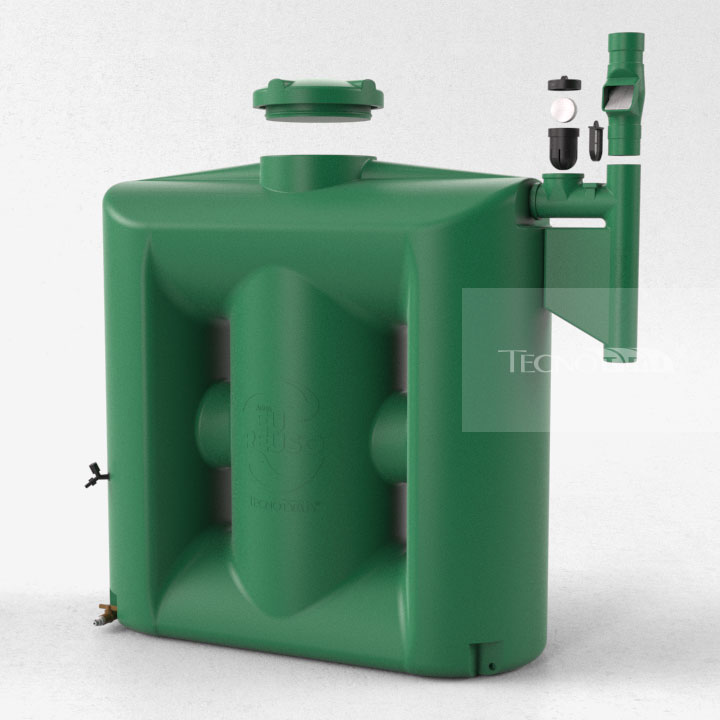
Tank 1000 L Green with Exploded Filter Reuse Kit – Tecnotri
With a distinctive design and capacity of 1000 liters per module, the Tecnotri Modular Cistern is a water reservoir that has all the benefits of rotomolded plastic products, and even more so, it is easy to install, compact and fully sealed, It can be configured with an anti-leaf filter and chlorinator.
Ideal for small spaces, this cistern is widely used in homes, condominiums and even industries, helping to combat the water crisis since its unique design allows easy installation in restricted environments, such as garages and corridors without having to change the local plan.
The greater the reuse of water, for purposes where treated water is not necessary, the lower the consumption of drinking water, which results in the high cost of collection and treatment for the entire society.
Now that you know the main types of cisterns, feel free to choose the ideal option, encouraging the rational and conscious use of water.
[button text=”See the Models” letter_case=”lowercase” style=”gloss” size=”large” radius=”99″ depth=”2″ icon=”icon-menu” link=”https://tecnotri.com.br/produtos/index/14/Cisternas—Kits-Reuso-de-Agua-Tecnotri”]