Good Manufacturing Practices (GMP) in the food industry play a fundamental role. Factors such as pest control, environmental hygiene, contact surfaces, hygiene and employee health. The objective is to guarantee good hygienic and sanitary conditions in food production, storage and transport establishments.
Furthermore, GMP are essential requirements to support the set of control measures of a HACCP plan (hazard analysis and critical control points).
In this article, we will explain what Good Manufacturing Practices (GMP) are. How to adapt to sanitary requirements and what type of pallets should be used in the food industry.
Learn about the requirements of the Good Manufacturing Practices (GMP) program
Among the various legislations and standards that apply to the food industry segment, there is a set of practices known as the Anvisa Good Manufacturing Practices (GMP) program.
GMP refer to the set of practices that ensure the essential hygienic-sanitary conditions for food manufacturing, guaranteeing a safe and adequate environment. Furthermore, they are an integral part of the elements of Food Safety Management standards. Therefore, food industries and food services must adopt these measures to ensure sanitary quality and food compliance with technical regulations.
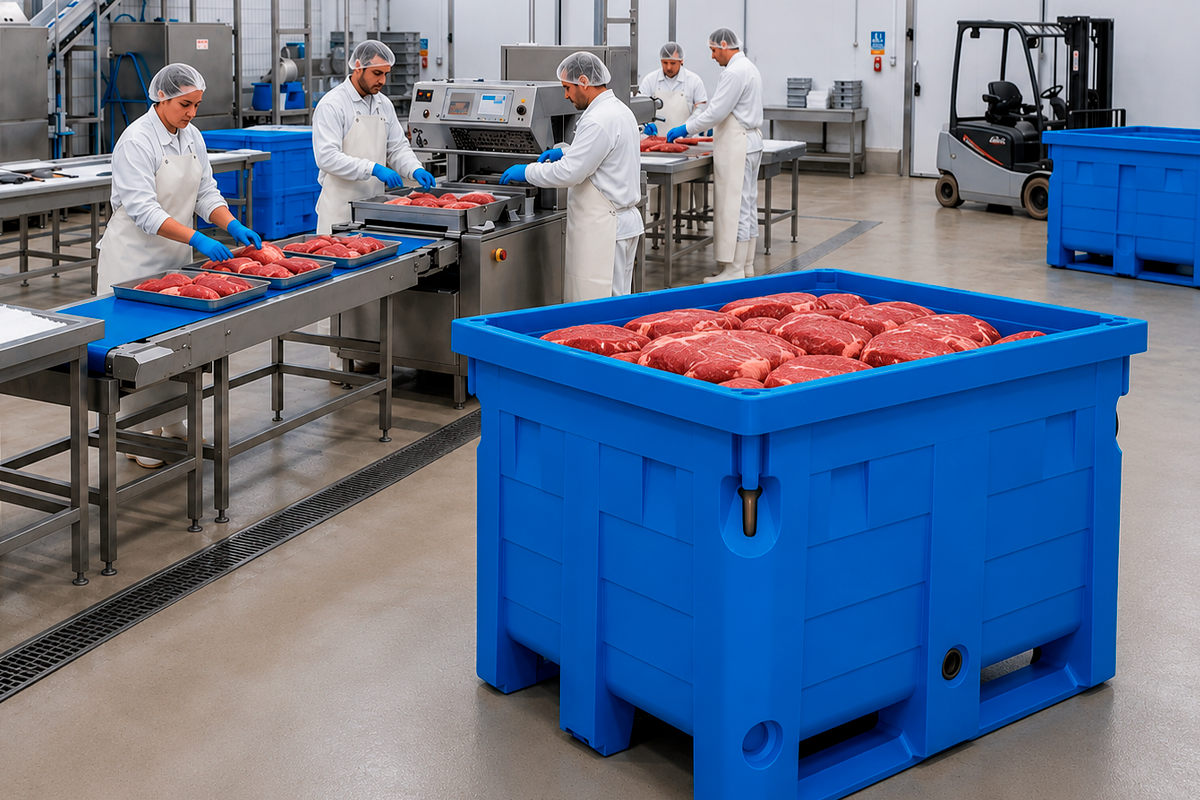
GMP involve a group of principles and rules for the correct handling of food, from its raw material to the distribution of the final product, covering the entire logistics chain. In short, the program is applied through periodic inspection and/or investigation and aims to monitor the hygienic-sanitary conditions and the integrity of the industrial operation. The main objective is to reduce the risks of contamination and mixing of foods, which can occur by particles, microbiologically, or by product. Therefore, using non-toxic materials when transporting and handling food, which are easy to clean, makes all the difference in the production process.
These practices must be applied from the company’s installation to product processing. This helps build the organization’s credibility among its consumers and employees. In this way, they guarantee excellent production for the company and the consumer. Furthermore, they optimize expenses and reduce losses by reducing failures in the production chain.
Due to these requirements, the BPF can generate improvements for the food industries, such as:
- Food safety;
- Standardization of manufacturing processes;
- Adjustments of sanitary conditions;
- Waste reduction;
- Reliability towards suppliers, customers and other interested parties.
See how to adapt to the rules of Good Manufacturing Practices in the food industry
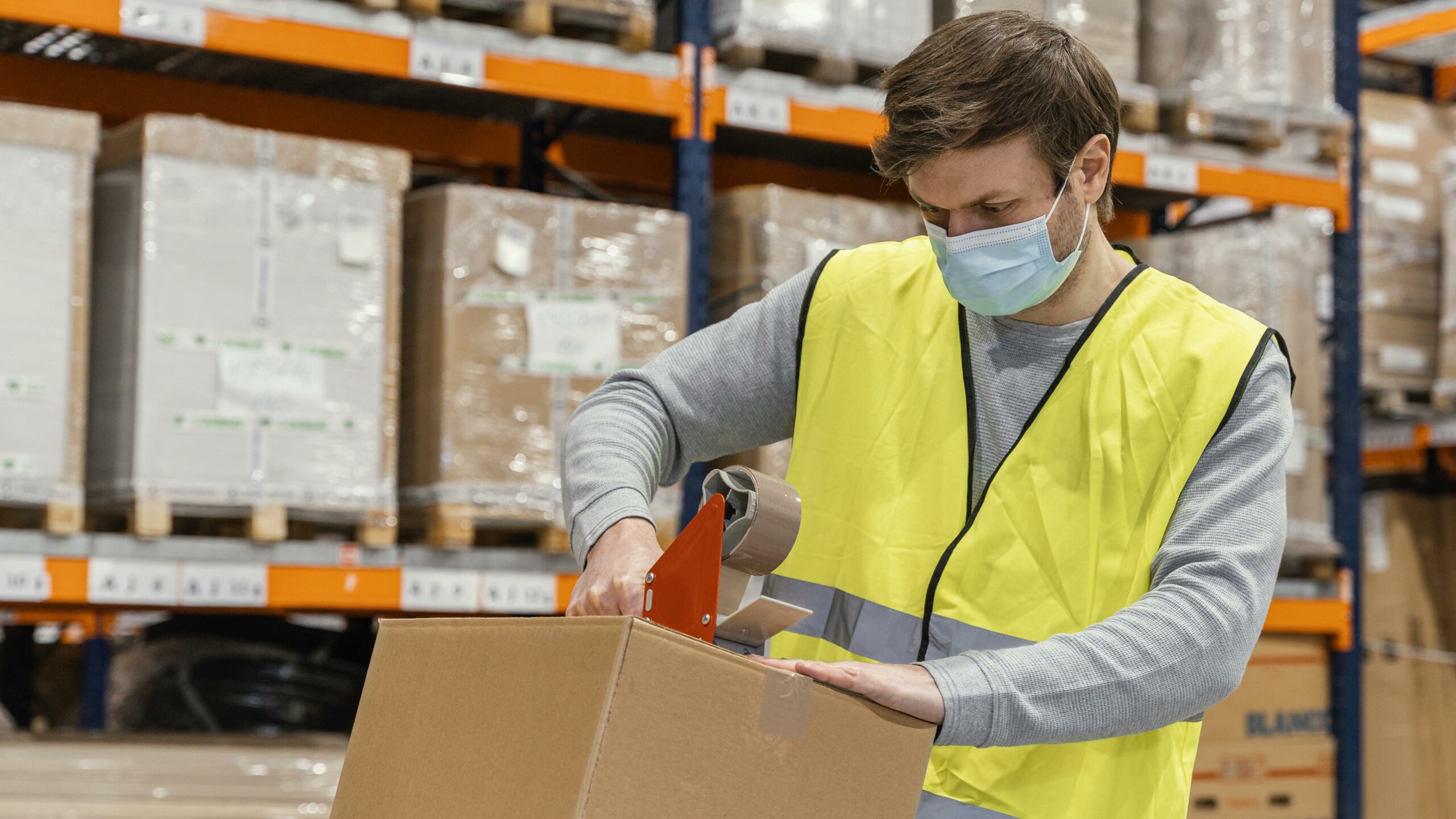
Care in food production must involve the entire process of handling, preparation, fractionation, storage, distribution, transportation, display for sale and delivery of food prepared for consumption.
To avoid contamination, manufacturers must adopt good manufacturing practices. They must also follow standard operational hygiene and hazard analysis procedures. Furthermore, they must implement critical integrated pest control points. The analysis of hazards and critical control points must consider the physical, chemical and biological risks to which foods are subject.
Understand the importance of using plastic pallets for Good Manufacturing Practices in the Food Industry
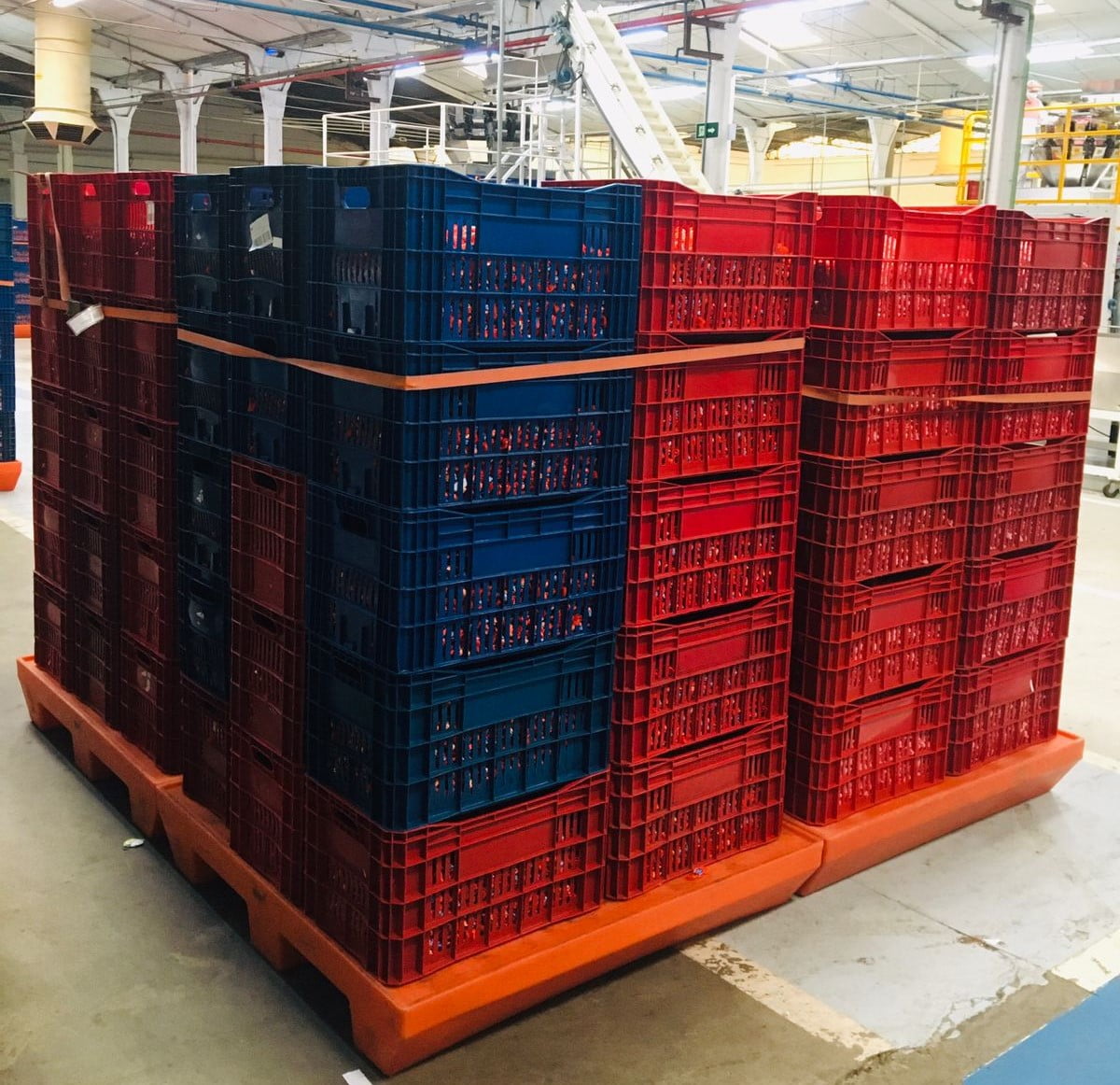
Another very important aspect to be observed is the way food is transported and stored. Therefore, when choosing pallets for transporting and storing food, you must pay attention to the characteristics of the material used, in order to ensure hygiene and cleanliness.
Plastic polymer pallets are the most suitable for food production. They are more hygienic, easy to wash and sanitize, and also meet health standards. Anvisa itself recommends the use of “shelves, pallets and pallets made of resistant, waterproof and smooth material, in order to facilitate cleaning, for storing food, packaging and containers”. This is established in the Collegiate Board Resolution – RDC nº 72 of 12/29/2009.
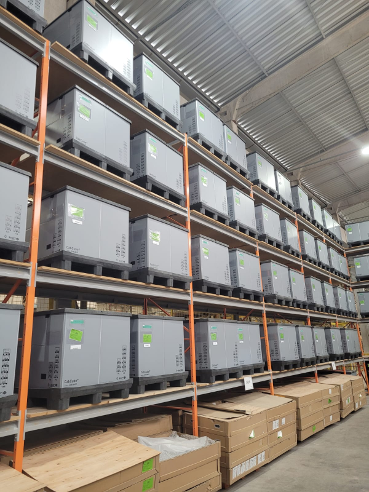
The Agency recommends that all food be stored in clean and organized places, protecting it against contamination, identifying it and keeping it on pallets, pallets or shelves. Manufacturers must make these pallets and pallets with resistant material that is easy to clean. Furthermore, it is necessary to keep these items away from the floor, respecting the minimum spacing necessary to ensure adequate ventilation, cleaning and disinfection of the area.
Plastic pallets are much more suitable for food production than wooden pallets, which are less hygienic, difficult to wash, store fungi, bacteria and other contaminants and encourage pest infestation.
Furthermore, plastic pallets offer a much longer useful life than wooden pallets, which require constant replacement. Therefore, it enables much more hygiene and a cost up to 75% lower than wooden pallets.
Be safer with non-toxic materials
In addition to being hygienic and easy to clean, Tecnotri plastic pallets are produced from 100% virgin and non-toxic material that allows direct contact with food, reducing the risk of contamination. Furthermore, they are lightweight products, 100% recyclable, resistant to chemical products and have a useful life of over 10 years.
Furthermore, as they are monoblocks, plastic pallets do not have nails or splinters, thus helping to avoid possible damage to goods or accidents at work. They help to optimize logistical operations, enabling greater rationalization and standardization of the storage location, better use of physical space and acceleration of processes.
[DOWNLOAD THE DEFINITIVE GUIDE TO PALLETS]
ISO 22,000 standards reinforce GMP requirements
Companies seeking to comply with the rules of Good Manufacturing Practices must pay attention to international storage and production standards. These standards are provided for by ISO 22,000 certification. It is a food safety management system based on the analysis of the stages of food production. It identifies potential health hazards to consumers and determines preventive measures to control these risks.
According to these standards, it is required to store raw materials and food in suitable and organized places. These items must be placed on well-maintained and clean plastic pallets. ISO 22,000 prohibits the use of wooden pallets in food production areas. This is due to the risk of contamination of the raw material by foreign and dangerous materials.
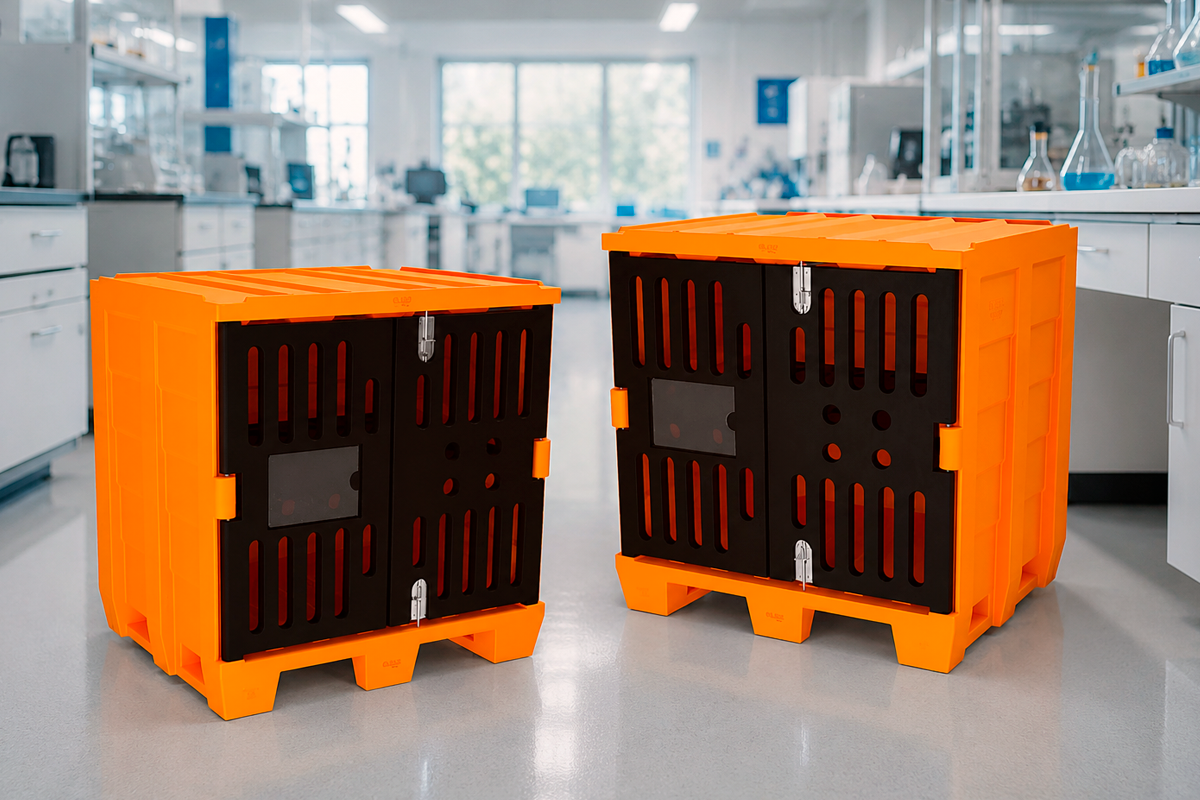
Tecnotri produces a complete line of rotomolded plastic products in compliance with Good Manufacturing Practices (GMP) specifications, ANVISA and ISO 22,000 certification. These products assist in the logistics and storage of materials, ensuring the hygiene and quality of the products.
Did you like this article? Do you want to know more about Tecnotri products that contribute to the adoption of Good Manufacturing Practices? Discover the plastic pallets, containers and cargo safes, ideal for handling food.