In September 2019, the federal government published the resolution RDC 304, which provides for Good Practices in the Distribution, Storage and Transport of Medicines.
This set of actions ensures the quality of medicines, through adequate control of all processes involved. Furthermore, it provides tools to protect the sector against counterfeit, disapproved, illegally imported, stolen, damaged and adulterated medicines.
But do you already know how to adapt to RDC 304? Do you know its main guidelines? Continue reading our content to find all the information you need to comply with regulations and ensure the quality and safety of medicines.
Learn about the main recommendations brought by RDC 304
The DRC text covers several sectors, such as quality assurance and management, metrology, inventory processes, logistics, transportation and reverse logistics. Next, we will cover some of its main topics.
- All parties involved in the production, storage, distribution and transportation of medicines must be responsible for the quality and safety of these products.
- Distributing companies must only supply medicines to companies licensed and authorized by the competent health authority. These institutions must be licensed by the Health Authority, the National Nuclear Energy Commission (CNEN) and other responsible bodies.
- The acquisition of medicines from distributing companies that do not hold the registration is permitted as long as the traceability of the cargo is guaranteed through the National Medicines Control System (SNCM).
- The company must have an appropriate number of employees with appropriate qualifications, in order to guarantee the quality of medicines. Requirements related to the health, hygiene and clothing of personnel must also be established, depending on the activities carried out.
- The Quality Management System must cover all aspects that influence the quality of medicines or services provided. The processes that impact their quality must be mapped.
- The management and control of quality documents must provide guidelines for preparing and storing documents in physical or electronic format.
- A customer support service must also be established and disclosed to customers for receiving complaints, which must be registered and investigated.
- The collection of medicines must comply with the provisions of this Resolution, without prejudice to the provisions given in the Resolution of the Collegiate Board – RDC nº 55/ 2005. It is up to the holder of the registration to coordinate the collection.
- Distribution maps must be readily retrievable for a time consistent with the validity of the medicines distributed.

Learn how to return medicines
All customers and health authorities must be notified immediately upon discovering the need to recall a certain batch. The person responsible for collection must keep records of notifications and proof of receipt.
In addition, before a returned medicine is returned to salable stock, the following factors must be recorded and weighed by the quality management system:
I – the reason for the return;
II – the storage and transportation conditions employed by the buyer;
III – the integrity of the original secondary packaging; and
IV – the expiration date.
See how proper storage should be done
According to RDC 304, the activity of storing medicines requires, at a minimum:
I – medication reception and dispatch area separated from each other;
II – general medicine storage area;
III – area or place for storing returned medicines;
IV – area or place of storage of disapproved, expired, recalled, suspected counterfeit or counterfeit medicines;
V – area or place of storage of medicines subject to the special control regime, when applicable;
VI – area or place for storing quarantined medicines, when applicable;
VII – storage area for medicines with radionuclides, when applicable;
VIII – cleaning materials storage area;
IX – administration area;
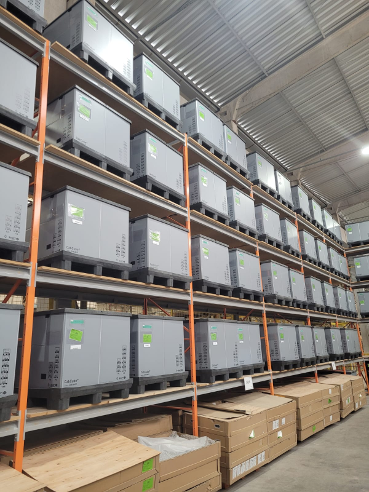
Storage areas must also be equipped with equipment and instruments necessary to control and monitor the required temperature and humidity. Therefore, the installations must have smooth surfaces, without cracks or dust release, to facilitate cleaning and avoid contaminants. Pallets must be made of material that allows cleaning and does not constitute a source of contamination, such as treated wood, aluminum or plastic materials.
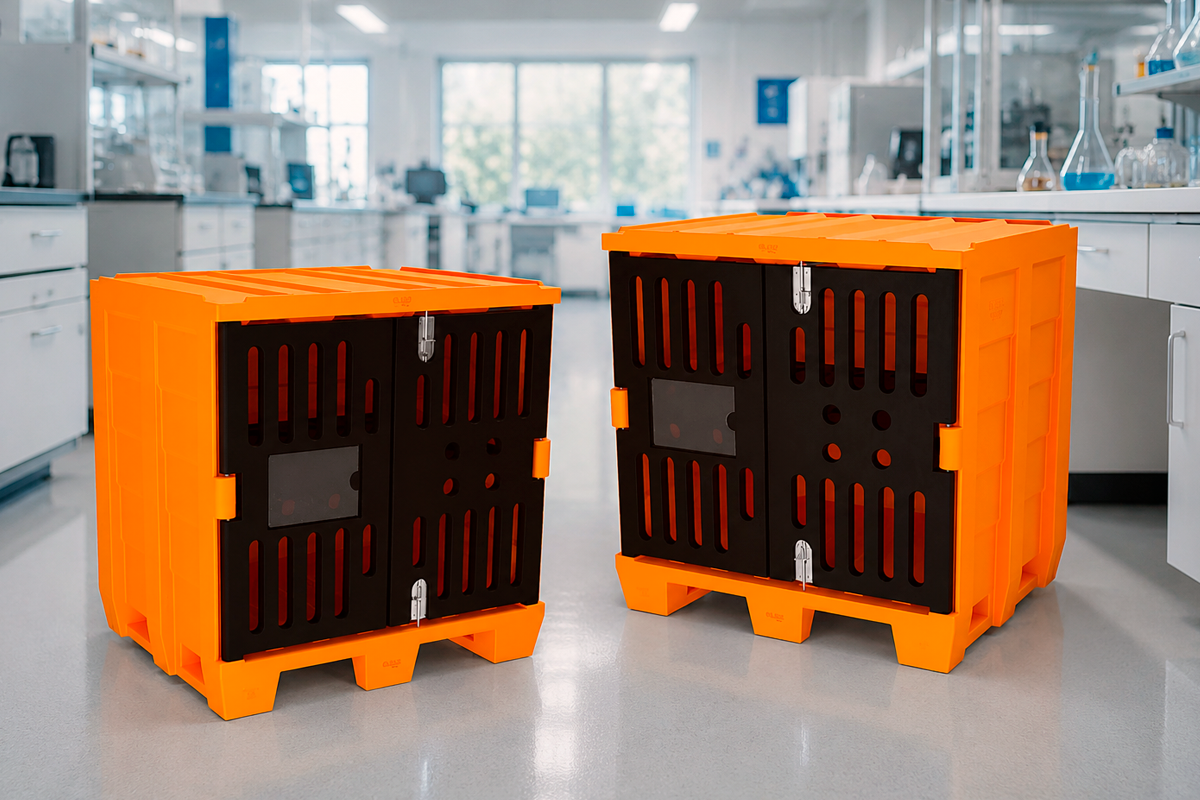
As it is made from sanitizeable and non-toxic material, the rotomolded plastic pallet helps to avoid contamination and favors securityin the pharmaceutical industry. It is also easy to clean and sanitize, as it has rounded corners, no edges, easy to sanitize and immune to external agents. Furthermore, it does not absorb moisture or suffer from oxidation attack. The product also receives antimicrobial protection, which prevents the proliferation of fungi and bacteria.

Find out the rules for transporting medicines
Companies that transport medicines must monitor transport conditions. Primarily, they must observe the specifications of temperature, packaging, storage and humidity of the medicine using calibrated instruments.
Recalled, returned or suspected counterfeit medicines must be identified clearly and securely. Sometimes, mechanisms must be used that allow segregation during transport.
Non-compliance with the provisions of this Resolution constitutes a health infraction, under the terms of Law No. 6,437/1977, without prejudice to applicable civil, administrative and criminal responsibilities.
As we have seen, RDC 304 demonstrates the regulatory body’s concern with the quality of the medicine production chain. Therefore, to comply with standards, it is essential that these products are stored and transported under conditions that guarantee the maintenance of their quality, safety and effectiveness.
The use of rotomolded plastic pallet (Super Roto®) favors compliance with standards, as it has expressive ownership identification. This way, they allow pallet management with a freight forwarder, exporting company or inter-company material flow. Furthermore, it also enables traceability using, for example, Radio Frequency Identification or RFID.