Are you aware of your industry’s distribution logistics? It is a complicated process and requires dedication to structure it. Therefore, in this article, we share some challenges you may face in your day-to-day business. And, in addition, we will tell you how you can combine technology with distribution logistics. Come with us!
What is logistics?
First, we need to define the concept of logistics. Logistics is a management area that relates to the entire supply chain. It involves everything from storage planning, circulation to product distribution. Coordinating the flow of information to maintain the organization and meet demands efficiently is the primary responsibility of logistics.
With the organized flow, the company has greater efficiency in the use of its resources. In this way, it is able to satisfactorily meet the demands of its customers with reduced costs and high productivity.
But logistics should not be treated as an isolated function within the company. In fact, recognizing the role of logistics in the organization can be a challenge. Its integration with a broader management vision is fundamental to the success of the operation.

Advantages of an efficient logistics operation
Every company strives to gain an edge over the competition and grow. Therefore, expanding strategically in the markets in which it operates and generating revenue is one of the crucial elements in achieving these objectives is distribution logistics.
In an increasingly competitive market, every company strategically depends on logistical planning, both internal and external, to maintain its competitiveness and growth. When you start to operationalize with import and export aspects, logistics becomes even more critical to the success of your business.
The complexity of logistics processes demands practical, intelligent management based on integrated logistics. This is a concept that refers to a type of joint operation, where all stages of the logistics chain are managed by a single system.
In this way, managers, managers and other professionals are able to act efficiently, in addition to having a broad and comprehensive view from one end of the chain to the other. The focus on optimizing the logistics operation guarantees the quality of the process and products at all stages, from origin to delivery to the final consumer.
Technology as an ally to distribution logistics
The fact that technology in this sector is already a strategic resource is nothing new. Distribution and logistics are also benefiting from technological developments. When it comes to logistics management, the days of spreadsheets and manual processes are behind us. The market demands constant automation, integration and information flow in real time.
Adapting to this new scenario can become expensive and time-consuming. However, it is a must. Solutions such as ERP (Enterprise Resource Planning) software emerge as alternatives to resolve crucial issues in the logistics chain. This is because they provide integrated information and reports that facilitate decision-making.
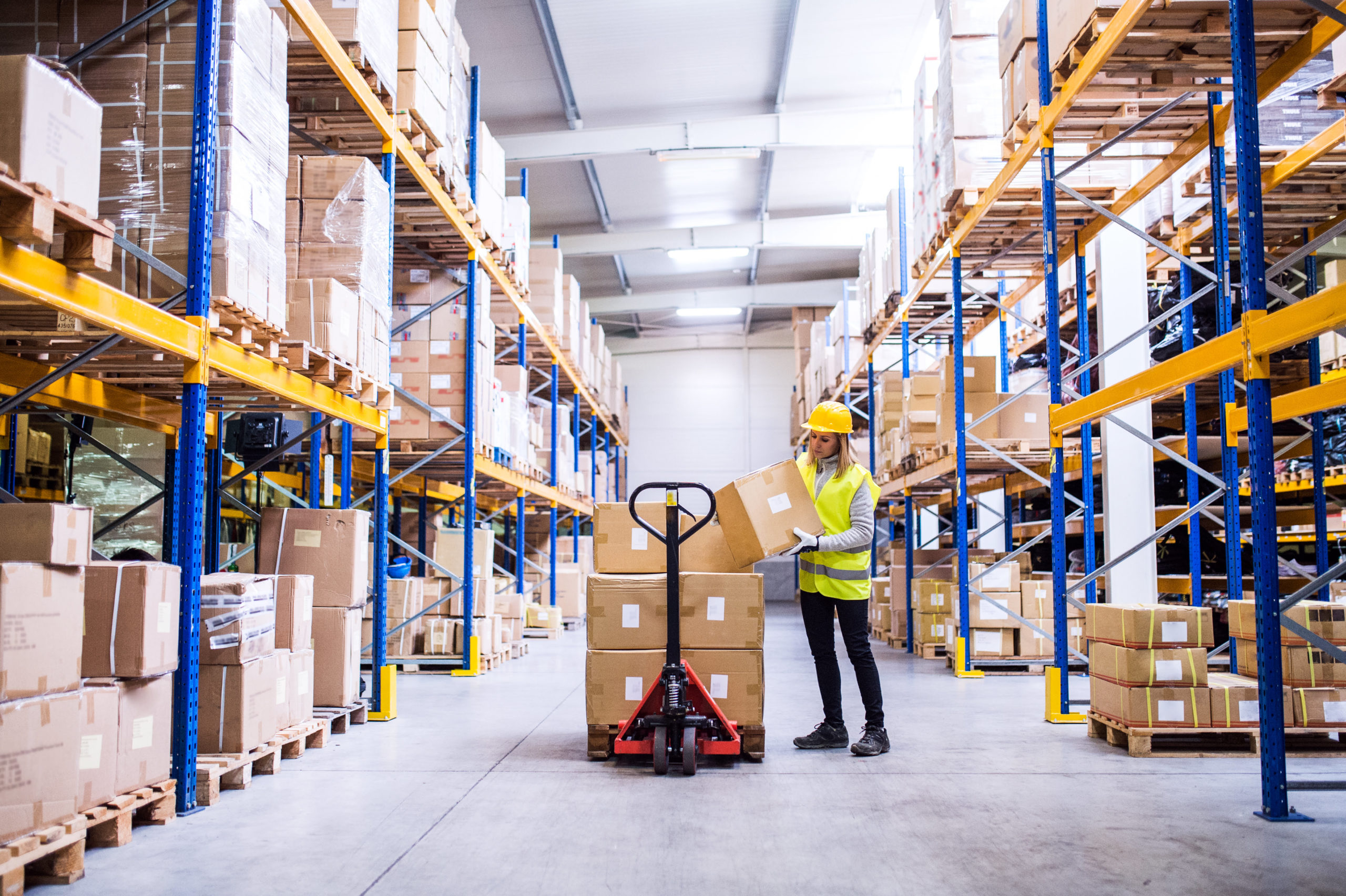
Top 5 storage challenges that can be solved through automation
Now learn about the main storage challenges:
1. Inventory accuracy: When manufacturers do not have an integrated view of their inventories, they run the risk of running out of stock at the wrong time or high inventory, reducing cash flow and increasing expenses for storing surplus goods.
2. Location of products: the lack of organization leads to more time to locate and move items to be shipped. This delays the loading process, generates increased costs and numerous problems with deadlines for customers.
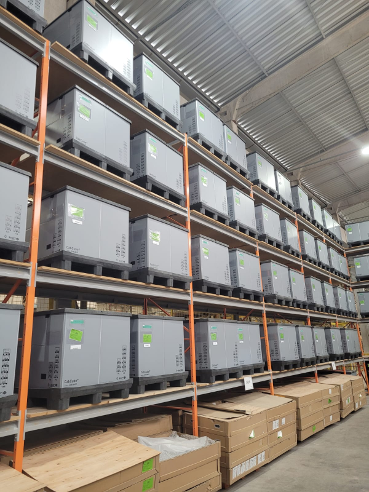
3. Use of warehouse space: optimizing space avoids unnecessary work. A smart strategy is to maintain fast-moving, high-selling inventory at the front of the facility. This way, loaders or forklifts do not have to make long journeys within the warehouse.
4. Redundant processes: barcode technology can reduce or eliminate the problem of tickets or other documentation having to pass through multiple hands throughout the selection, checking, loading, etc. process.
5. Picking optimization: in stocks that still rely on manual processes, locating and collecting items for separation for delivery takes too much time. Therefore, with this process controlled by computerized systems, there is a significant saving of time and reduced wear and tear on equipment and workforce.
What to conclude about distribution logistics?
Thus, we come to the conclusion of our article. As you can see, some of the most common problems in supply chain management can be solved through the use of technology. It is up to professionals in the area to be aware of the new options that present themselves, in addition to seeking to implement changes that can bring significant benefits to their organization’s production chain.
Because of this problem, we are studying the RFID solution. It involves automatic identification through radio signals, retrieving and storing data remotely. Currently, here at Tecnotri, we have seen RFID in a very relevant way, because it is already a reality in the logistics chain. Want to know more about topics like this? So Click here and stay tuned!