To reduce transportation costs and optimize results, the logistics sector must implement strategies capable of overcoming the difficulties faced in product distribution, storage and delivery operations.
Transport logistics is a very important element in management, capable of making companies more competitive and helping them to stand out in the market. According to Institute of Logistics and Supply Chain (ILOS), in relation to companies’ net revenue, transportation corresponded to 6.8% of the cost in 2015. Inventory appears with the second most costly operation, with 4.5% that year. Finally, storage and administrative expenses account for 13% of net revenue in 2015 – which would result in an expense of 24.3% of net revenue on logistics.
Understand how transport logistics works
Transport logistics can be defined as the search for defining the ideal strategy to transport the greatest quantity of goods, in the fastest way and at the lowest possible cost. It seeks to meet the needs of consumer markets in terms of delivering products to the right place and at the right time.
The producer must be careful to avoid waste when transporting and storing products. Problems such as insufficient storage network and inadequate transport used can lead to significant losses.
Learn how to calculate logistics costs
Before you start calculating to reduce costs and optimize processes, you need to know what is included in your logistics costs. With this in mind, you will be able to eliminate expenses and rethink the distribution of investments.
Logistics costs consist of the sum of all a company’s expenses with its logistics operations, such as storage, stock, inventory, transportation, order processing, transit time, tax burden, among other factors. Planning and prior cost calculation help determine spending patterns related to the production or acquisition of items.
Managers must seek to understand all the details of operations, as well as identify bottlenecks and problems, so that they can make decisions and define new action plans quickly.
Rationalize transport routines
One strategy to reduce transportation costs is to program smarter routines for product shipments. Rationalization is essential to make logistics more efficient and avoids errors such as delays in delivery and products from the same purchase being sent separately.
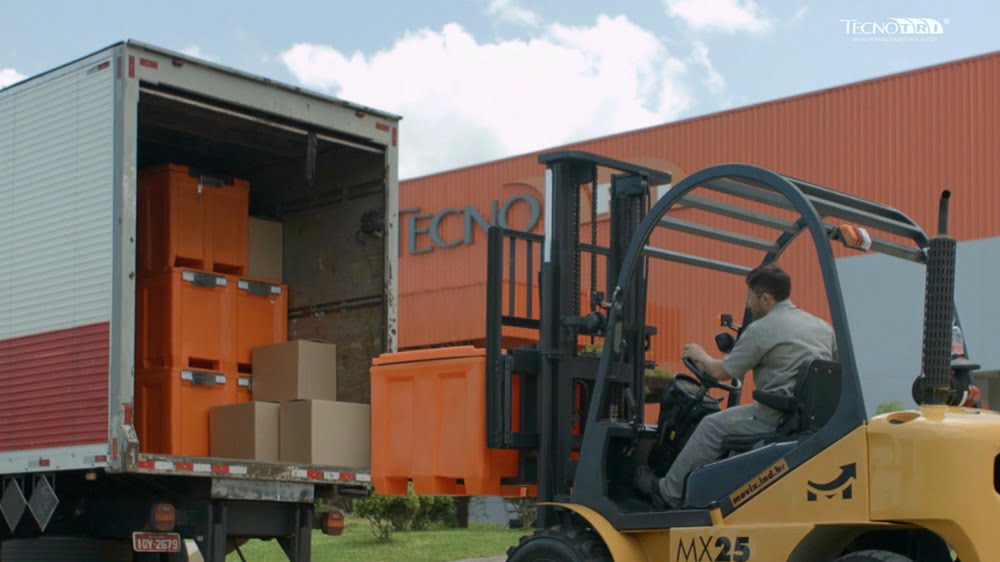
Use a good freight traffic management system. It helps you find more practical and economical routes and avoid losses.
Plotting efficient routes also helps to reduce expenses, which can be done through automated systems. Furthermore, there are strategies that help reduce fuel costs, such as correctly calibrating tire pressure, avoiding sudden stops and negotiating prices at gas stations.
To avoid queues at ports and reduce waiting time, producers must use loading and unloading scheduling. This way, it is possible to organize schedules and have greater control over when cargo leaves and enters. Some ports already have automated scheduling systems, which makes work more practical and efficient.
Be aware of storage costs
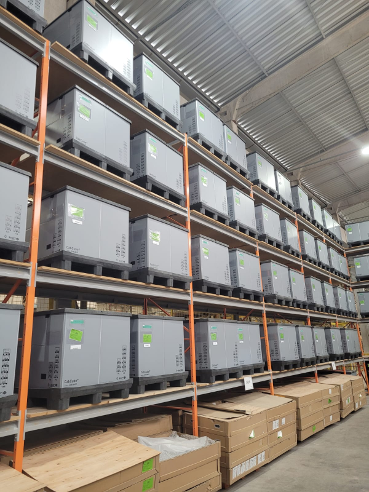
The cost of storage is related to several factors, such as warehouse rent, cost of the pallet or shelf structure, movement, internal controls, management system, maintenance, infrastructure such as water, electricity and security, people, training and taxes.
A company that produces a lot but sells little, keeping overcrowded stocks, will have high storage costs.
To reduce these costs, strategies such as cross-docking can be implemented, in which products are stored for as little time as possible and then transported to points of sale close to customers. Another solution is Just In Time, which defines the ideal time to request a material, whether for production or for sale.
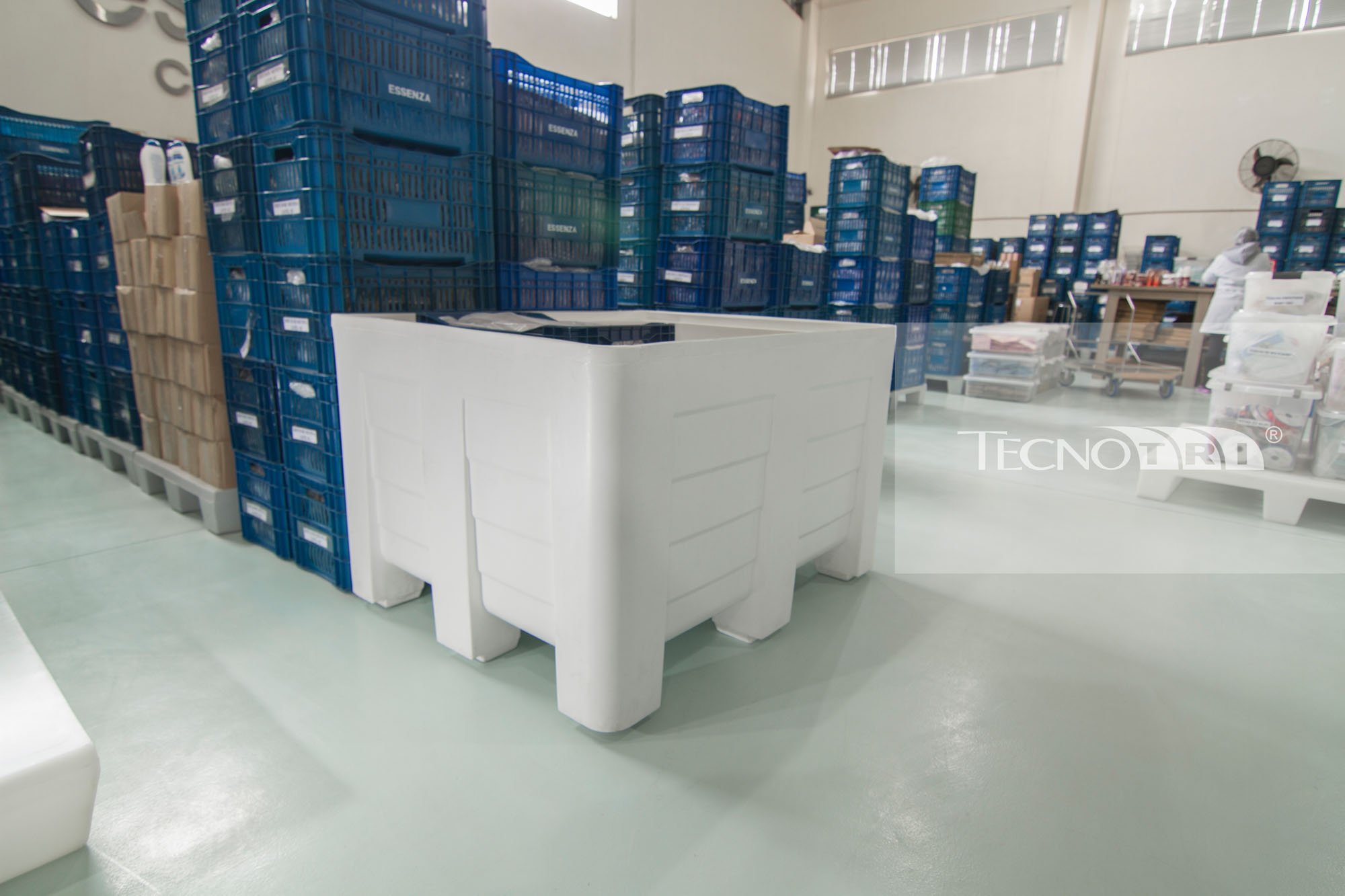
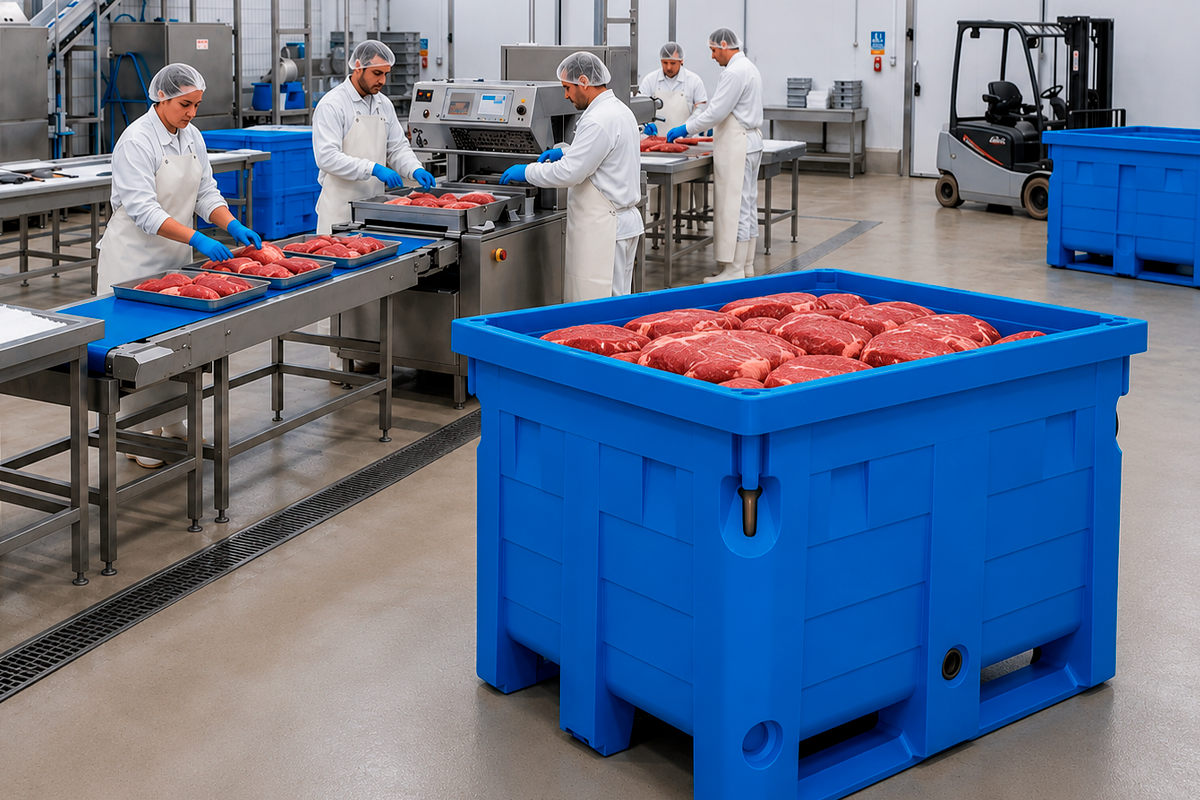
The use of Rotomolded Container Bins is also very suitable, as it allows space optimization in cross-docking. Produced with rotomolded plastic, Containers are light, resistant and easy to clean. Made for use on the ground, they can be easily moved with a pallet or forklift. Furthermore, these products are non-toxic, unalterable to chemical agents and resistant to temperatures from -35º to 60º C.
Have operational flexibility
Maintaining your own fleet requires a high initial cost, in addition to generating high maintenance costs. Some sectors have typically seasonal demand, and therefore it is not necessary to spend the same amount on transport throughout the year.
The solution may be to outsource transportation and storage services, so that the number of shipments and the volume of stored cargo can be more easily expanded or reduced, depending on demand.
If your company has a large flow of deliveries in a certain region, you should hire carriers that operate exclusively locally and are capable of operating more efficiently and at lower costs.
Depending on the situation, you can use alternative means for deliveries. For short distances, it may be a good idea to use motorcycle couriers or even cyclists.
Furthermore, your company may only maintain a small fleet of vehicles to make nearby deliveries in emergency situations.
See the importance of management software
Using management software makes it possible to plan, execute, monitor and control transport activities. The software is also capable of dispatching and issuing documents, controlling deliveries and collections of products, enabling fleet and product traceability, auditing freight, supporting negotiation, planning routes and modes, among other resources.
The use of integrated management software (ERP) allows adding value to the supply chain and generating savings opportunities for the operation. Furthermore, the use of online platforms helps to reduce costs, as it reduces the need to purchase equipment and install devices.
As we have seen, taking care of logistics can make the transportation and storage of products much more efficient, helping to reduce costs.
Find out more:
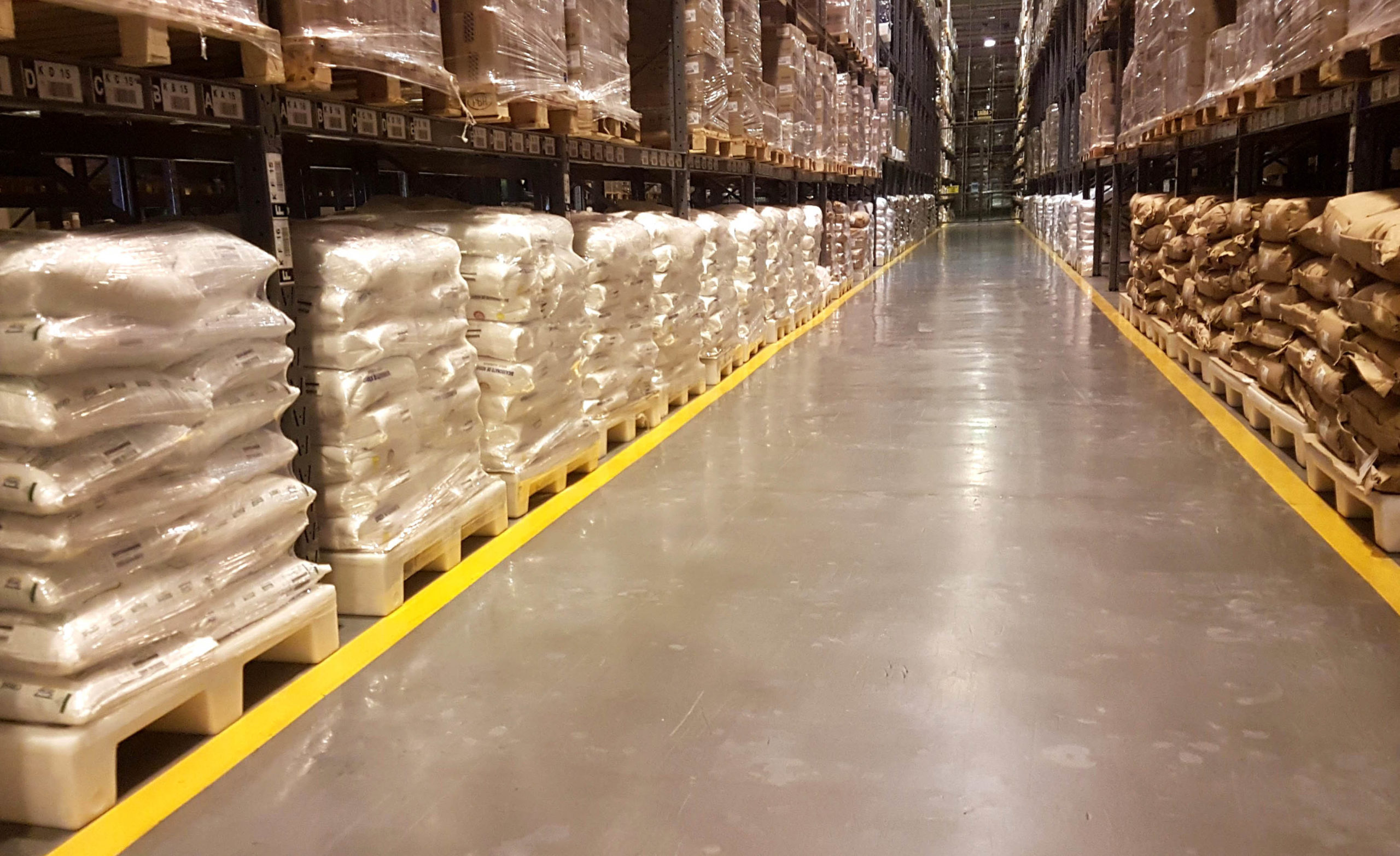 The importance of plastic pallets for reverse logistics
The Pallet Super Roto favors reverse logistics, as it has expressive ownership identifications, which provide information for managing the pallet with a freight agent, exporting company or inter-company material flow… [continue reading]