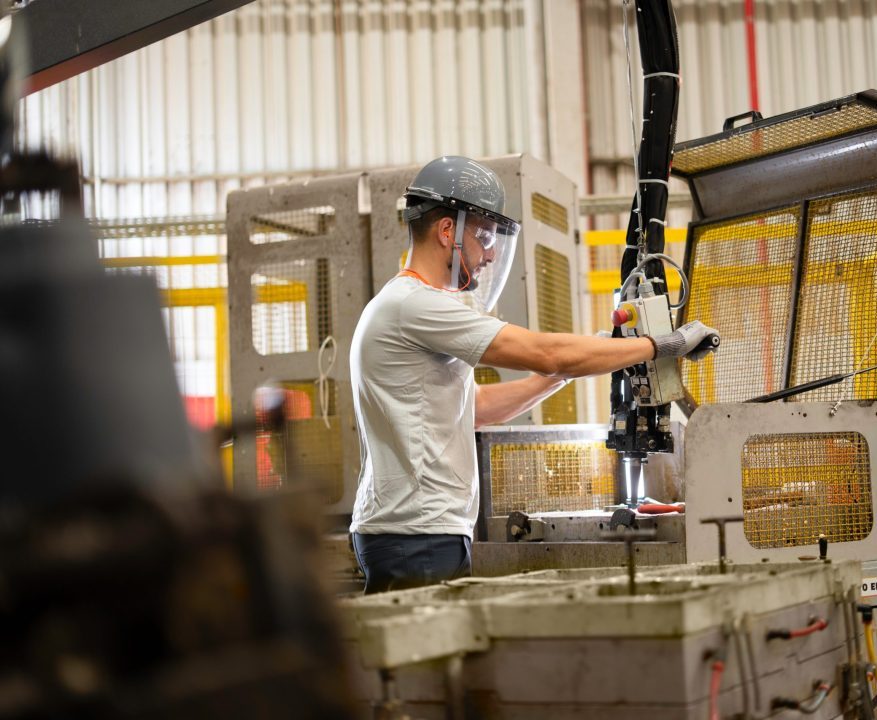
Honda opened, on March 27th, its second car factory in Brazil, in Itirapina (SP). The new unit has a nominal production capacity of up to 120 thousand cars per year. By 2021, all models made by the brand in Brazil will leave the new assembly lines.
The company is also expanding the power generation capacity of its wind farm. All cars manufactured in Itirapina will use clean energy. The factory will receive energy from Honda’s wind farm in Xangri-Lá (RS), which will have its generation capacity increased from 27.7 to 30 megawatts with the installation of another tower, increasing the number of wind turbines from nine to ten.
Learn about Honda’s clean energy initiatives
Since November 2014, Honda’s wind farm has been providing clean, renewable energy to the Sumaré complex, in the interior of São Paulo, where the brand’s administrative headquarters in South America, Honda’s research and development center in the region, as well as the car factory are located.
In 2011, Honda Motor established new CO2 emissions targets for all its units around the world, in line with the company’s environmental commitment policy. With the measure, the automaker intends to reduce CO2 emissions from its motorcycles, automobiles and power products by 30% by the end of 2020, based on levels from the year 2000.
The company seeks to develop innovative and environmentally friendly technologies for its production processes and products. Around the world, Honda factories practice the Green Factory program, which operates on several fronts, such as treating effluents, reducing waste generation in the production process and improving efficiency in energy use.
Containment pallets contribute to environmental preservation
containment pallets are used in industries in the engine and parts segment to store oils, lubricants and greases. The use of containment pallets is very important to prevent product leaks and contamination and ensure the quality and safety of the entire production process.
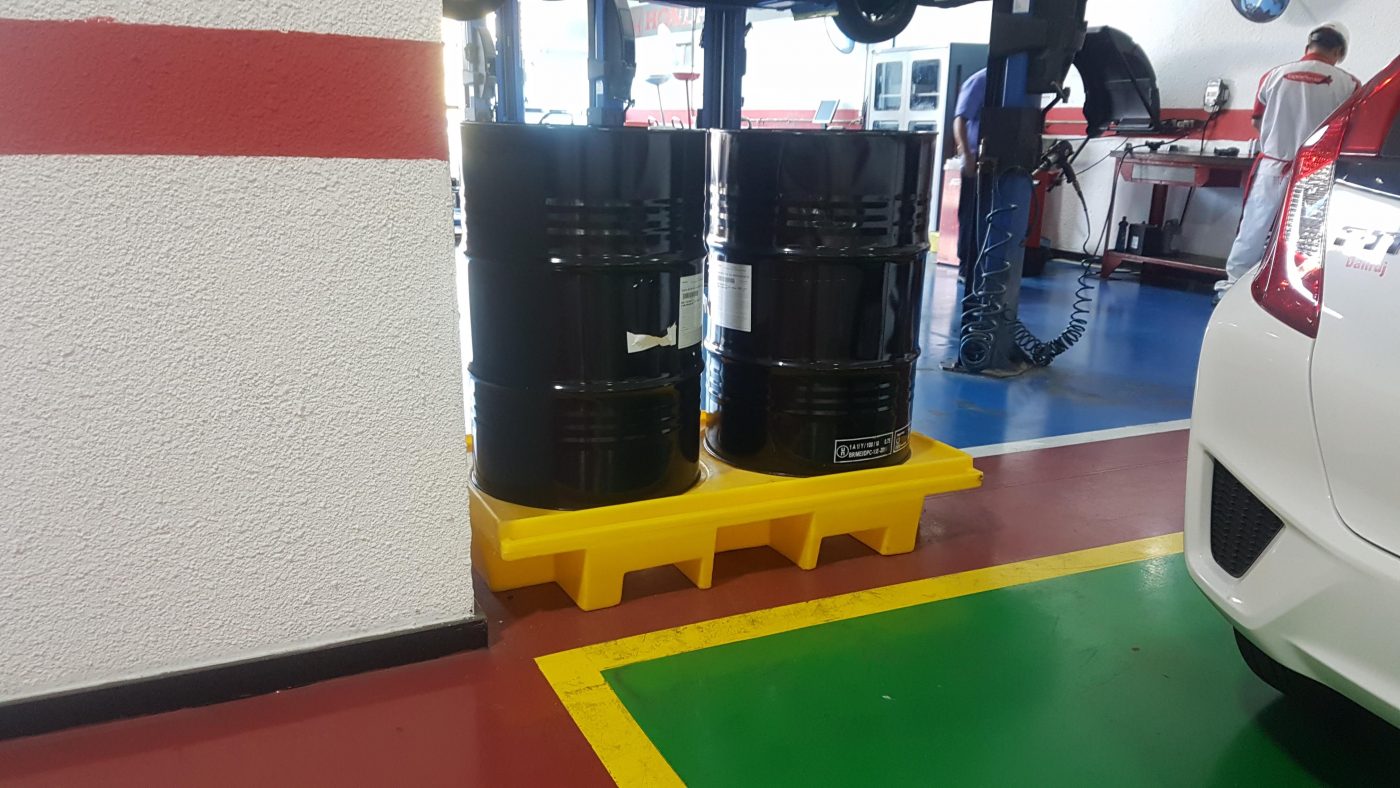
These products are also very useful in dealerships and mechanical workshops, as they guarantee a safe environment that complies with safety regulations and standards. Around 50 Honda dealerships are adapting to the new standards for containing leaks in vehicle manufacturers.
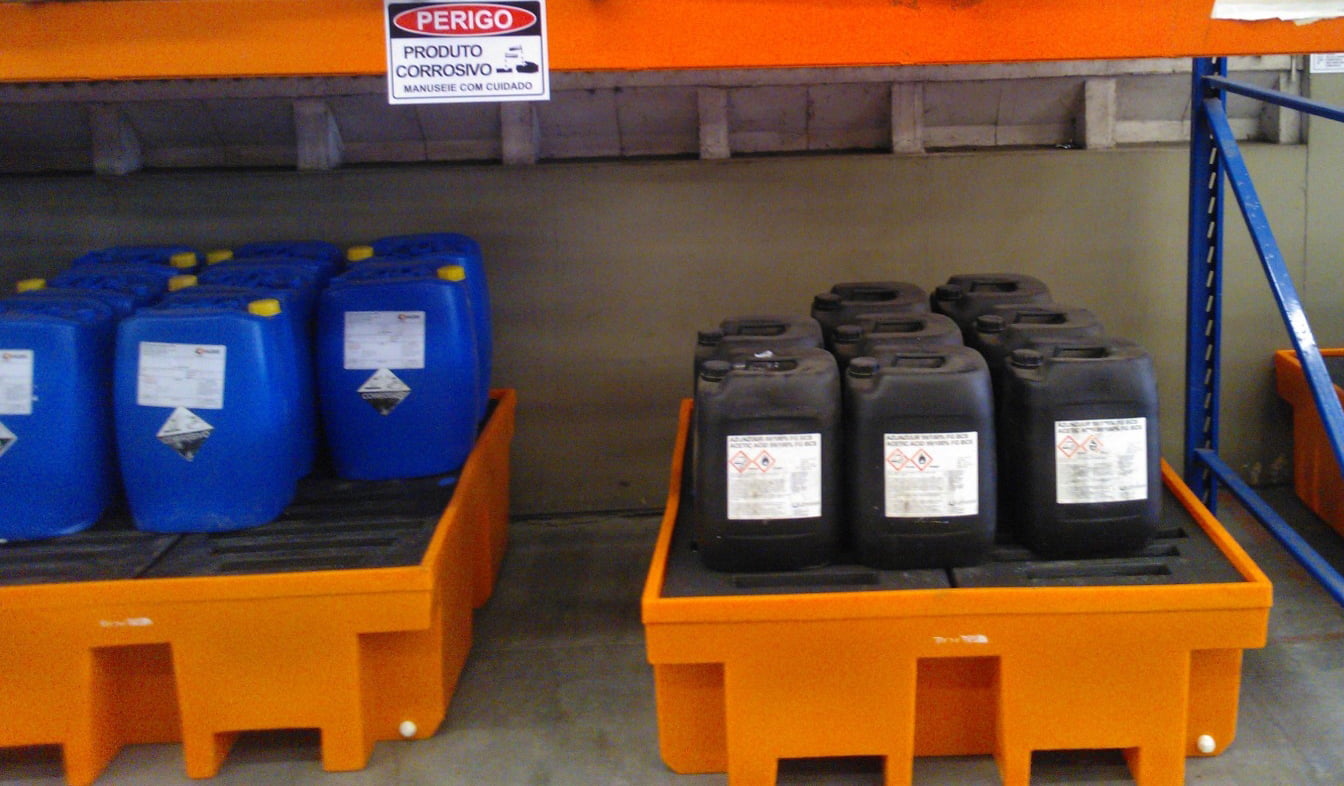
The containment pallet is used for storage and to prevent the spillage of dangerous and flammable liquids into the environment, thus avoiding risks of contamination of the work environment and the people who handle these products. The product offers greater safety to industries and meets Anvisa standards, Good Manufacturing Practices (GMP), ISO 14001 and international standards OSHA 40 and CFR 264.
Non-toxic and immune to chemical agents, the containment pallet offers great resistance to corrosion and the effects of time. It prevents spills of chemical and flammable liquids, such as oils, greases and corrosive battery liquids, from contaminating the environment. Furthermore, it allows spilled liquid to be reused, reducing operating costs and avoiding oil waste.
Available in different formats and models, the Tecnotri containment pallet has a reversible grid, allowing it to accommodate drums on one side and packages of different sizes, such as batteries, on the other. Furthermore, it is light, easy to disassemble and clean and can be moved with forklifts or pallet jacks.
Understand how the containment pallet prevents contamination
One of the main problems encountered in mechanical workshops is the way liquids are stored in drums, gallons and other containers. Packaging in wooden pallets with holes at the bottom and without flow protection against leaks proves to be inefficient and dangerous to the environment and people.
Therefore, it is recommended to use plastic containment pallets, which were developed to retain contaminating liquids, such as those from used batteries and oil filters, ensuring the cleanliness of the site and preserving the environment. The containment pallet allows spilled liquid to be reused and offers excellent chemical resistance, low weight and easy mobility.
Washing parts in workshops must be done with appropriate equipment. This space must be separated from the service environment and when washing the parts, the contaminated water falls into separator boxes that separate the water and oil. This cleaning takes place periodically with a drainage truck. The used lubricating oil is stored in drums until the specialized company collects the material.
As we have seen, Honda’s new factory will use innovative and environmentally friendly technologies. The use of containment pallets in the engine, parts, workshop and dealership segments enables greater efficiency in operations and greater safety for people and the environment.
Do you want to know more about the applications of plastic pallets and how they can contribute to bringing more efficiency and safety to your company? Speak to one of our experts:
[button size=”medium” style=”primary” text=”Talk to an expert” link=”https://conteudo.tecnotri.com.br/fale-consultor-pallet-contencao” target=””]