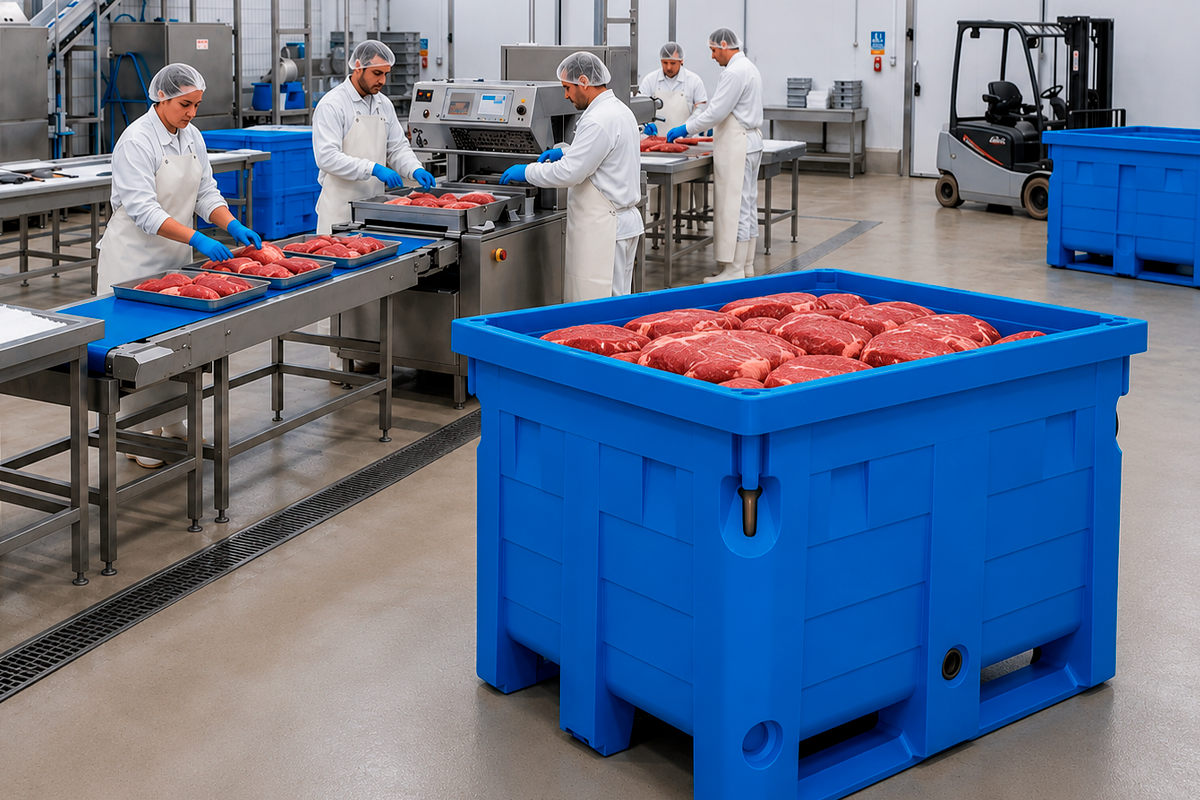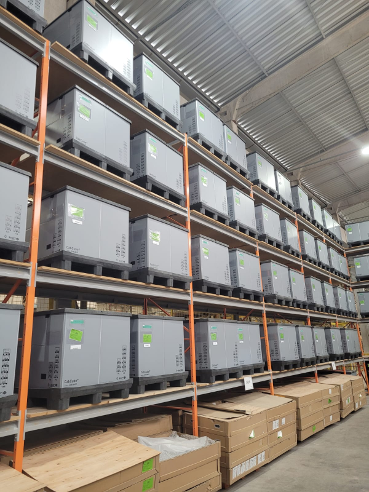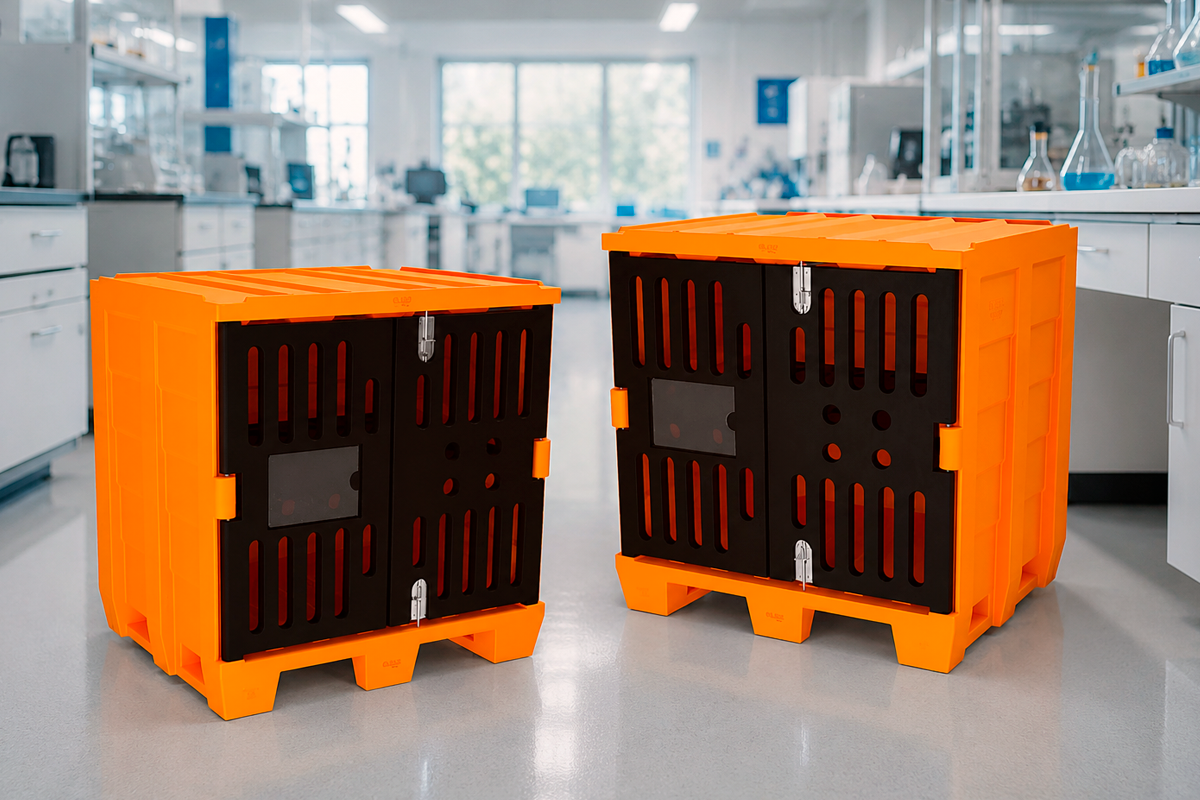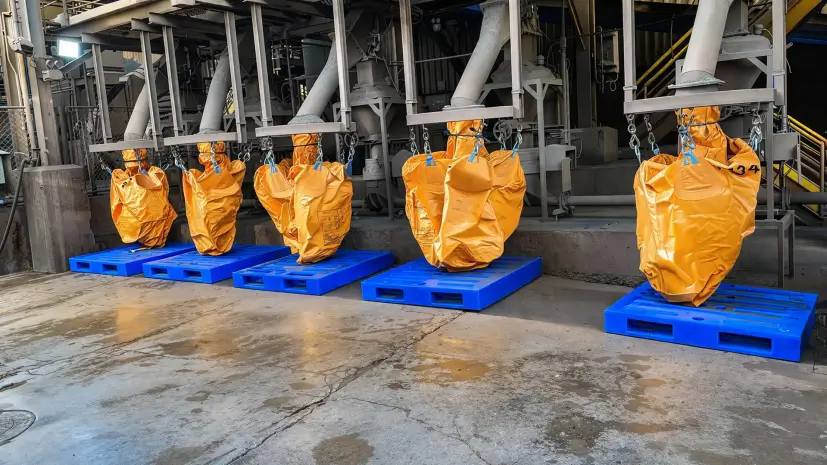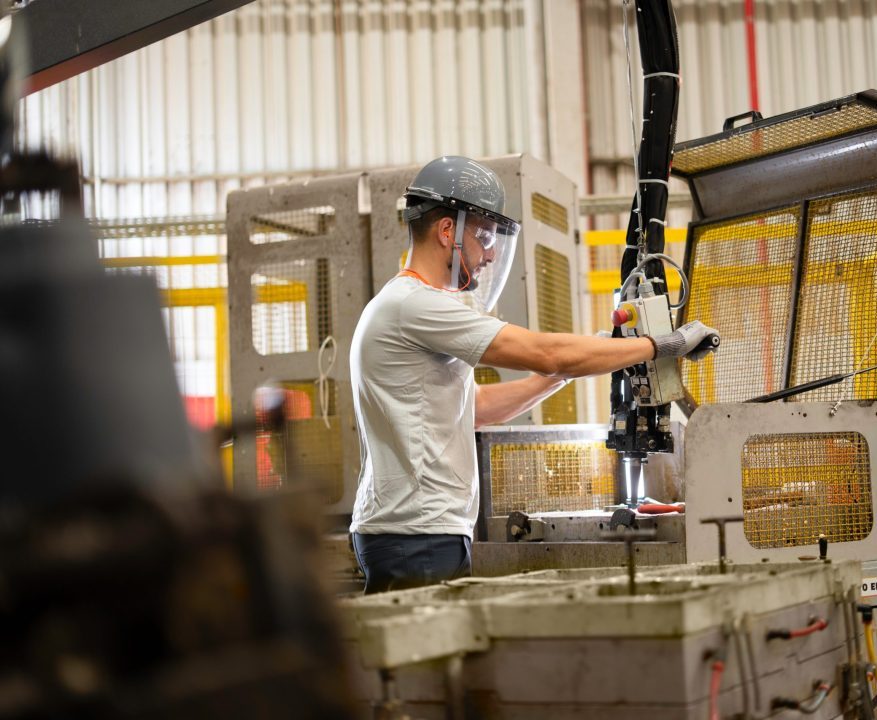
The transportation and storage of products is an essential stage in the logistics of food industry operations. The movement of goods needs to be carried out quickly, in order to optimize operations, make better use of space in the storage area and reduce costs.
See how to plan storage
For efficient storage capable of keeping stocks supplied, warehouse planning must include location, area sizing, physical arrangement, berthing bays, handling equipment, type and computerized storage systems for locating stocks and available labor.
The proper functioning of the warehouse also requires a quick system for transferring cargo, capable of holding the delivery vehicle for the shortest possible time.
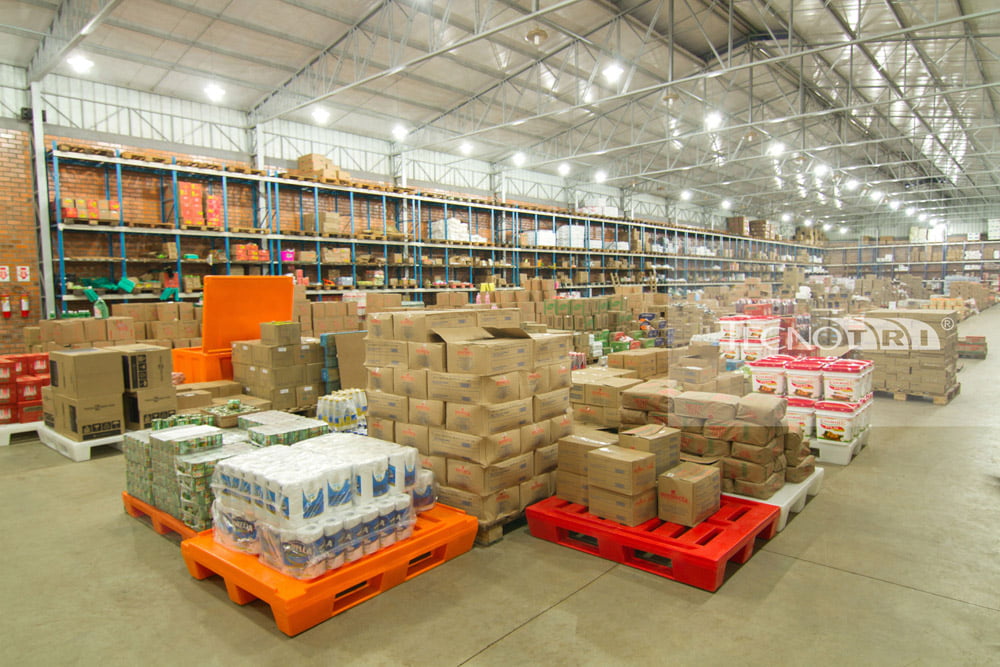
Capable of handling the most diverse types of loads, storage structures are basic elements for palletization and the rational use of space. They are made up of L- and U-shaped profiles, modular and perforated tubes, arranged to form shelves, cradles or other load-bearing devices.
The physical arrangement of the operation’s productive resources is generally determined by the type of product, type of production process and production volume.
Learn how to optimize storage logistics
From suppliers to your work team, you need to ensure that you have quality services throughout the food product logistics chain. It is recommended that operations be controlled and monitored at all times.
When transporting goods, it is necessary to take into account the particularities of each type of food product. Raw materials and non-refrigerated items require different transportation and storage than non-perishable foods, for example. Furthermore, each type of food requires specific packaging, capable of ensuring its protection and conservation.
Ensure that your employees have the necessary training to properly handle the products. Remember that they will be handled numerous times, especially during storage. Make it clear to them that product safety is paramount.
For logistics to be efficient from start to finish, it is essential that the flow of data and information is constant and very well controlled. Therefore, it is worth investing in logistics management software. With it, it is possible to manage all orders, control stocks, monitor transport routes, select the most appropriate equipment and employ precise metrics.

Discover the ECRS process improvement analysis tool
To allow a better analysis of processes, there is a need to carry out a critical and thorough analysis at all stages. ECRS (Eliminate-Combine-Reorganize-Simplify) is a tool that allows you to carry out very detailed analyzes of production processes, focusing on improving the activities involved.
With ECRS analysis, it is possible to combine workstations and simplify existing processes to improve cycle time and reduce the number of operators associated with the operation.
The principles behind this tool are:
- Eliminate – Consists of eliminating all operations that do not add value to the operation, identifying actions that may be delaying the process as they are not essential to the overall operation.
- Combine – Combine operations that are similar.
- Reduce – Reduce the time of operations/tasks.
- Simplify – Simplify tasks.
Observe Good Manufacturing Practices (GMP)
Good Manufacturing Practices (GMP) measures must be adopted by food industries to ensure production quality and food compliance with technical regulations.
GMP can be defined as a group of principles and rules for the correct handling of food, from its raw material to the distribution of the final product, which involves the entire logistics chain.
Manufacturers should seek to adopt standard procedures for operational hygiene and hazard analysis and critical control points and integrated pest control. The analysis of hazards and critical control points must take into account the physical, chemical and biological risks to which food is subject.
Learn how to choose pallets for transport and storage
Currently, pallets are at the center of the supply chain, allowing the transport of goods from the beginning of production until the products are received by the end customer. The pallet is used to unitize loads, make better use of space within stock, ensure adequate storage of products and avoid damage.
In the United States, for example, more than two billion pallets circulate through the production chain at any given time – around 94% of industrial materials and domestic consumer goods are transported by pallets at some point in their supply chain. Between 2014 and 2019, the pallet market is expected to grow by 4.6% annually.
When choosing the pallets used in your logistics operations, you must pay attention to the characteristics of the material used, in order to ensure hygiene and cleanliness throughout the process.
An advantage of the plastic pallet is its load capacity, as it is capable of supporting large weights. Extremely robust, this product allows boxes to be stacked, optimizing warehouse space.
plastic pallets are also easy to sanitize and clean, which prevents the proliferation of microorganisms and bacteria, which can compromise the quality of food. As they are monoblocks, they do not have seams, nails or welds, which helps to avoid accidents and bring greater safety to operations.
Unlike wooden pallets, which store fungi, bacteria and other contaminants, plastic pallets are not porous and do not absorb moisture, which helps to avoid contamination. The hollow platforms allow for the drainage and drainage of liquids that can accumulate during the storage of food products.
Furthermore, the plastic pallet has antimicrobial protection, which prevents the proliferation of fungi and bacteria and allows direct contact with food.
Invest in automating your processes
A current trend is automation in storage, which now involves resources such as order picking systems, pallet stacker cranes, operations shuttles, telescopic conveyors and management software. As it is a customizable product, manufactured from molds, the plastic pallet can be manufactured according to customers’ logistical needs, favoring automation.
Tecnotri produces a complete line of rotomolded plastic products in compliance with ANVISA Good Manufacturing Practices (GMP) specifications and ISO 22,000 certification, helping to assist in the logistics and storage of materials and guarantee the hygiene and quality of products.