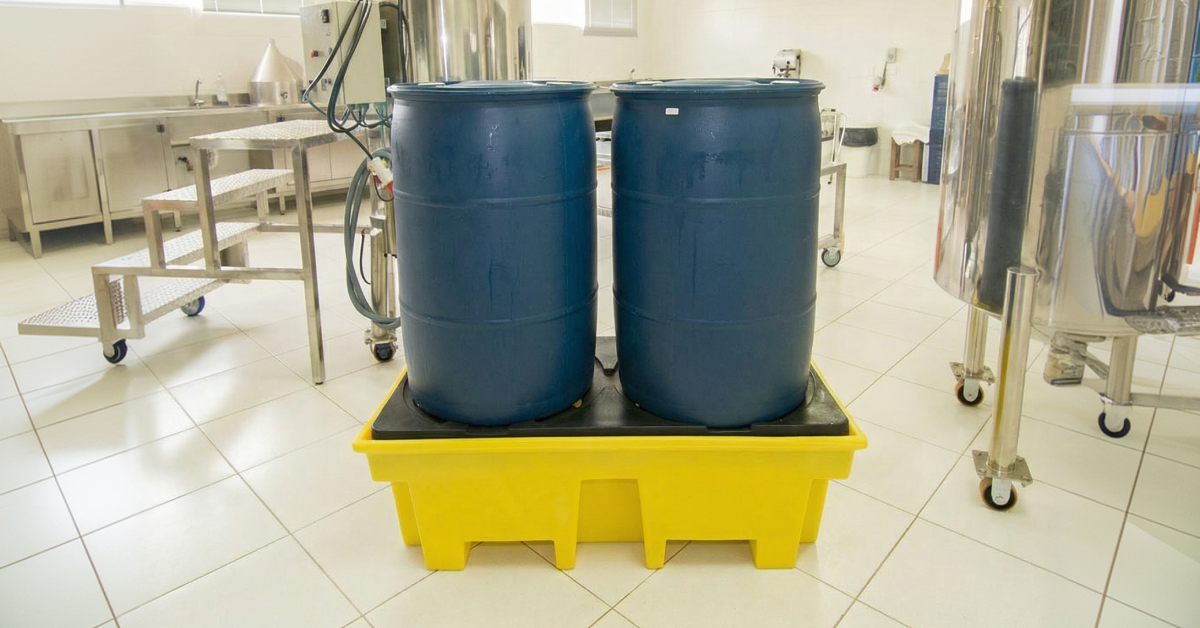


The main feature of the containment pallet, also called container pallet, is to prevent the leakage of dangerous, chemical and flammable liquids from contaminating the environment during storage and transport.
Manufactured using the rotomolding process, containment pallets are lightweight, non-toxic, immune to chemical agents and simple to clean, in addition, they can be easily moved with a pallet or forklift.
Learn about the maincontainment pallet benefits:
Uses
They are used to ensure the containment of leaks. Preventing the chemical and flammable liquids that leak from the drums from contaminating the environment.
Hygiene
Easy to disassemble and clean as they are light and non-toxic. The containment pallet also has a reversible face (grid). It can accommodate drums on one side or packages of different sizes on the other.
Security
They meet OSHA 40 CFR 264 standards, being non-toxic and immune to chemical agents such as acids. Furthermore, they are manufactured in yellow and orange colors, recommended for security areas.
Capabilities
The containment pallet does not require maintenance and can be manufactured in different formats and models for 1, 2 or 4 drums with varying capacities from 100 L to 1000 L, including IBC type reservoirs.
Movement
Easy to transport. The containment pallet can be handled with forklifts or pallet trucks, a great benefit compared to old masonry systems that are restricted to the construction site.
Industries from the most varied sectors such as Metallurgy, Pharmacology, Agricultural Implements, Chemistry, Automotive, in addition to the Hospital, Environmental and Food sectors that transport and handle dangerous liquids, guarantee the safety and efficiency of their logistics with the use of containment pallets.