

Pressure for operational efficiency and environmental responsibility has been shaping strategic decisions across Brazilian industry. Longer logistics cycles, rising input costs, and the need to present solid ESG reports are putting companies in front of an unavoidable choice: adopt sustainable solutions that don’t compromise performance, productivity, or budget.
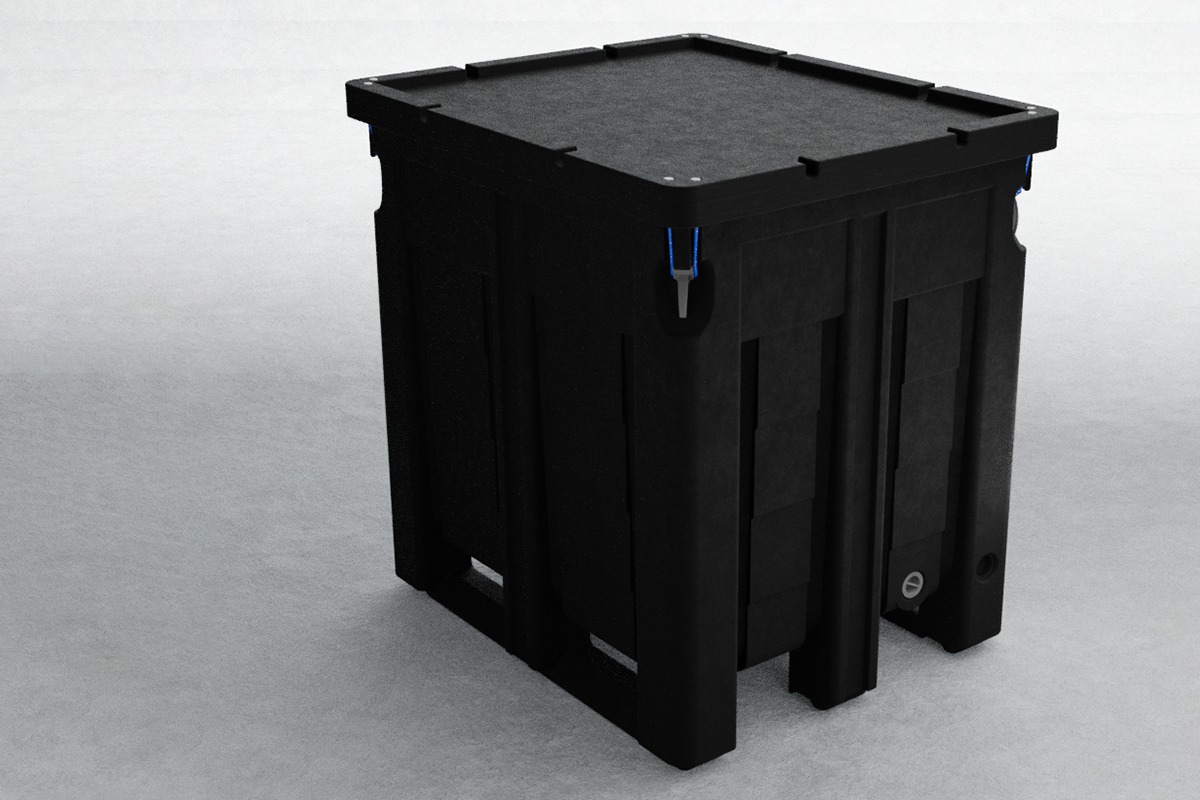
In this scenario, demand is growing for containers that combine durability, savings, and environmental traceability. Tecnotri’s Ecoblack line was created to address exactly this need. Find out below how it generates direct gains for your bottom line and for your sustainability goals.
Understand how sustainable containers cut costs
Many companies still associate industrial packaging made from reused material with fragile products, short lifespans, or lower performance than traditional models. But practice shows the opposite!
The technology applied to reprocessing Tecnotri’s material, for example, allows Ecoblack containers to keep the same strength, stability, and safety properties as conventional products.
This technical equivalence translates into real savings, since it reduces replacements, maintenance, and disposal. In operation, fewer stoppages mean less accumulated cost, especially in sectors with high logistics flow.
In addition, using reused plastic enables leaner production. By feeding items that reached the end of their service life back into the production cycle, industry reduces its dependence on virgin raw material, which helps smooth out price swings in the polymer market.
Tecnotri’s Ecoblack line: industrial sustainability applied in practice
The Ecoblack line comes from a continuous internal reprocessing process, which reuses previously used Tecnotri products to create new parts. The cycle works as a structured circular economy:
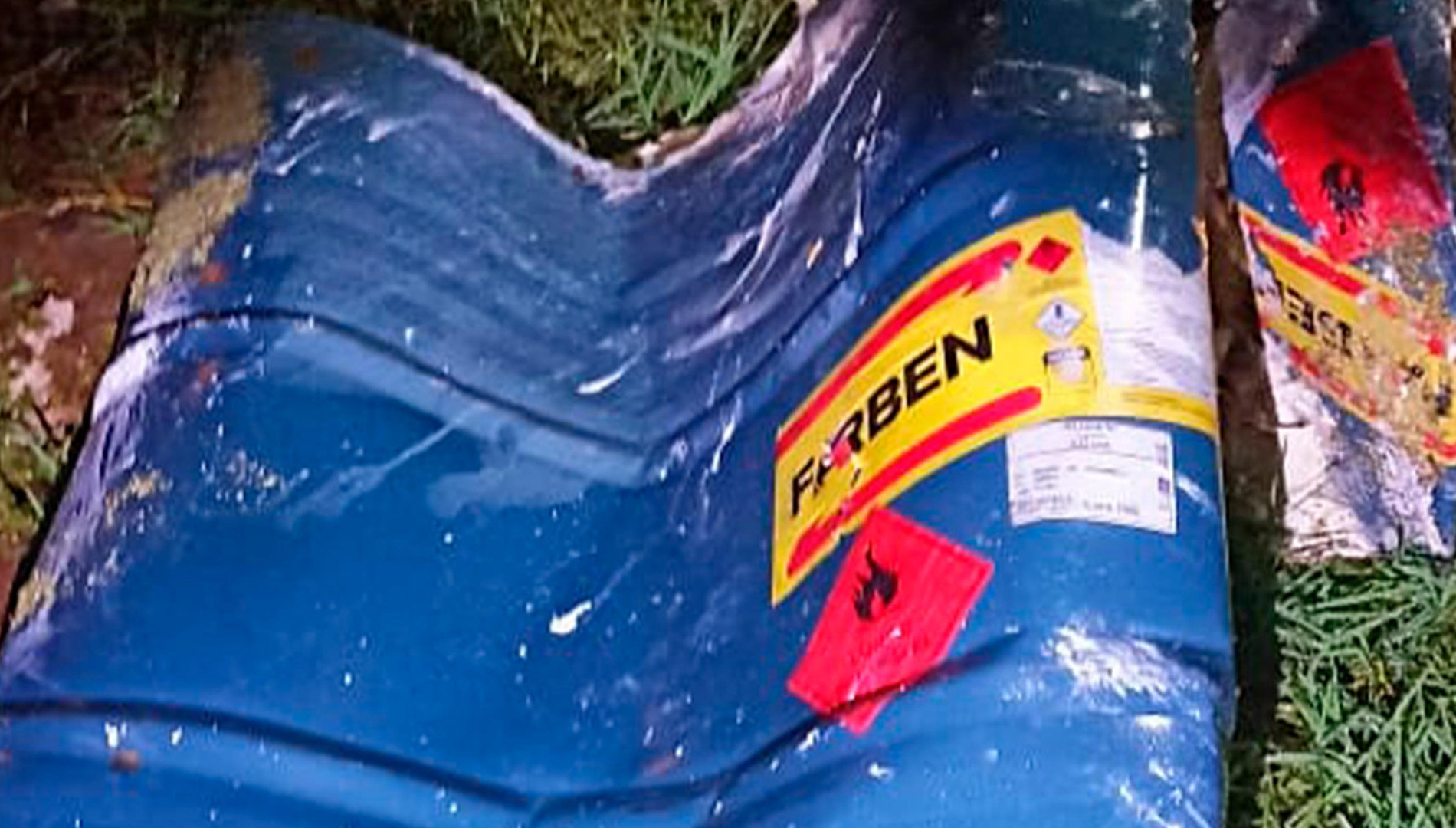
- Containers and pallets reach the end of their service life or come back damaged;
- The resulting material goes through reprocessing;
- The raw material generated is used to make new, fully functional Ecoblack parts;
- The cycle starts again whenever products return to the factory.
This process eliminates waste, mitigates emissions associated with disposal, and turns rotomolded plastic into a valuable resource that can be reused again and again. That’s the case with Ecoblack containers, which retain all their key features:
- Lightweight, non-toxic material;
- Extremely sturdy structure;
- Easy to clean;
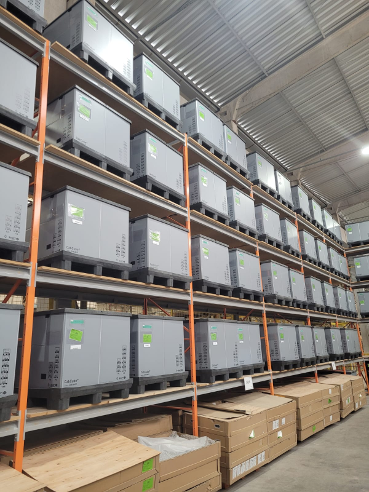
- Stackable parts with a long service life;
- Immunity to chemical agents;
- Stability even under temperature variations;
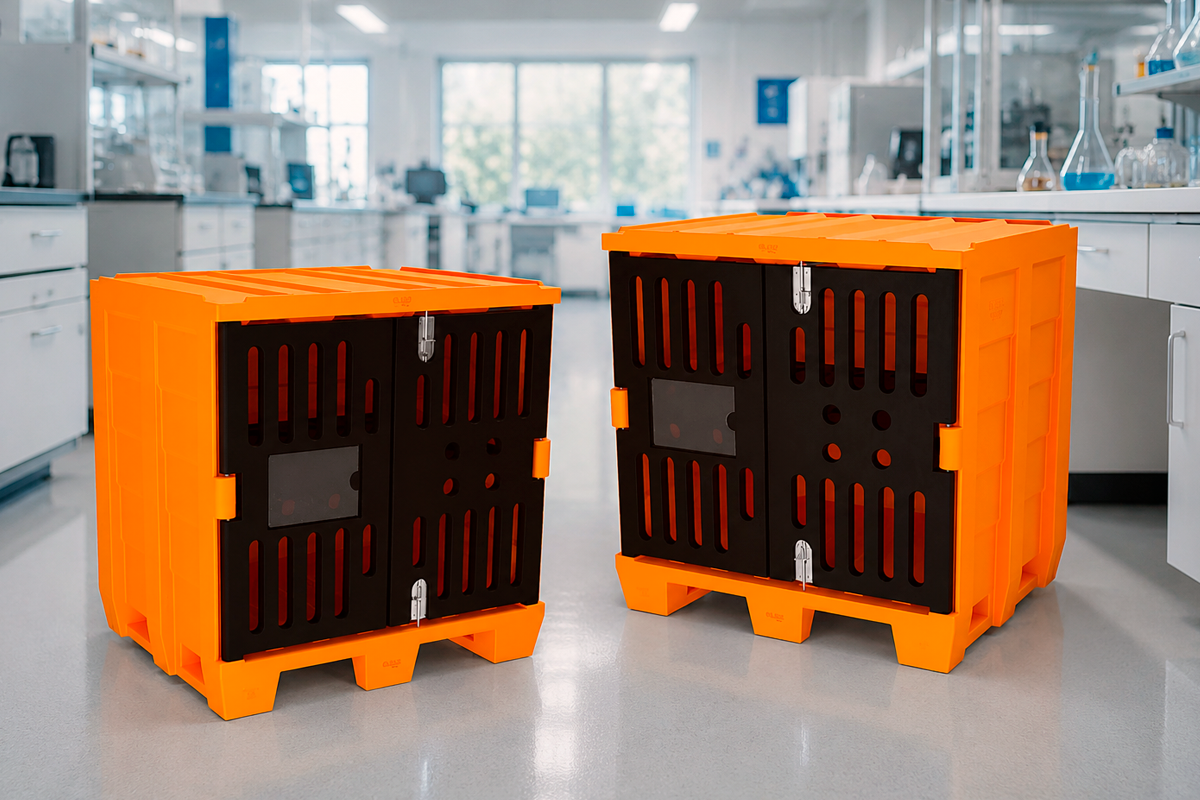
- A range of shapes and models for industrial use;
- Zero need for recurring maintenance.
For industries seeking budget predictability, these factors make all the difference. A container that holds up better to daily use lowers costs, both for replacement and for transport, since the lightness of the structural plastic reduces the overall weight of the load.
Tecnotri Ecoblack vs. standard containers: where’s the real gain?
A simple comparison helps illustrate the effects of the Ecoblack line:
- Raw material
Standard: relies exclusively on virgin polymer.
Ecoblack: uses reprocessed Tecnotri plastic, with a reduced environmental footprint.
- Service life
Standard: high durability.
Ecoblack: same level of durability, at a lower acquisition cost.
- Reuse cycle
Standard: doesn’t return to the production process.
Ecoblack: comes back to the factory and becomes new parts, ensuring ongoing savings.
- Technical performance
Standard: good strength and stability.
Ecoblack: equivalent performance, proven in rotomolding tests.
- ESG contribution
Standard: generates waste at the end of its service life.
Ecoblack: feeds a circular cycle that reduces waste and emissions.
How does the Ecoblack line strengthen ESG reports and green logistics?
The ESG agenda has come to directly influence investment decisions and global competitiveness. According to PwC, 77% of institutional investors plan to stop buying products that don’t meet ESG criteria in the coming years, while Europe is expected to reach US$8.9 trillion in ESG funds by 2025.
In Brazil, growth has also been significant. Funds with this focus raised R$2.5 billion in 2020, showing a real shift in how companies and investors assess environmental performance and governance.
By adopting sustainable containers like the Ecoblack line, your company incorporates practices that strengthen the environmental indicators already mentioned throughout this content.
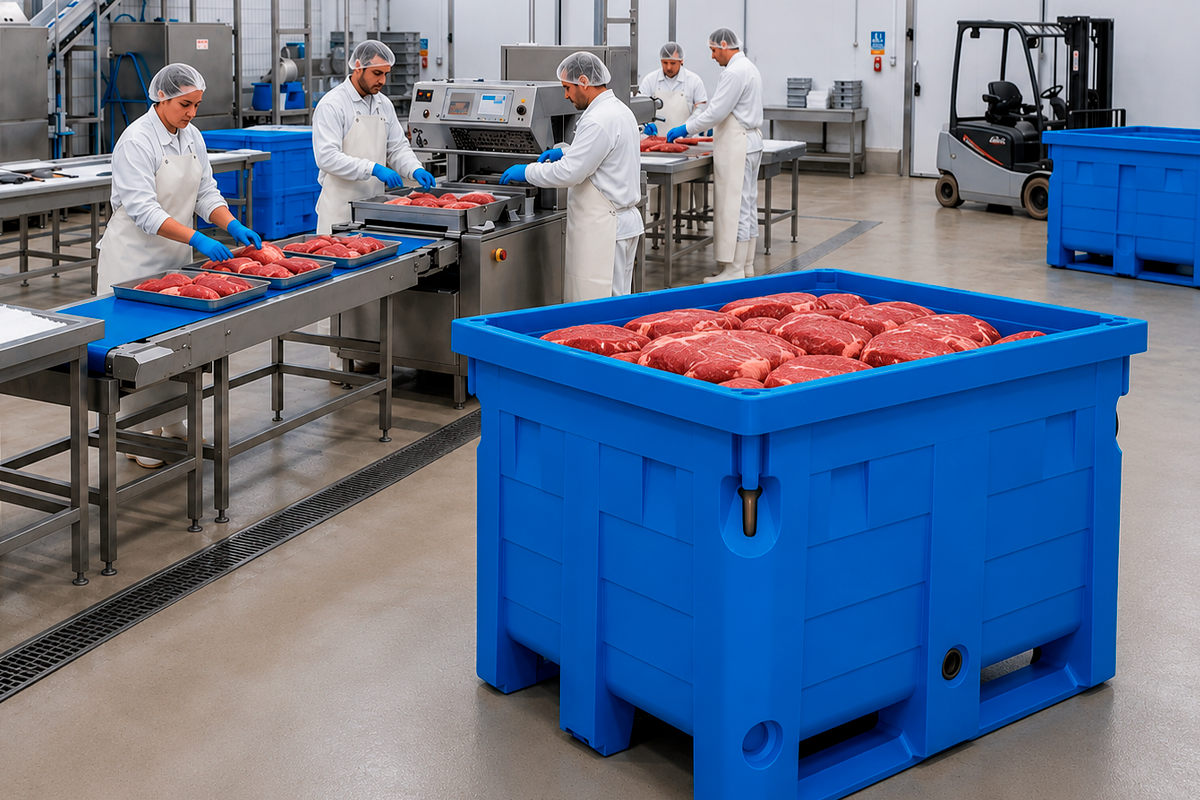
Green logistics also benefits from the lightness and strength of rotomolded containers, which reduce damage, losses, and rework, making the operation more efficient and lowering its impact.
The Ecoblack line: a smart choice for savings and ESG
As 2026 approaches, companies face a growing need to present more transparent metrics. As a result, sustainable containers are no longer just a complementary option — they’re becoming part of the strategic planning of those pursuing responsible productivity.
Ecoblack products are a complete solution for industries that want to optimize resources, extend packaging durability, and move forward on the ESG agenda without increasing costs. Learn more about Tecnotri’s sustainable container line and bring savings to your operation.