

The fishing industry has expressed its concerns regarding the implementation of an infrastructure capable of guaranteeing safe and competitive marketing of its products.
Many criteria must be observed for the proper functioning of an industrial fish establishment. After all, it is one of the most perishable foods. Because of this, it needs adequate care from the moment it is caught fresh until it reaches the industry for industrialization. Furthermore, it is necessary to meet the standards and requirements that regulate the sector both nationally and internationally.
Understand the importance of taking good care of storage
The fish needs to be subjected to the freezing process to reduce the temperature of the entire product to a low enough degree to preserve its quality. This must be observed during the transportation (external and internal), storage and distribution stages, until the moment the products are sold.
The fishing industry requires fast and efficient refrigeration systems to ensure that fish products remain fresh and healthy. Therefore, it is important to look for refrigeration solutions capable of providing precise temperature control and a consistent production flow.
Given these factors, factories are looking for more efficient technologies and equipment that cover all phases of processing. Cold rooms with temperature sensors guarantee an accurate and reliable temperature signal. This may be applicable for security and data logging.
In the processing line, equipment such as a water jet fish scaler and processing tables with an individual production control system make the process more efficient and help reduce waste.
Furthermore, it is currently possible to monitor products in real time. This happens at all stages of processing, from receiving the fish to freezing.

Learn how to make storage more secure
According to Ministry of Agriculture, Livestock and Supply, for the construction of an industrial fish establishment, the following requirements must be considered:
- – Areas with patios and access roads must be paved and urbanized, avoiding the formation of dust and facilitating water drainage. They must have drainage facilities, as well as means that allow them to be cleaned.
- – The dirty (receiving) and clean (processing) areas must be physically separated, in order to exclude any possibility of contamination of the products;
- – Have, preferably next to the reception area, a factory and/or ice silo, as well as a waiting room;
- – Have plastic pallets in the waiting room, as well as in the places for containers used to package fish;
- – Have a storage chamber with refrigeration at temperatures from 0ºC to 4ºC, when products preserved in a modified atmosphere are produced;
- – Provide, preferably next to reception, a place to wash plastic boxes (bins/tubs) and other containers used for packaging fish;
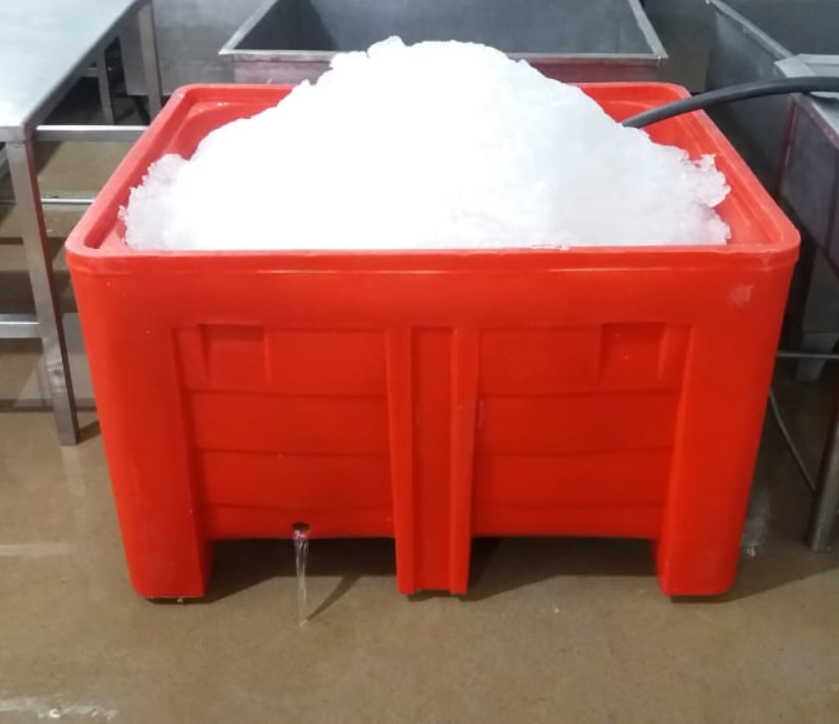
- – Have equipment and utensils made of materials that do not transmit toxic substances, odors or flavors. Furthermore, these containers must be non-absorbent, corrosion resistant and capable of withstanding repeated cleaning and disinfection operations. Its surfaces must be smooth and free from imperfections;
- – Floors in industrial premises must be highly resistant, waterproof, non-slip, anti-corrosive, easy to clean and disinfect;
- – The receiving sector must be equipped with containers for preserving live fish and, when necessary, for purification;
- – Among other requirements.
Have more hygiene and safety with plastic containers
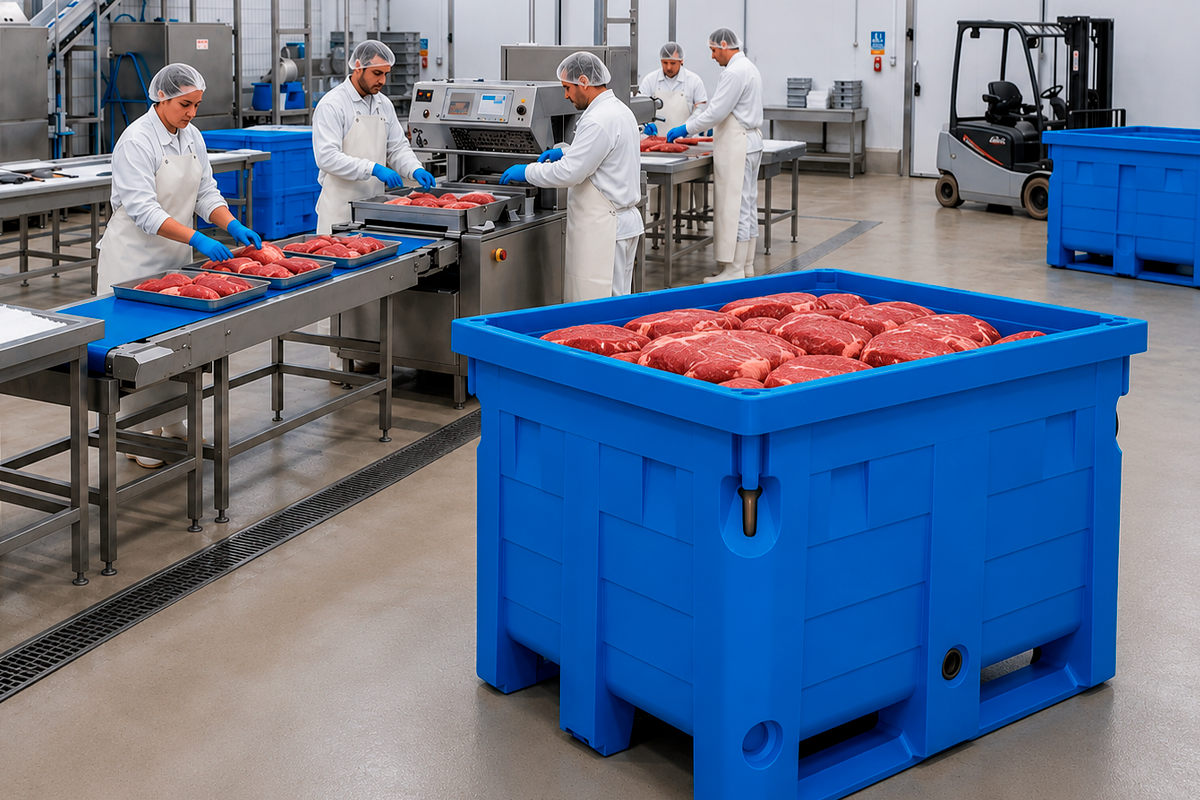
To ensure food hygiene and safety, plastic containers are a great solution. Also known in the fish segment as BINS or TINA, they are able to comply with all sector rules. In addition to being durable, 100% produced from virgin material, recyclable and non-toxic, they are lightweight, easy to clean, resistant (triple wall) and have antimicrobial protection. This protection prevents the proliferation of fungi and bacteria, allowing direct contact with fresh foods.
Using plastic containers, the fish is protected against temperature changes. Furthermore, they can be used in environments with temperature changes between -35ºC to 60ºC.
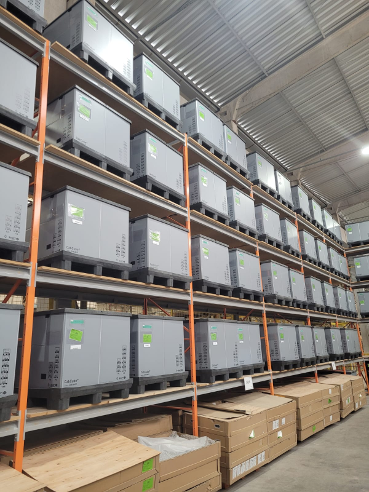
Tecnotri plastic containers are manufactured in versions from 39 to 600 liters, with load capacities of up to 1000kg. They are very versatile and available in different colors, which also contributes to the organization and identification of production.
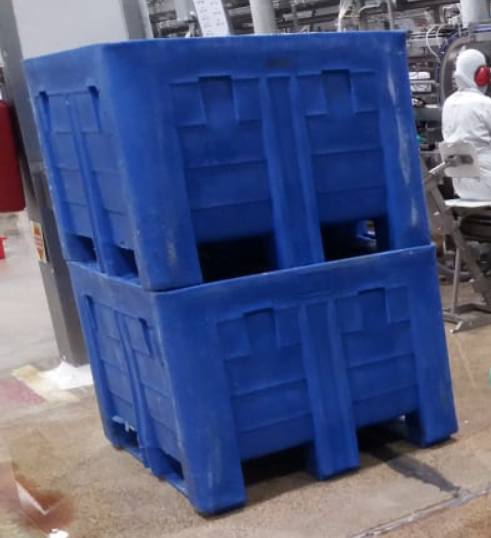
Furthermore, Tecnotri plastic containers can be customized in terms of color and logo (logo or sector description), thus making it easier to separate the materials that circulate within the production sectors, that is, helping visually and mainly to separate clean areas from dirty areas.
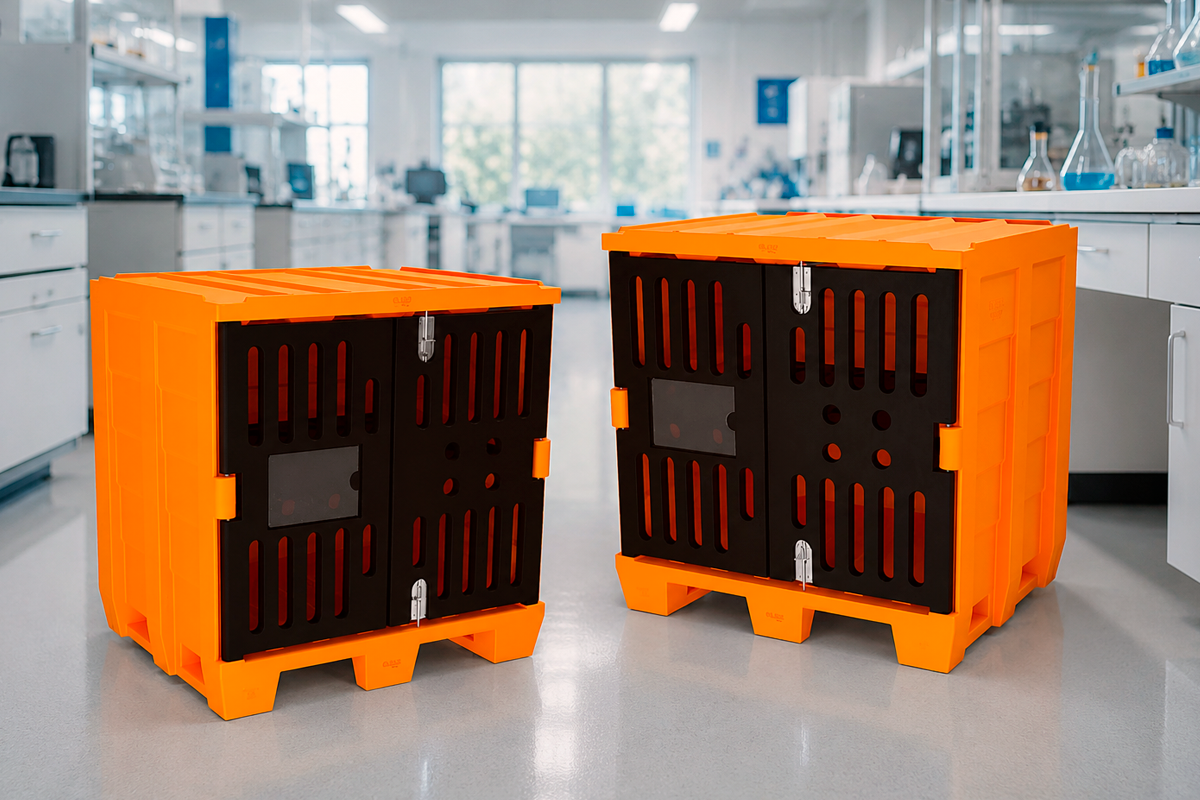
Also discover the Cargo Safes, an alternative solution for the safe storage of fish.