

The use of plastic pallets in industry has gained increasing popularity due to their numerous advantages compared to traditional wooden pallets. These products offer a versatile and durable solution for transporting and storing goods across a variety of industrial sectors.
In addition, they ensure that companies remain within the law, following the current regulations for each segment. Read on and learn more about plastic pallets: why they are more suitable than those made from wood, what regulations they comply with, in which industrial fields they can be used and many other important information.
Which is better: plastic or wooden pallet?
The choice between the first and second depends on the specific needs of each company and environmental, economic and operational considerations. However, in many cases, pallets made from plastic have a series of advantages over those made from wood.
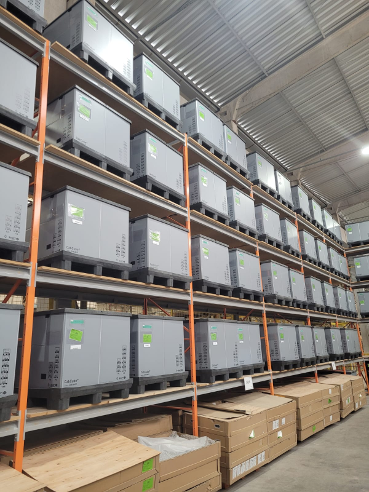
Firstly, plastics are more durable and have a longer lifespan than others, which results in less need for replacement and long-term cost savings. Additionally, they are resistant to moisture, corrosion and contamination, making them ideal for environments where exposure to adverse conditions is common, such as refrigerated warehouses or outdoors.
Another advantage of plastic pallets is their ease of cleaning, making them suitable for industries that require high standards of cleanliness, such as food and pharmaceuticals. They are also lighter than wooden pallets, which makes handling easier and reduces transportation costs.
From an environmental point of view, plastic pallets offer significant benefits, as they are fully recyclable at the end of their useful life, contributing to the reduction of waste and a circular economy. Considering all these aspects, it is clear that plastic pallets come into play as a clear solution for companies seeking efficiency, durability and sustainability in their operations.
In which segments can plastic pallets be used?
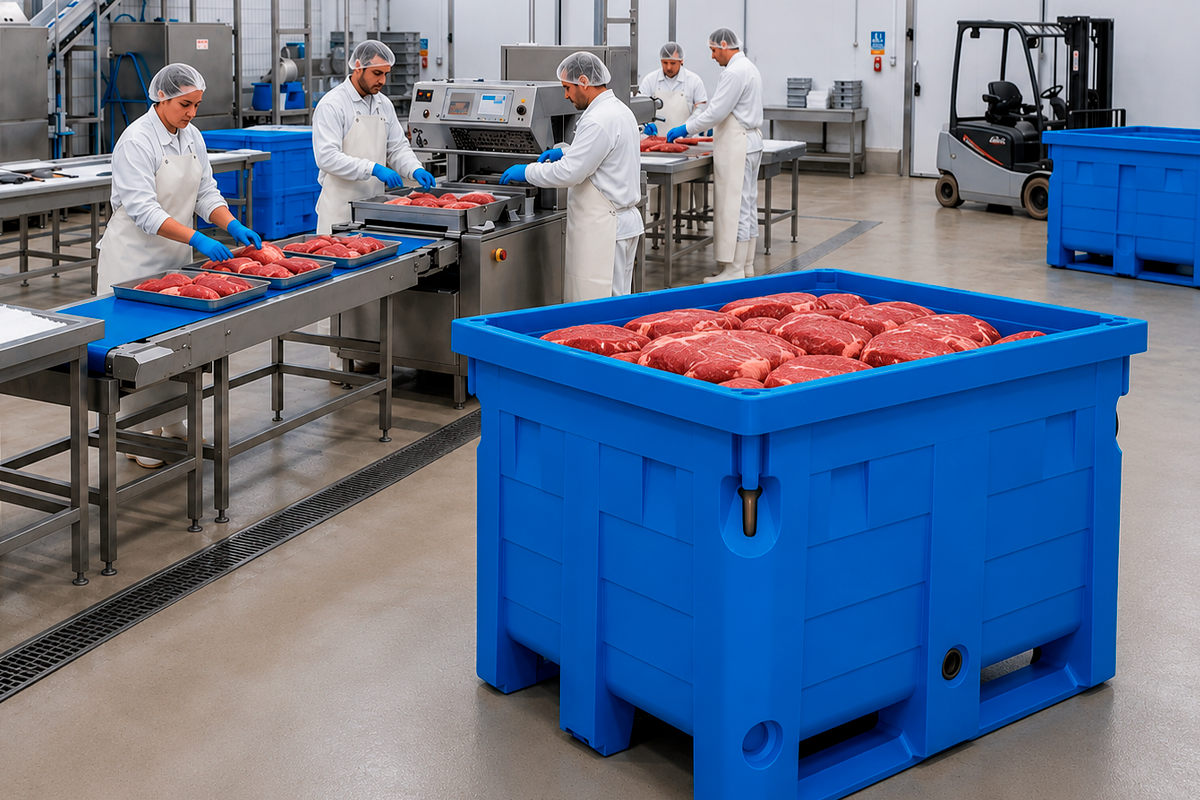
As they are versatile, they can be applied in different industrial sectors. Often used in the food industry, they guarantee the safety and quality of food during transport and storage.
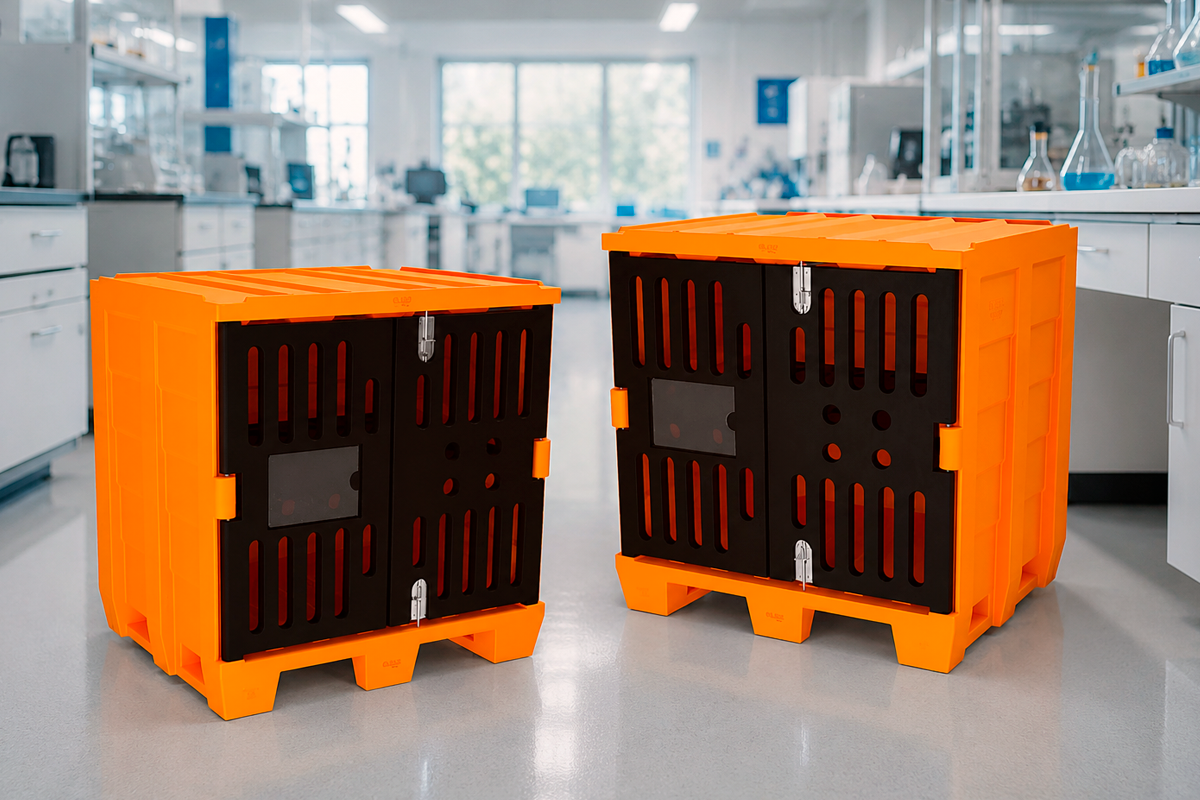
In addition, they are widely used in the pharmaceutical industry, where cleaning and sterilization are very important, offering a safe solution for handling sensitive products, avoiding cross-contamination and ensuring compliance with health regulations.
Other industrial sectors in which plastic pallets can be useful:
- Beverages;
- Refrigerators;
- Commerce;
- Cargo logistics;
- Toys;
- Packaging;
- Decoration;
- Nautical;
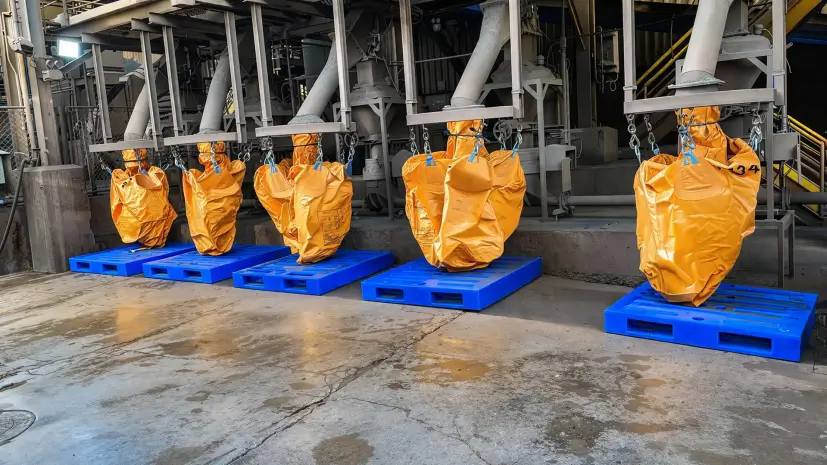
- Chemistry;
- Agricultural activities.
What regulations do plastic pallets comply with?
Regulatory Standards are defined by the Ministry of Labor and Employment and must be applied by companies to guarantee the health and well-being of employees. Each has specific requirements, but all aim to maintain worker safety.
Among the main regulations that plastic pallets meet, we can mention:
– FSSC 22,000, which aims to ensure quality in production and distribution, avoiding risks in all industry processes;
– ISO 2200, which concerns food safety management;
– Ordinance nº 326, associated with the transport of food cargo;
– NR 36, the slaughterhouse standard, which establishes minimum obligations in activities involving the slaughter and processing of meat and meat products intended for human consumption;
– NR 17, which defines parameters relating to ergonomics and working conditions;
– Among others, including regulations from Anvisa, HACCP, FDA and BFP.
How are Tecnotri plastic pallets manufactured?
Tecnotri’s plastic pallets are developed using a process called rotomolding, capable of creating large equipment. The technique works like this: a hollow mold is filled with powdered resin. Afterwards, it goes to a type of oven, which rotates at low and distinct rotations. When heated, it is transformed into a piece according to the model created.
Unlike other existing processes, rotomolded resists temperature variation, essential for internal logistics. This is because, when working with cooling chambers, there may be heat when loading goods, due to the stuffiness of transport — a fact that harms the products. In this sense, rotomolded plastic pallets not only withstand low temperatures, but are also capable of preserving the internal contents.
Durability, hygiene and resistance to impacts and weather conditions are other advantages of rotomolded plastic. Therefore, its versatility is immense, serving the most varied sectors of the industry. Tecnotri’s plastic pallets can also be customized with your company’s brand and different colors, making it easier to organize your operation.
With our team of engineers, it is also possible to customize products according to your needs. Together, we find efficient solutions to optimize costs and production processes.
Check out: plastic pallet factory with several models | Have a personalized pallet for your business
In summary…
- Plastic pallets have more advantages over wooden pallets, such as ease of cleaning, resistance, durability and lower weight;
- Versatile, plastic pallets can be used in different types of industries, especially in the food sectors, which require extreme hygiene;
- With plastic pallets, you can meet a series of sanitary requirements and regulatory standards;
- Tecnotri’s plastic pallets are manufactured using the rotational molding process, which guarantees light, resistant, durable and sustainable products.
Discover Tecnotri’s rotomolded plastic pallet line
Access our portfolio and check out all the information and details on plastic pallets. We are sure that we have the ideal solution for your company.