

Brazilian industry is going through a new cycle of transformation. After periods of contraction, the sector closed 2024 with 3.3% growth, driven by the reorganization of supply chains, automation, and digitalization. In this context, sustainability is no longer just a trend: it’s part of modern industrial strategy.
Companies of all sizes are being challenged to balance productivity with environmental responsibility, in a shift that goes beyond regulatory compliance — it’s also about competitiveness. Solutions that combine efficiency, the circular economy, and durability are gaining ground as a concrete response to ESG goals.
Tecnotri’s Ecoblack line is an example of this commitment, with durable products made from high-quality reprocessed raw material. Want to understand how this innovation contributes to more sustainable operations? Check out the full content below!
The role of industrial sustainability in reducing costs and risks
In recent years, the market has been pushing for a change of approach across industry. Environmental regulations, traceability requirements, and pressure from major contractors are redefining how companies operate.
Adopting sustainable practices has become a condition for keeping contracts, accessing credit, and preserving reputation. According to recent studies by KPMG and ABOL, more than 80% of Brazilian logistics operators already have dedicated ESG teams, reflecting the growing importance of this agenda.
Within this agenda, one of the most direct and effective actions is replacing virgin materials with reprocessed raw materials. By using highly durable, resistant compounds, companies reduce their consumption of natural resources, cut down on waste, and extend the life cycle of their equipment.
Sustainability, therefore, isn’t just a reputational advantage — it’s a smart management decision.
ESG in industry: reputation and value across the entire chain
In today’s context, the Environmental, Social, and Governance (ESG) pillars have become decisive for business continuity. Sustainable practices strengthen a company’s institutional image, build trust, and open doors to new partnerships.
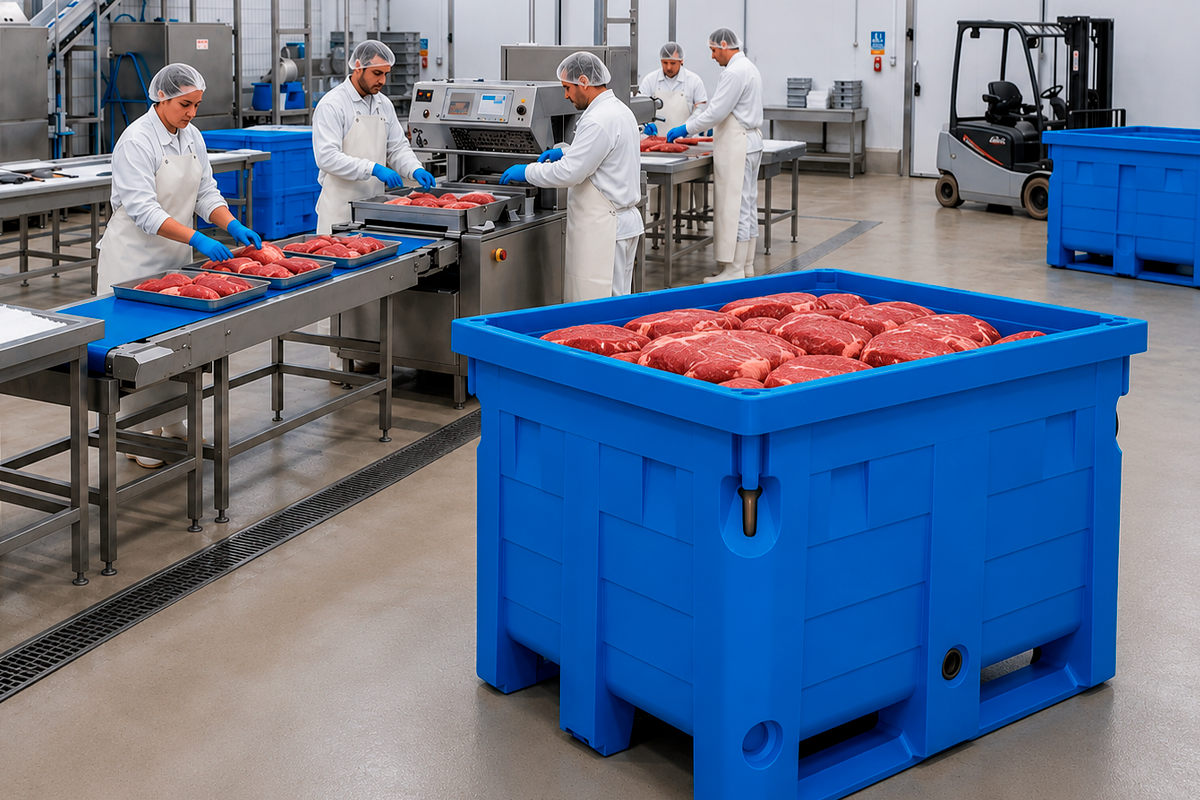
Companies that invest in circular-economy-aligned solutions, such as Tecnotri’s Ecoblack rigid containers, demonstrate social and environmental responsibility and transparency to their customers and stakeholders.
According to the Logistics Operators Profile study (ILOS and ABOL, 2022), 72% of Brazilian logistics operators carry out waste reduction, reuse, or recycling initiatives, a clear reflection of the sector’s growing maturity and the consolidation of sustainability as a competitive advantage.
Tecnotri’s Ecoblack line: the balance between savings and environmental responsibility
Developed with a focus on circularity and performance, Tecnotri’s Ecoblack line represents the meeting point between technical innovation and ecological commitment.
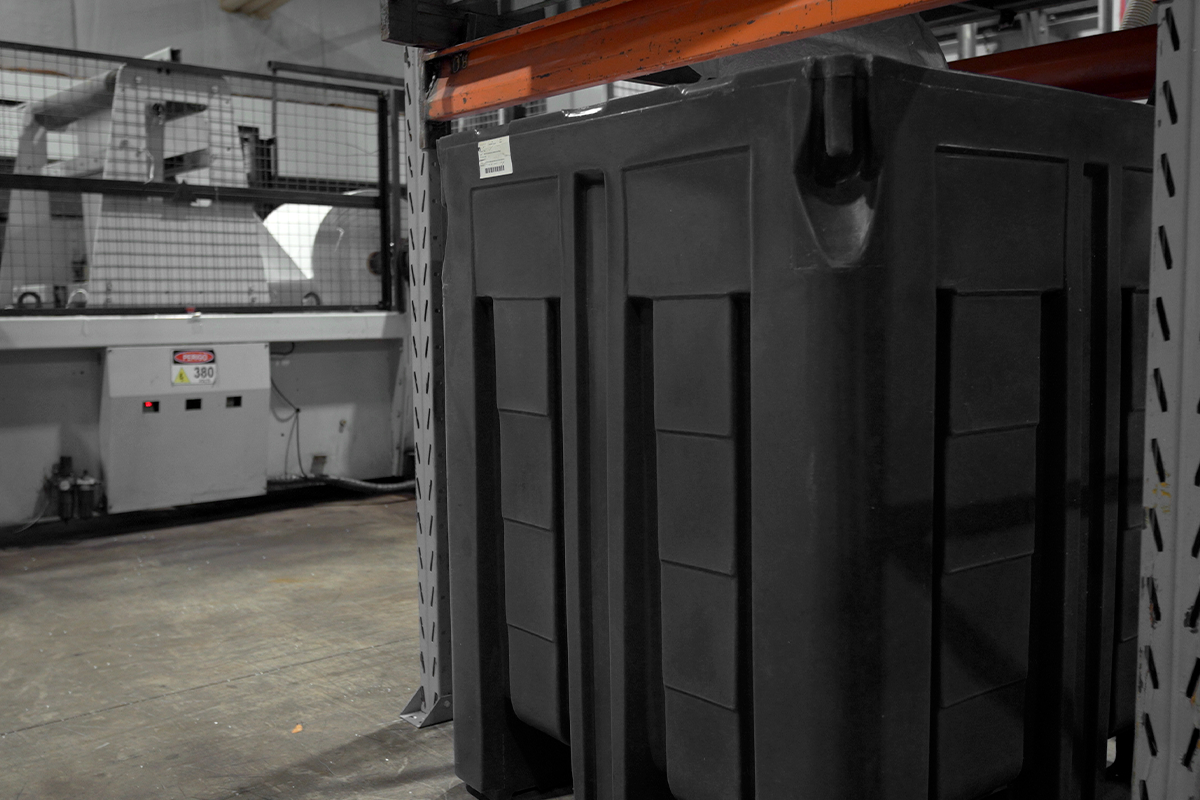
Made from high-performance reprocessed raw material, Ecoblack containers reduce virgin plastic consumption and extend product lifespan, while maintaining the same standard of strength and lightness that characterizes Tecnotri’s solutions.
Key benefits include:
- Reduced virgin plastic consumption, by safely and reliably reusing industrial materials;
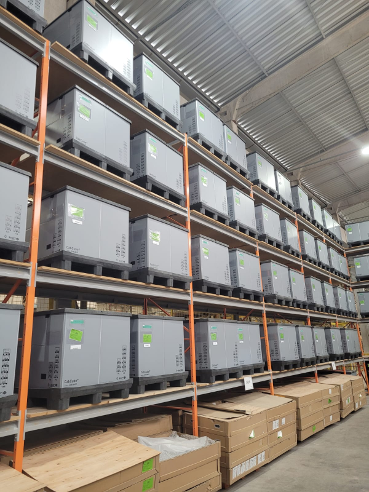
- Savings in production and logistics operations, thanks to durability and optimized stacking;
- A cleaner, more sustainable production cycle, in line with circular economy principles.
Besides being environmentally responsible, the line’s containers offer technical advantages that ensure chemical resistance, modular design, and safety when transporting and storing materials.
The investment pays off quickly and measurably. By choosing Ecoblack, industries achieve a significant reduction in maintenance and replacement costs, since the containers are designed to withstand long periods of use without warping or losing performance.
These results reinforce that industrial sustainability, when properly applied, also generates operational predictability and extends to corporate image, investor appeal, and brand positioning in the market.
The circular economy as a strategic pillar
The circular economy is already an essential guideline for industries seeking efficiency and longevity. In the plastics sector, initiatives such as Recircula Brasil, supported by ABIPLAST and ABDI, demonstrate the technical and economic feasibility of tracking reprocessed materials and ensuring their safe reintroduction into the production chain.
Tecnotri is part of this movement with solutions that prioritize the circularity of industrial plastic, promoting a smarter production model that’s less dependent on natural resources.
As a result, every Ecoblack container represents a cycle of savings, durability, and environmental responsibility, putting into practice the idea that waste is, in fact, a resource with a new purpose.
Bring savings and sustainability to your industry with Tecnotri’s Ecoblack line, because cutting costs and protecting the planet can (and should) go hand in hand.