

The storage of flammable liquids requires special care to avoid accidents, fires and environmental contamination. The safest way is to use suitable containers, such as drums and drums, combined with containment pallets that prevent leaks and meet the safety standards of NR-20 and ISO 14001.
Companies that work with the processing, transport or storage of flammable liquids must be aware of the special care required by this type of material. Sectors such as the chemical, pharmaceutical, cosmetics and fuel industries acquire large quantities of flammable liquids, which requires extensive knowledge about handling and storage.
Due to the risks that these products pose to the environment and the surrounding community, there are several standards and rules regarding the storage of petroleum derivatives and other dangerous liquids.
In this article, we will discuss the necessary precautions for storing flammable liquids, as well as the containers and equipment necessary to ensure safety and comply with technical standards.
What are flammable liquids?
A flammable liquid is characterized by its flash point. This is the lowest temperature at which a liquid releases enough vapor to form a flammable mixture with air. In this case, the quantity is insufficient to maintain the burning or flame.
Resolution 5232/2016 considers flammable liquids to be those that produce flammable vapor at temperatures of up to 60°C, in a closed vessel test, or up to 65.6°C, in an open vessel test, normally referred to as flash point.
In addition to the flash point, there are other concepts that are important when referring to flammable products:
- Burn point: is the lowest temperature, a few degrees above the flash point. In which the quantity of vapors is sufficient to initiate and maintain combustion.
- Ignition point: temperature where the amount of flammable vapors is so intense that it catches fire just by contact with oxygen.
- Combustion: exothermic chemical reaction between two reactants, fuel and oxidizer, in which energy is released in the form of heat.
According to NR-20, any liquid that has a flash point equal to or greater than 70°C and less than 93.3°C is considered fuel. Flammable liquids are those with a flash point less than or equal to 70ºC. As in the case of fuels, tanks for storing flammable liquids will be made of steel or concrete, unless the characteristics of the liquid require special material.
Necessary care when transporting and storing
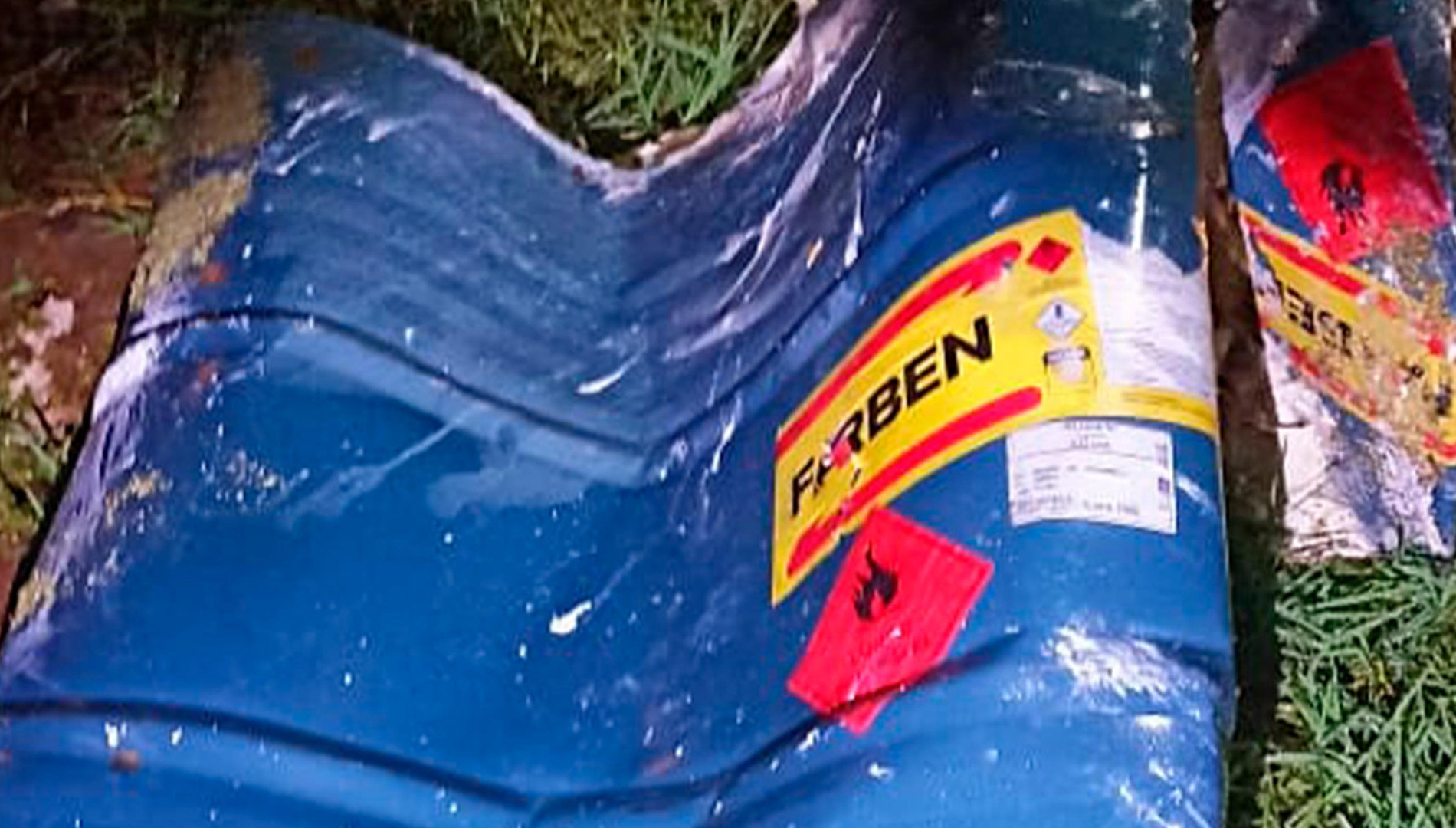
Whoever deals with chemical and flammable liquids must always be aware of the risk of spills, which can cause contamination of the work environment and the people who handle these products.
NR-20 establishes the minimum requirements to guarantee the safety and health of workers against the risks inherent to activities with flammable and combustible liquids. It defines the procedures necessary for the inspection, maintenance, analysis and operation of facilities.
Proper design and maintenance
Storage and care varies depending on the volume of the products. For large and medium-sized storage, we require adequate design, as well as periodic maintenance and review. In addition, there must be a means of fire protection to stop flames in emergency situations.
Identification of the product and risks
For small volumes of flammable materials, it is necessary to identify the product and its risks on each container. In this case, workers must be informed about the risks and have knowledge in handling these substances, whether solid, liquid or gaseous.
Attention to standards and legislation
A critical analysis of the risk must be carried out using technical criteria, taking into account the specific standards and legislation in force. Factors such as the need for movement, temperature and pressure conditions and the types of storage compartments that will be used must be treated with great responsibility and care.
Vehicle adaptation
The vehicle that will transport the chemicals must be equipped with the correct signage, personal protective equipment for the person responsible for the movement and an emergency kit. The responsible professional must have taken a course on handling special products, in addition to being fully aware of the risks that contact with these products can pose to your health.
Use of containment pallet
The use of containment pallet prevents the leakage of chemical and flammable liquids stored in drums and drums from contaminating the environment. Furthermore, it allows spilled liquid to be reused.
Learn more about rotomolded containment pallets
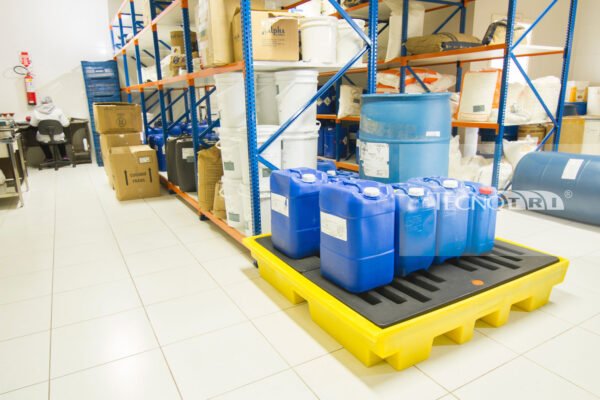
We call the rotomolded containment pallet (Super Roto®) a container pallet or containment basin. We use this pallet to ensure the containment of leaks from drums and drums, preventing the spillage of chemical, flammable, acidic and corrosive liquids from contaminating the environment. Furthermore, it allows spilled liquid to be reused, reducing waste costs.
The containment pallet offers greater security to industries and meets Anvisa standards, Good Manufacturing Practices (GMP), ISO 14001 and international standards OSHA 40 and CFR 264. All these benefits make the containment pallet. A fundamental piece in various sectors of industry and commerce, such as metallurgy, food, pharmaceuticals, agricultural implements, among others.
Features of Pallet Container
Non-toxic and immune to chemical agents, the containment pallet offers great resistance to corrosion and the effects of time. It prevents the leakage of active ingredients, excipients, flammable, acidic and corrosive chemical agents from containers, reducing the risk of moving these substances and protecting the soil and the environment.
The rotomolded containment pallet is also lightweight, easy to disassemble and sanitize. Furthermore, it receives a UV14 additive, which prevents the proliferation of microorganisms and guarantees greater quality and hygiene. This product is easy to clean, as it has rounded corners and no sharp edges.
The Tecnotri containment pallet has a reversible grid, allowing it to accommodate drums on one side and packages of different sizes on the other. This product supports drums with a diameter of 60 cm on one side, or packages of different sizes on the other, according to customer needs. Capable of holding 1 to 4 drums, it offers a containment capacity of up to 1000 liters.
Monoblocks and 100% recyclable, these products are stackable, easy to handle and can be moved with forklifts or pallet trucks. Fully interlockable and monobloc, they do not undergo changes in their weight and measurement characteristics and are capable of withstanding environments with temperatures between +60° C to -40° C.
The raw material used is polyethylene, ideal for containing and retaining chemicals and liquids. It is manufactured in standardized yellow and orange colors, in accordance with safety regulations. Furthermore, the rotomolded pallet also meets the needs of companies seeking certification with ISO 22,000. Furthermore, they must comply with the Hazard Analysis and Critical Control Points (HACCP) standard.
Benefits of containment pallets for storing flammable liquids
Companies that work with the storage of flammable liquids find several benefits in using containment pallets, such as:
- Prevent leaks and contamination;
- Complies with Anvisa, NR-20 and ISO 14001 standards;
- Prevents waste of leaked liquids;
- Reduces risks of fines and environmental lawsuits;
- Easy implementation and adaptation of the environment;
- Easy to handle, transport and sanitize.
Download our eBook
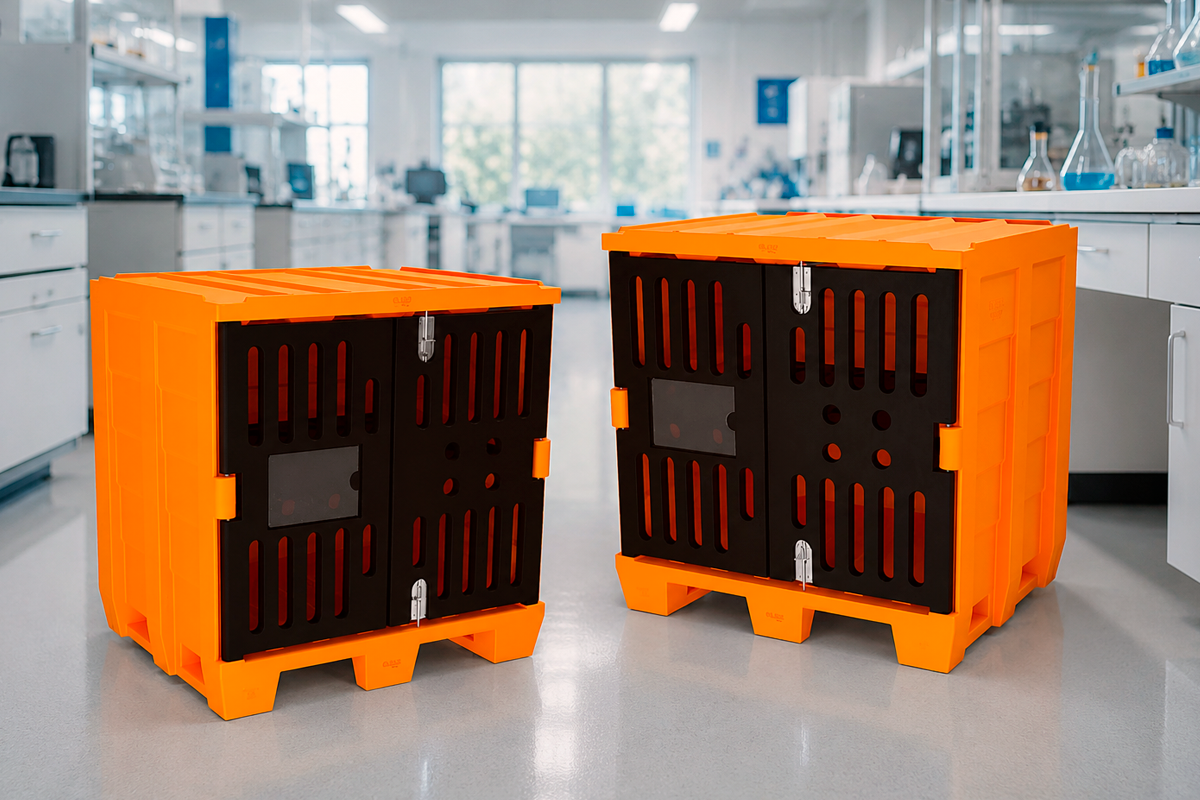
In addition to containment basins, Tecnotri also has models of cargo safe with closing latches that are ideal for moving controlled substances and listed in Annex I of SVS/MS Ordinance nº 344/98. These products are also non-toxic, resistant to chemical agents, closing latches and stainless steel hinges. Furthermore, they comply with ABNT NBR 16242, Class 1, 2 and 3, and Anvisa standards on dangerous cargo.
Did you like this article? Do you want to know more about the advantages brought by containment pallets? Access the product page or learn more in this e-book.