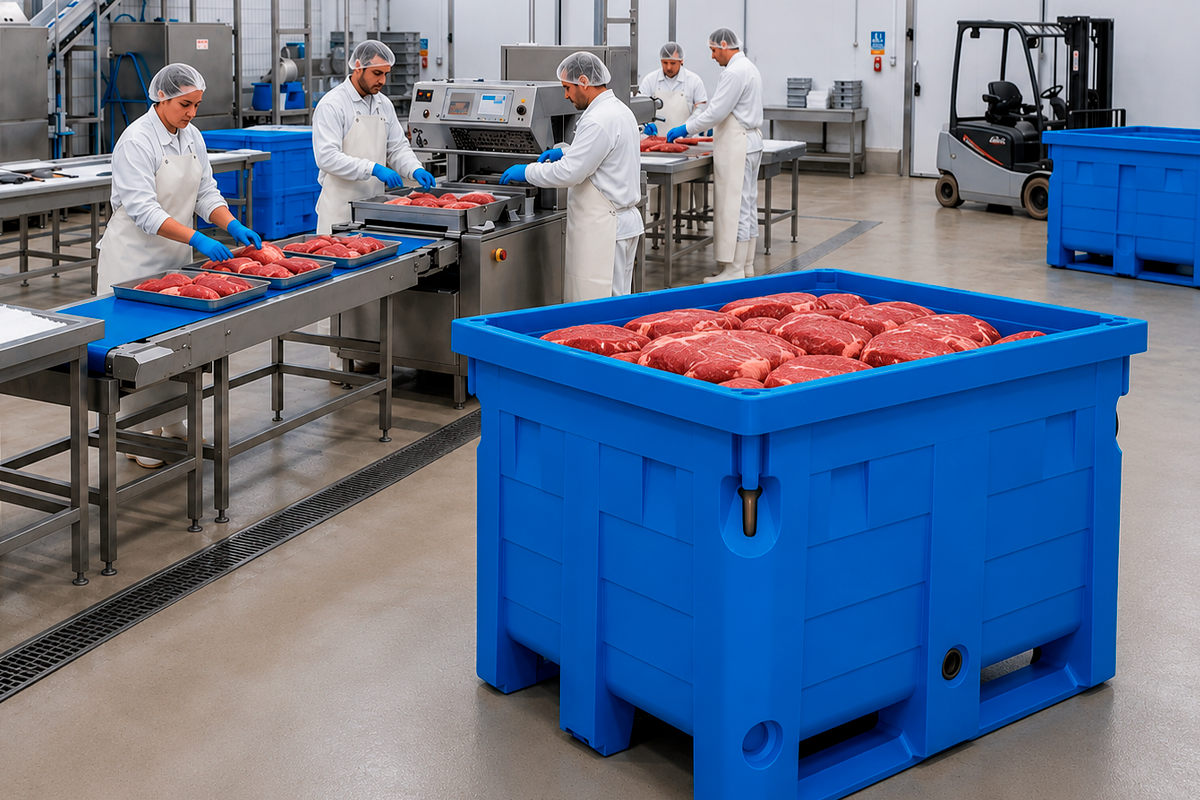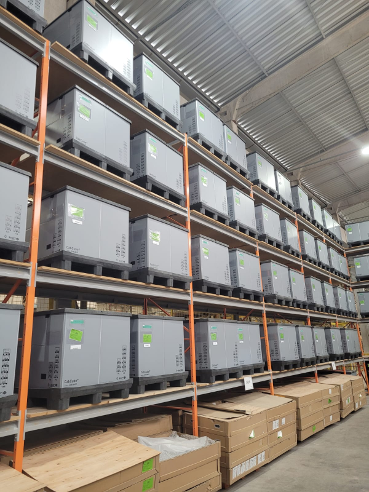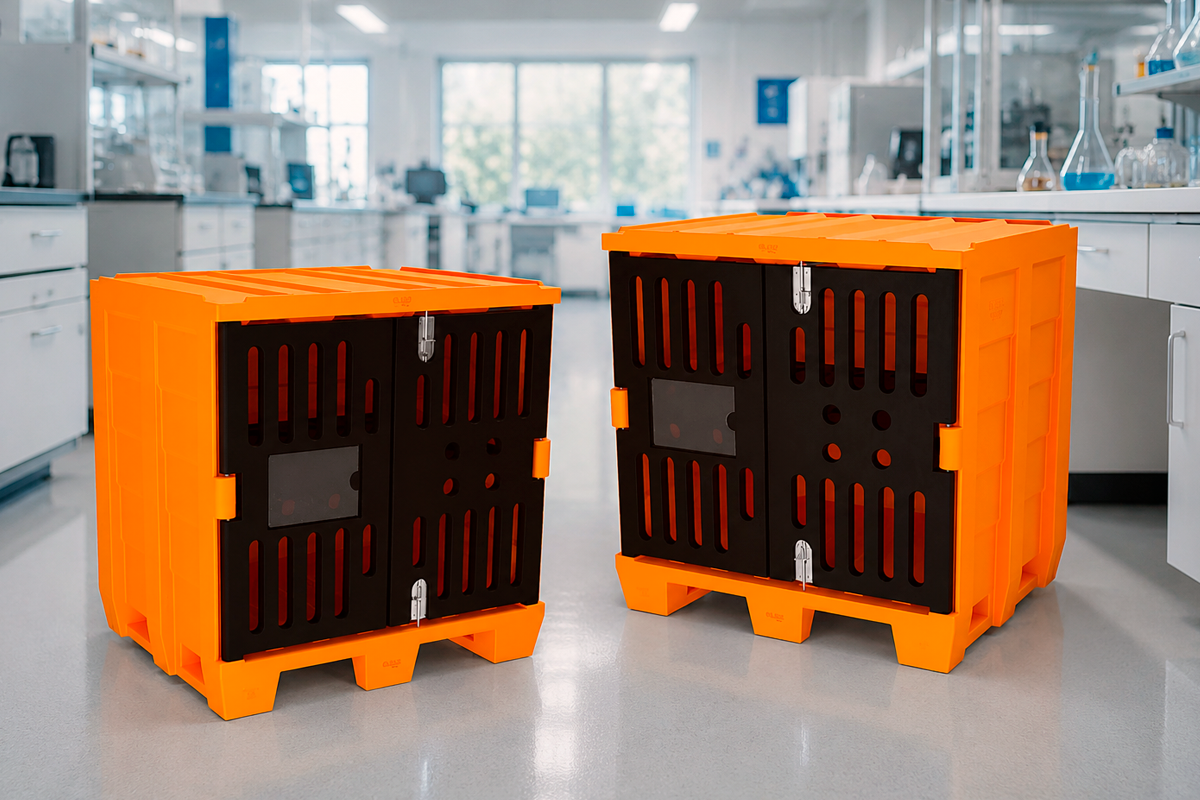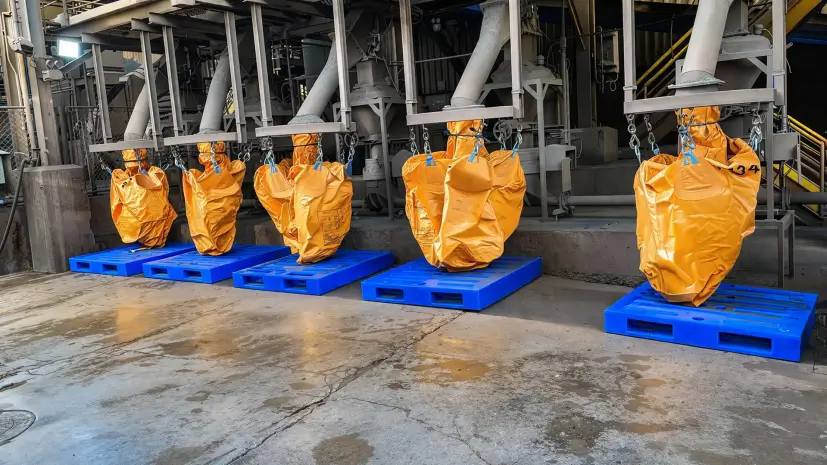


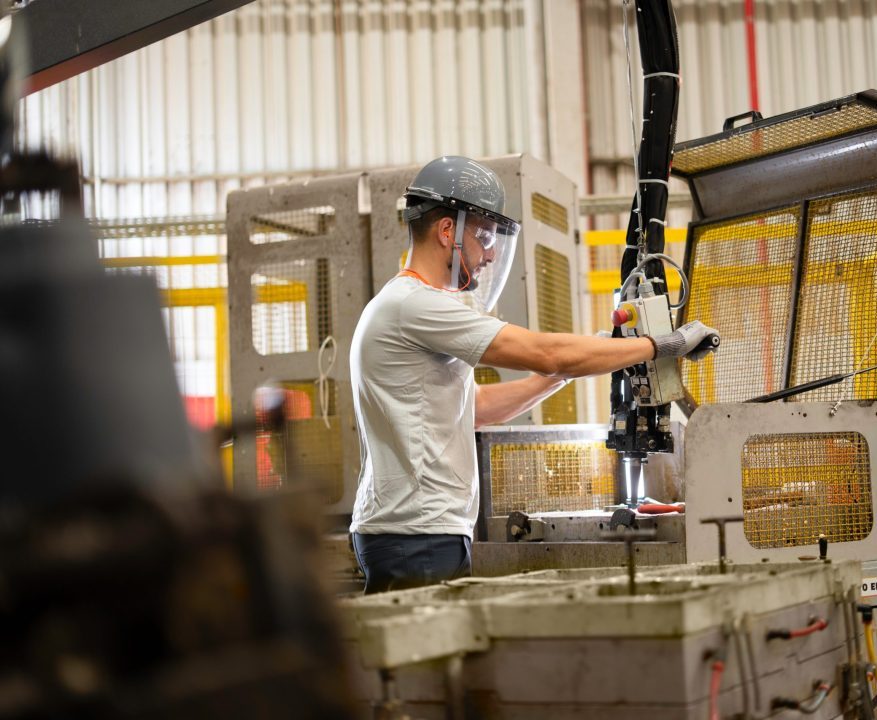
The use of plastic pallets for cold storage and in refrigerators is a frequent recommendation, if not a requirement, from inspection bodies such as Anvisa (National Health Surveillance Agency) and SIF (Federal Inspection Service), which requires the use of plastic pallets in the production of beef jerky in slaughterhouses, for example.
Unlike wooden pallets, which accumulate fungi, bacteria and other contaminants, plastic pallets can be washed and sanitized. Thus, helping to avoid contamination and meet health requirements.
But do you know why plastic pallets are widely used in refrigerators? What are their advantages over wooden pallets? Find out the answers to this and other questions about plastic pallets below.
How pallets are used in Meat Refrigeration
An example of efficient use of plastic pallets is in a Frigorifique Charque, located in Santana do Parnaíba (SP). The slaughterhouse, one of the most modern in the JBS group, produces around 80 tons of beef jerky per day.
Its production process is divided into four stages: boning, salting, drying and packaging. In the boning process, the meat arrives in batches of 28 tons (one trailer). Boning is done on benches and then the boned meat is placed on a conveyor belt, which will take it to salting.
When salting, the meat receives an injection of brine. Soon after, it receives a salt crust and rests for a week on stainless steel shelves. At this point, the pallets are only used to dispose of meat in the brine.
After salting, the meat is sent to a bath to remove excess salt, and then placed on rotomolded plastic pallets. At this stage, the batches are separated by the color of the plastic pallet according to the production date, which facilitates visual management of the process.
After eight hours of sun, the meat is placed on stones to rest for another eight hours. At this stage, 320 l plastic containers such as Tecnotri plastic containers are also used to store small meat scraps.
Once the clothesline process is complete, the meat is taken to the packaging sector, following which the batch is separated into pallets in different colors, which visually identify the stored contents.
Understand why plastic pallets are replacing wooden and metal pallets
Because it is manufactured with sanitizable and non-toxic material, easy to wash and handle, in addition to being monobloc and without any seams or welding, the rotomolded plastic pallet prevents the flow of possible causes of contamination with food. The product also receives antimicrobial protection, which prevents the proliferation of fungi and bacteria.
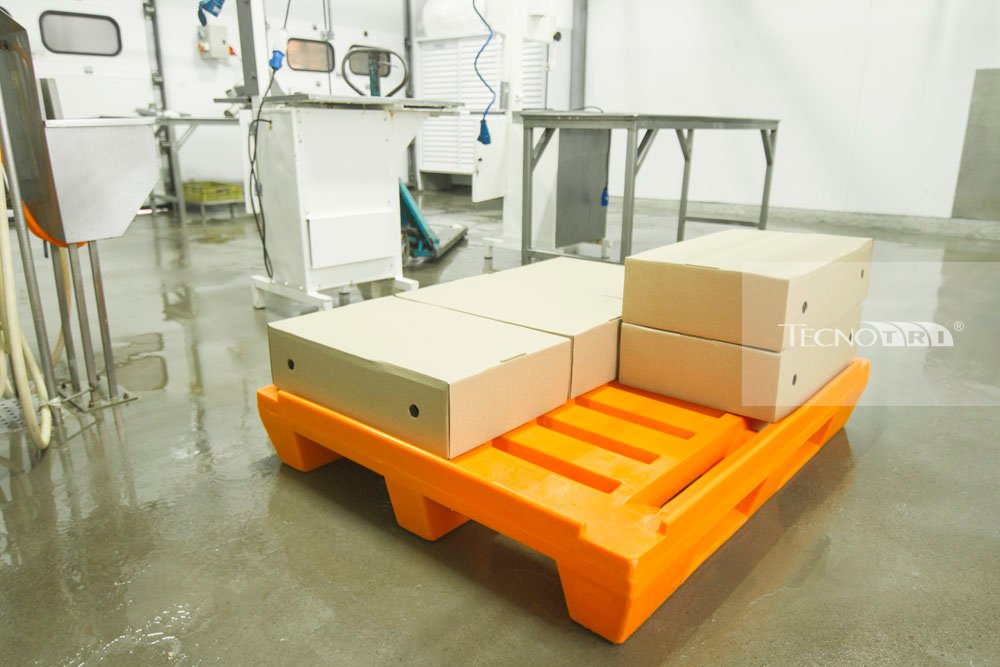
Furthermore, plastic offers a much longer lifespan than wood, which requires constant replacement. Therefore, it allows a cost of up to 75% lower than wooden pallets. When compared to metal pallets, rotomolded plastic pallets, such as the Tecnotri pallet, cost 3 times less. In other words, it presents an excellent investment and an excellent cost-benefit ratio.
Due to these characteristics, the material is ideal for sectors in which hygiene care is essential, such as in the food industry.
Learn about the materials used in plastic pallets
Pallets for cold rooms or freezers are generally manufactured in PP, the popular name for Polypropylene (a type of plastic resin), or in HDPE, as High Density Polyethylene is known.
PP is the recommended material for pallets used at room temperature or in a cold cooling chamber, where it is exposed to lower temperatures of up to -10ºC.
For cold freezing chambers up to – 35 ºC, the pallet must be made from HDPE for greater resistance. For this purpose, companies like the JBS Group use Rotomolded Plastic Pallets, such as Tecnotri Plastic Pallet, which guarantees greater resistance to the pieces. The Injected Plastic Pallet made of polypropylene presents a loss of flexibility and becomes brittle at these lower temperatures.
See the advantages of using plastic pallets
The plastic pallet is a single-piece plastic platform, without seams or splinters, used for moving loads. With an excellent finish, this material is light, durable, impact resistant and easy to handle. Plastic is up to 70% lighter and stronger than wooden pallets. It is also immune to external agents and withstands temperature variations from -35ºC to 60ºC without suffering variations in weight and color. Another benefit is the possibility of customizing the Rotomolded Plastic Pallet, due to the more affordable cost of purchasing the mold.
The rotomolded plastic pallet was developed to be used in environments that require special hygiene care, such as refrigerators, food industries, industrial kitchens, pharmaceutical, chemical or medical-hospital sectors.
As we have seen, using rotomolded plastic pallets, the most modern refrigerators, such as Frigorífico Charque, can ensure food safety, facilitate the transport and storage of their products and meet the sanitation requirements of international standards SIF (Federal Inspection Service).
Did you like this article? Leave your opinion in the comments.
More about rotomolded plastic pallets:
Everything about rotomolded plastic pallets. Ask all your questions here
In this material you will understand the uses, applications, differences and how to choose the ideal pallet for your business.
[button size=”medium” style=”primary” text=”Download Free Guide” link=”https://conteudo.tecnotri.com.br/perguntas_frequentes” target=””]