


Stock is crucial to the smooth logistical functioning of companies. But the big challenge of good storage management is choosing which types of stock are right for each segment of activity.
Understanding the types of stocks is essential to get a sense of the wide variety of means available for organizing and controlling your products. Good stock control allows you not only to maintain the physical organization of goods, but also to optimize the entry and exit planning of each item.
Below, we’ll cover everything you need to know to choose the best type of inventory for your business.
Learn about the main types of stock
Advance or Seasonal Stock
Among all types of inventory, this is adopted when the company predicts future demand, delivery or production of an item. Generally, it is used when there are predictable fluctuations in demand, delivery or production of certain items and supply variations are relevant.
Advance stock aims to level this type of fluctuation, which is very common on seasonal dates, such as Christmas, for example, when there is an increase in demand for certain products. It can also be used in situations where supply is inconsistent, such as in the food sector.
Stock in Transit
It is made up of items that are in transit on transport vehicles to be delivered between supply channels. Refers to the period in which these products remain in vehicles during transport.

Large multinational companies, for example, have their products “in transit” after loading for a longer period of time than in the storage area. These stocks require extra attention, as products may suffer damage due to poor transport conditions and climate change.
Consigned Stock
This type of stock is not held by the company, but by third parties, such as distributors, customers, among others. Custody is stipulated by agreement, but ownership of the items remains with the product manufacturer.
Contingency Stock
It is the stock held as collateral to cover possible situations of extraordinary failure in the company’s operations and system.
Inactive Stock
These are items that are obsolete or that have not been released in recent months. The length of time for stock to be considered inactive varies for each company, as it depends on the determination of the stock administrator himself and also on the company’s area of activity.
Good inventory management ensures that the goods in that inventory remain properly stored and available for trading. In order for these goods to circulate, settlements and exchanges can be carried out with suppliers.
Obsolete stock
It is the stock of products that deteriorate because they are past their expiration date or when they are lost or stolen during a long storage process.
Maximum Stock
Refers to the maximum quantity of products to be stored for a stipulated period until a new order can be placed.
It is used for companies that do not have a very large physical space and will certainly have to use the maximum capacity of their stocks.
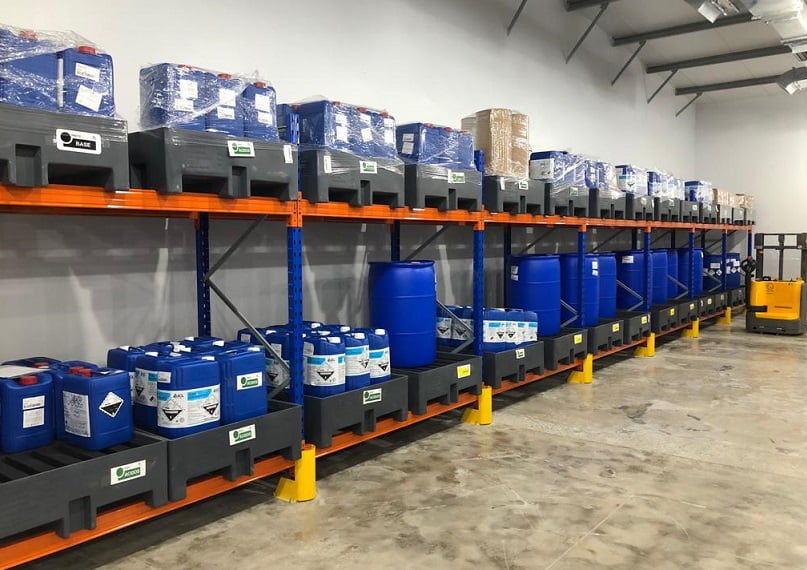
To calculate the maximum stock, a previously determined quantity of products must be stipulated so that new orders can be interrupted, whether for financial reasons or due to available storage space.
This method can also be a way to save on purchases, as discounts can be negotiated when products are purchased in larger quantities.
Average Stock
Refers to half of the normal stock added to the safety stock. This stock should be checked more frequently in the case of perishable products.
Minimum Stock
Also known as Replenishment Point, this type of stock consists of a minimum quantity previously determined, so that the purchase order request for a specific product occurs within the expected time frame.
Protective stock
Also known as safety stock, the protective stock aims to compensate for demands that are higher than expected and longer than the replenishment time, which mainly depends on the replenishment time.
This type of stock serves to meet urgent needs and compensate for uncertainties and setbacks in supply. For example, in case a supplier delays delivery, it allows operations to continue.
Regulatory Stock
It is the stock generally used in companies with several branches. It is maintained by one of the branches to meet the eventual needs of the others.
Cycle stock
Cycle inventory occurs mainly in companies that operate with several products or with operations that have several stages. Its use is recommended mainly for companies that sell diverse products on a large scale, so that there is no confusion and losses.
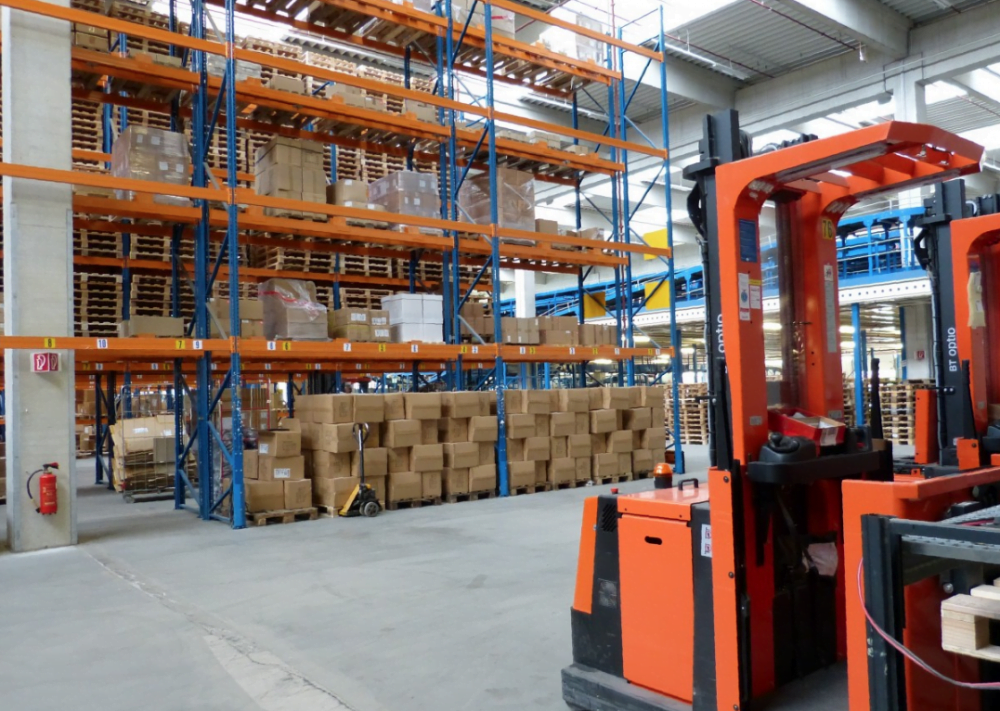
Consider that a company manufactures a line of four products. It cannot manufacture all four simultaneously, but it markets all of them at the same time. To meet its demand, it must program the production cycle of each product and carry out inventory planning according to the sales period.
Dropshipping
Generally, dropshipping is aimed at e-commerce businesses and individual marketplace entrepreneurs. The process involved in this inventory consists of receiving service orders (sales) online and forwarding them to the supplier, who in turn sends the product to your customer on behalf of your company.
In this case, the supplier does not need to handle or have access to the product, he only mediates the sale. The profit from this process comes from the price difference between the value published in the online store and the original value of the product, in addition to several other facilities.
Companies can work with one or more types of stock, according to their needs.
Learn about the technological innovations used in storage
Companies are increasingly investing in automating the storage process. Warehouse automation offers resources such as order picking systems, pallet stacker cranes, operations shuttles, telescopic conveyors, palletizing robots and management software.
The automation of stacking and palletizing processes makes it possible to move larger quantities of products with more agility and efficiency, optimize the flow of goods in the loading/unloading area and facilitate the interface between the distribution center, the platform and the vehicles. It eliminates a large part of the labor employed, reducing operation and maintenance costs and avoiding errors and work accidents.
The palletization of the storage system facilitates and speeds up access to each stored pallet, optimizing stock control and adapting operations to any space, size or weight of the merchandise that will be stored.
Learn about the advantages of using rotomolded plastic pallets
pallets favor the rationalization of storage spaces, the reduction of damage to products and the better use of vertical spaces. Its structure provides direct and individual access to each load unit, facilitating product distribution.
Produced in different colors, the pallets favor a more efficient organization of products, with easy identification of goods, good use of physical space and property traceability.
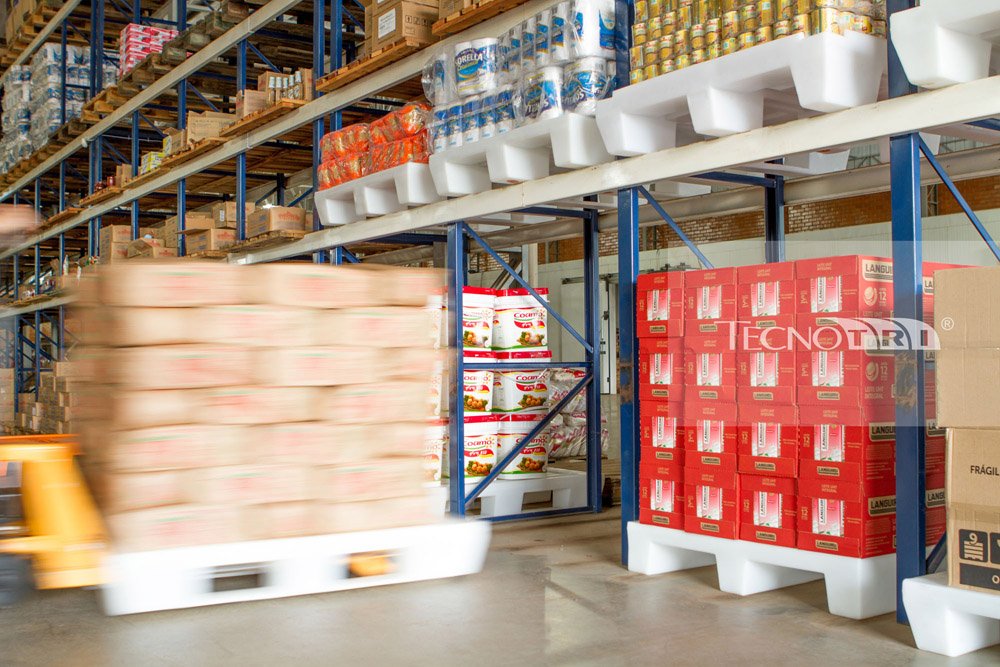
plastic pallets are versatile and can be configured for use on the ground, in a sliding pallet door, dynamic drive in, rack and metal shelving. They have a modern system of interlocking beams that makes assembly and disassembly quick and easy.
Due to its resistance, the pallet rack allows the storage of large and heavy products in a vertical position, optimizing the use of physical space and multiplying storage capacity.
The drive in modality is carried out by accumulation on a surface or height; the drive-thru system has two cargo access aisles, one on each side of the rack and the push-back storage is up to four pallets deep on each level.